

 English
 عربى


Ask quality managers in meat, dairy, or electronics plants about vacuum packaging failures, and the same story keeps coming back: seals that looked perfect on the packing line turn into soft, half-inflated pouches weeks later, somewhere between the cold store and the retail shelf. In most of those cases, the chamber machine was never at fault. The bag was simply never specified for the product, the temperature, or the equipment it had to survive.
The conclusion first: choosing a vacuum packaging bag is a matching exercise, not a price comparison. Four variables decide whether a bag performs: what you pack, the temperatures it must endure, the oxygen barrier your shelf-life target requires, and the machine that will form and seal it. Lock those four down before comparing prices, because the cheapest bag that leaks in distribution is the most expensive bag on your line.
Start With the Application Profile, Not the Bag
Before comparing suppliers or film structures, put the job in writing. Five questions cover nearly every vacuum bag decision in industrial purchasing:
- Product profile: weight, rigidity, and any bones, shells, hard corners, or metal parts that can puncture film; fatty or juicy products also contaminate the seal zone.
- Temperature range: frozen storage at -18°C or below, boiling or pasteurization near 100°C, retort sterilization around 121°C, sometimes more than one in the same supply chain.
- Shelf-life target: a product sold within two weeks has very different barrier needs from one shipped ambient for twelve months.
- Machine type: chamber, nozzle, and thermoforming lines each demand a different bag format.
- Documentation and presentation: food-contact declarations for the destination market, plus printing or clarity if the bag is the shelf face of the brand.
Specify for the harshest condition the bag will ever see, not the average day: the coldest freezer, the longest cook cycle, the sharpest bone in the product.
Structure: Match the Resin to the Temperature
In multilayer coextruded bags, polyamide (PA) provides strength and puncture resistance, while the innermost layer does the sealing. Which sealant sits inside decides where the bag can live.
PA/PE for the cold chain, PA/PP for heat
- PA/PE structures are the low-temperature workhorse. They stay flexible through frozen distribution and seal at moderate temperatures, which suits meat, seafood, cheese, and most chilled and frozen vacuum work.
- PA/PP structures swap the PE sealant for polypropylene to withstand high-temperature processes, making them the structures to shortlist for boiling, hot-filling, or retort-grade cycles approaching 121°C.
Seven-layer builds come in symmetric and asymmetric versions. Symmetric structures place similar layers on both sides of the core, which keeps pouches flat and less prone to curl in the seal bar; asymmetric builds serve when the two sides need different properties, such as a printable outer with a high-clarity inner.
What 5, 7, and 9 layers actually buy you
Layer count is not decoration. Extra layers give the film engineer somewhere to put function: an EVOH core for oxygen barrier, PA skins for puncture strength, PE layers for sealing and toughness. In a 9-layer high-barrier film, the EVOH layer sits protected between polyamide skins, one reason it holds its barrier better through flexing and cold than thinner builds. For a closer look at how polyamide-based and EVOH-core builds differ, this comparison of PA/PE and PA/EVOH structures breaks down where each one wins.
The table below condenses the usual starting points:
| Structure | Comfort zone | Barrier tendency | Typical fits |
|---|---|---|---|
| PA/PE, 7-layer coextruded | Frozen and chilled; moderate heat only | Medium to high with EVOH core | Meat, seafood, cheese, textiles |
| PA/PP, 7-layer coextruded | Boiling and retort cycles up to about 121°C | Medium to high | Hot-fill, boil-in-bag, sterilized products |
| High barrier, 5 to 9 layers with EVOH | Standard processing temperatures | High, low oxygen transmission | Nuts, cured meats, long shelf-life foods, electronics |
| Medium barrier coextruded | Standard processing temperatures | Moderate | Short shelf-life and frozen products |
Treat every figure as a starting point: request oxygen and moisture transmission values with test conditions stated, and confirm the temperature rating in writing for your exact cycle. For standard chamber-machine work, a ready-made multilayer vacuum pouch built on these structures is the fastest route to a working spec.
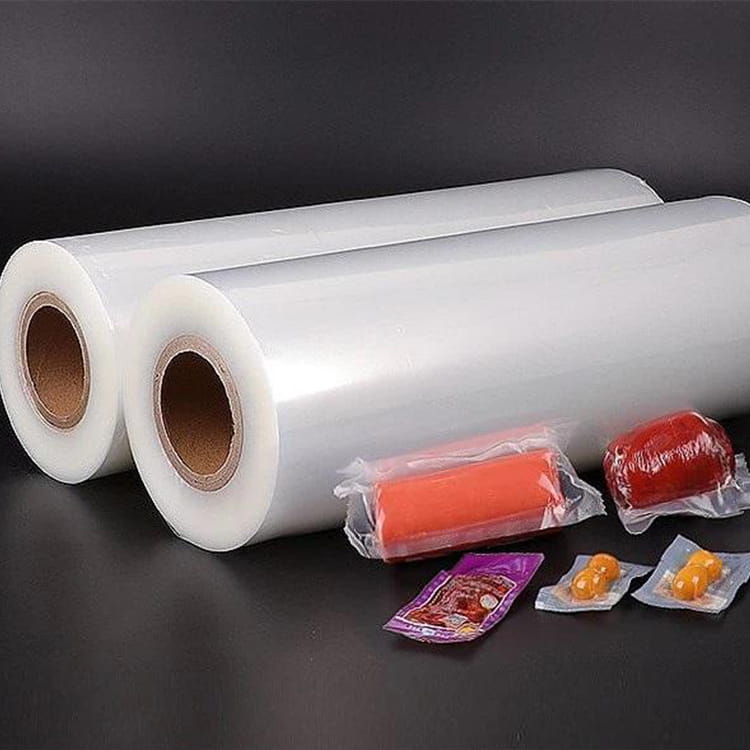
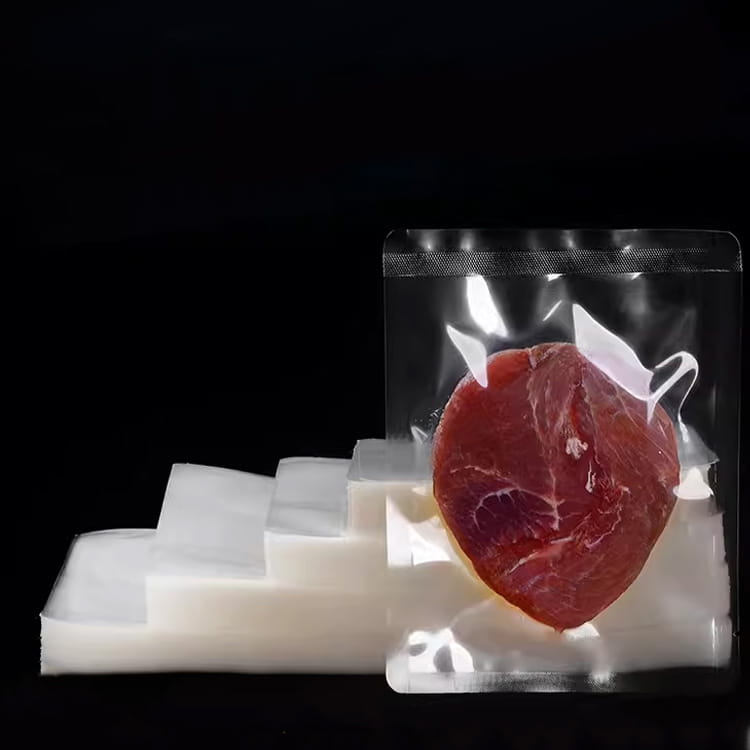 High-Barrier PE/PA Composite Vacuum Sealer Bag for Fresh FoodThis multilayer PE/PA vacuum bag pairs flexibility, low-temperature toughness, and reliable oxygen and moisture barrier performance, making it a practical ready-made option for extending the shelf life of meats, seafood, and prepared foods on chamber machines.View Product →
Barrier Level: How Much Oxygen Protection Do You Need?
Oxygen is what ages a packaged product. It turns nuts and fried snacks rancid, oxidizes and fades cured meats, allows mold on cheese, and attacks metal surfaces on circuit boards. The barrier level sets how fast that clock runs, so choose it from the shelf-life target rather than from habit.
Buyers tend to make one of two mistakes. Over-speccing pays for a 9-layer high-barrier structure on a product that sells out in three weeks; under-speccing surfaces months later as rancidity returns or color complaints arrive from a retail chain. A useful rule of thumb: frozen products slow their own oxidation, so a medium-barrier bag often suffices, while ambient distribution, nuts, cured meats, and electronics justify a high-barrier film with a protected EVOH core.
High-barrier structures typically earn their premium in these categories:
Nuts & snacksCured & smoked meatsCheese & dairyPCBs & electronics
Datasheets quote oxygen transmission as OTR, in cc per square meter per day at a stated temperature and humidity. High-barrier coextruded films commonly sit in the low single digits, medium-barrier builds noticeably higher. Match the number against a shelf-life calculation or a real storage trial instead of chasing the lowest figure on the page, and always compare datasheets under identical test conditions.
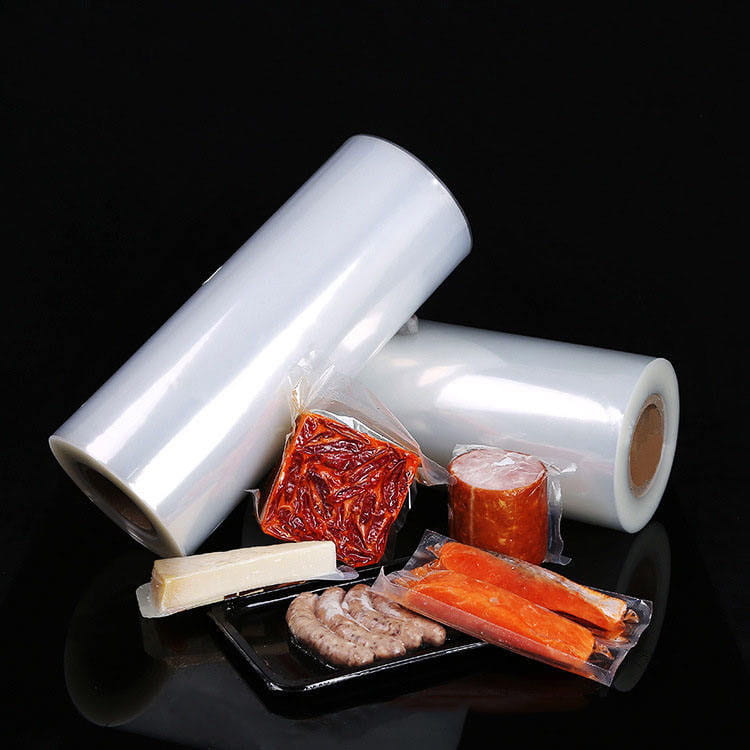
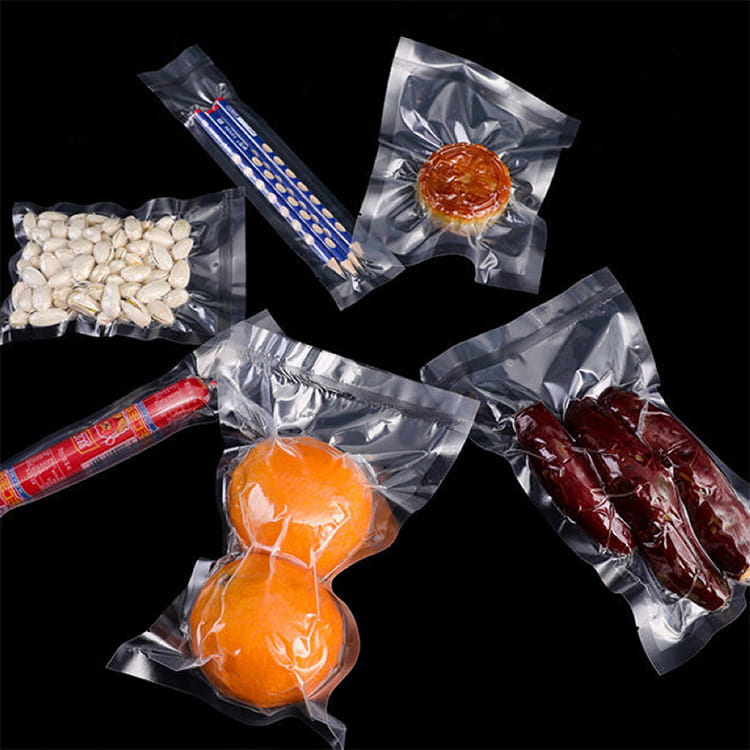 7-Layer Transparent Co-Extruded Food Packaging FilmWith an EVOH barrier layer, PA and PP strength layers, and transparent outer PE, this seven-layer co-extruded film offers a way to compare OTR ratings and thickness builds when matching high-barrier film specs to a real shelf-life target.View Product →
Thickness, Puncture, and Seal Integrity
Thickness is the spec buyers quote first and understand least. General-purpose vacuum pouches commonly start around 60 to 90 microns; bone-in meats, hardware, and anything with sharp corners usually justify 90 to 120 microns or a build with reinforced PA content. Thermoforming bottom webs run thicker still, because the film is drawn deep around the product.
Two nuances matter more than the gauge figure. First, thickness alone does not equal puncture resistance: the PA share and the layer design decide whether a bag survives a rib bone or a circuit-board corner, so ask for a puncture or drop-test value, not just a micron number. Second, agree a thickness tolerance in writing; film is commonly supplied within roughly ±5 to 10% of nominal, and the low end of that band is where leak complaints begin.
Sealing is the other half of integrity. Fatty or juicy products contaminate the seal area, so the sealant layer needs enough thickness to close through light contamination, and your sealing parameters should come from the supplier datasheet rather than trial and error. A practical bag specification lists six things:
- structure and layer count, with the barrier layer named;
- thickness with its tolerance;
- OTR and WVTR values with test conditions;
- recommended sealing temperature window;
- puncture resistance value and test method;
- food-contact documentation for the destination market.
Match the Bag Format to Your Machine
The best film in the wrong format is still the wrong bag. Smooth pre-made pouches, usually three-side sealed with one open end, feed chamber machines, where the entire bag sits inside the chamber; this is the standard route for portioned meats, cheese, and small parts. Nozzle or snorkel machines draw air through a probe inserted into the bag and suit whole muscles, textiles, duvets, and bulky electronics. Countertop external-suction machines need embossed, textured bags to channel air out, which is why smooth industrial pouches underperform in them.
At production scale, thermoforming changes the economics. Film from a roll is formed into a bottom web around the product and sealed with a top web, so finished-bag inventory disappears and irregular shapes pack tightly. It demands capital and tooling, which is why it pays at higher, stable volumes.
Whichever format you run, leave headroom: the bag needs extra length for two seals plus any product swell during freezing or cooking. A bag cut too short stresses the corners of the seal, and corner stress is where most vacuum loss begins. On chamber machines, correct sizing also lets the pump pull a full vacuum quickly instead of fighting a collapsed pouch.
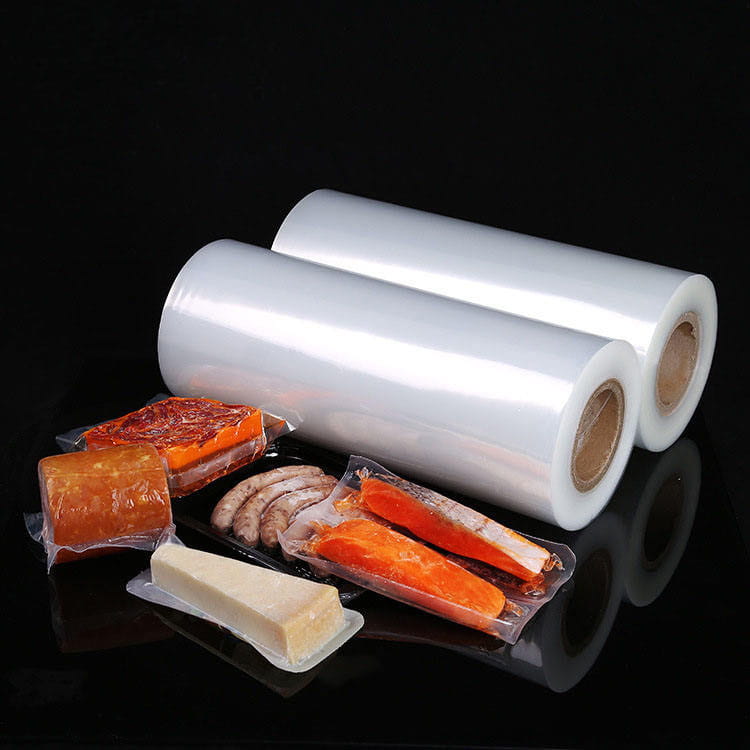
 Low-Temperature 7-Layer PA/PE Co-Extruded FilmBuilt for frozen and demanding applications, this PA/PE co-extruded film combines low-temperature toughness with multilayer strength and sealing performance, useful for buyers specifying films that must hold seals through freezing and storage cycles.View Product →
Compliance, Consistency, and Supplier Checks
Paperwork protects you as much as film does. For food, request a food-contact declaration matched to your destination market, whether that is EU Regulation (EC) No 1935/2004 or the relevant US FDA food-contact requirements. BPA is not a component of standard PA/PE or PA/PP coextruded films, but if a BPA-free claim matters to your retail customers, get it in writing rather than as a verbal assurance.
Then test the system behind the film. A serious multilayer coextrusion supplier provides a datasheet with test conditions, a certificate of analysis for each batch, and traceable batch codes on rolls and cartons; incoming material inspection and in-process controls are what keep bag number ten thousand identical to the sample you approved. Seen from the film-maker side of the table, most field failures trace back to three skipped steps: no line trial on the customer own machine, no distribution simulation with freeze-thaw and vibration, and no shelf-life storage check before the first full order.
For a structured version of that vetting process, this guide to choosing vacuum pouch manufacturers lists the audit questions worth asking before committing volumes.
Frequently Asked Questions
Q1: What thickness should I choose for vacuum packaging bags?
Start at 60 to 90 microns for boneless, soft products in chilled or frozen distribution, and move to 90 to 120 microns for bone-in meats, hardware, or sharp-edged items. Treat these as starting points and confirm with a puncture test on your actual product.
Q2: Can one bag handle both freezing and boiling?
Usually not. PA/PE structures handle freezing well but are not rated for sustained boiling, while PA/PP structures are chosen precisely for heat. If your process includes both, the bag must be explicitly rated for both cycles by the supplier.
Q3: Why do some vacuum bags lose vacuum over time?
Three causes dominate: oxygen passing through an under-specced barrier, which shows up as slow, uniform softening; micro-leaks from punctures at folds or corners, which soften near the damage; and fat or liquid contamination in the seal, which fails within days. Where and when the loss appears tells you which one you have.
Q4: Should I use smooth or textured vacuum bags?
Follow your machine. Chamber and nozzle equipment works with smooth bags, while countertop external-suction sealers need textured bags to channel air out. Industrial vacuum packaging is almost entirely smooth-film territory.
Bottom Line
Work through the decision in order: application profile, structure and temperature rating, barrier level against shelf life, thickness and seal strength, then machine format and supplier paperwork. Buy against a written specification, validate with a line trial and a distribution simulation, and compare prices only after the bag has proven itself. A vacuum bag is a small line item that carries the entire product, so it deserves the same rigor as what goes inside it.