

 English
 عربى
عربى


Understanding the Vacuum Pouch Market Today
Food brands moving away from rigid trays and jars are discovering that flexible packaging changes more than shelf appearance. Working with capable vacuum pouch manufacturers affects shelf life, freight cost, and how a product performs once it reaches a retail cooler. The category has grown quickly because flexible pouches use less material per unit of product volume, ship flatter before filling, and give brands a wider printable surface for storytelling. That growth has also pulled in a wide range of vacuum pouches suppliers, from small regional converters to large integrated film-to-pouch operations, which makes sourcing decisions harder rather than easier.
The practical challenge for a buyer is that two pouches can look nearly identical on a shelf and behave completely differently in a distribution chain. One holds a vacuum seal for fourteen months; the other loses integrity after six. The difference usually traces back to film formulation, seal engineering, and the quality discipline of the factory that produced it, not the printing on the outside. This guide walks through the technical and operational factors worth checking before a purchase order is placed, so that packaging decisions are made on evidence rather than a sales sheet.
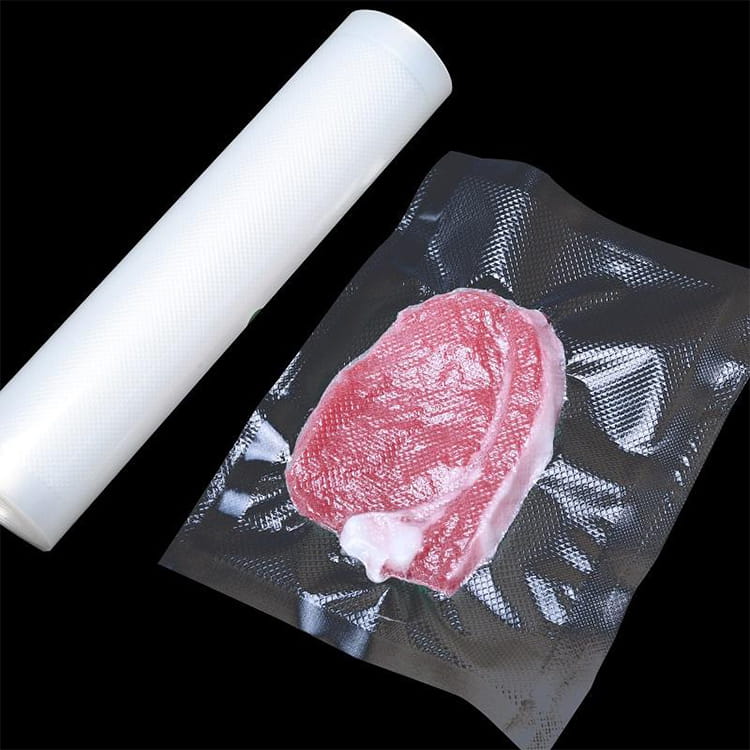
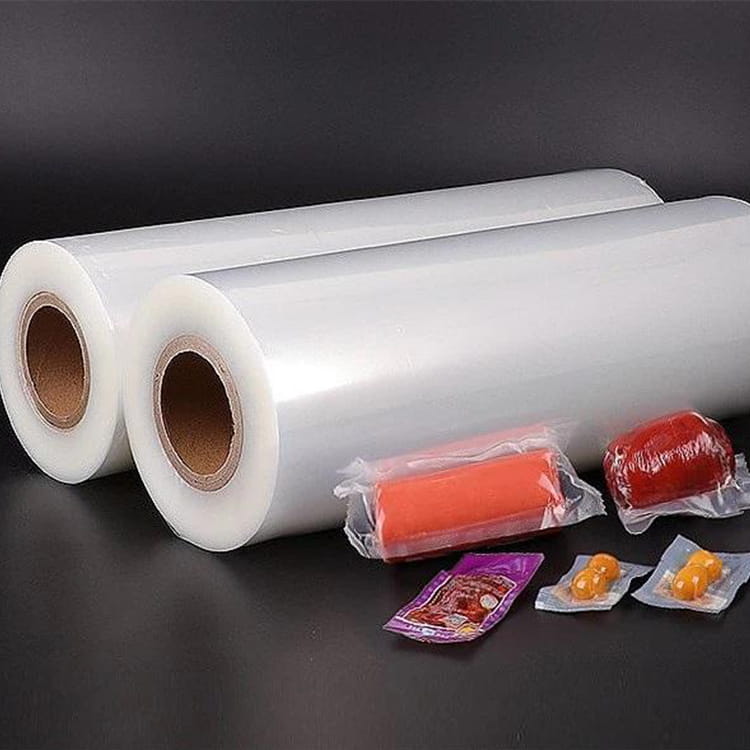
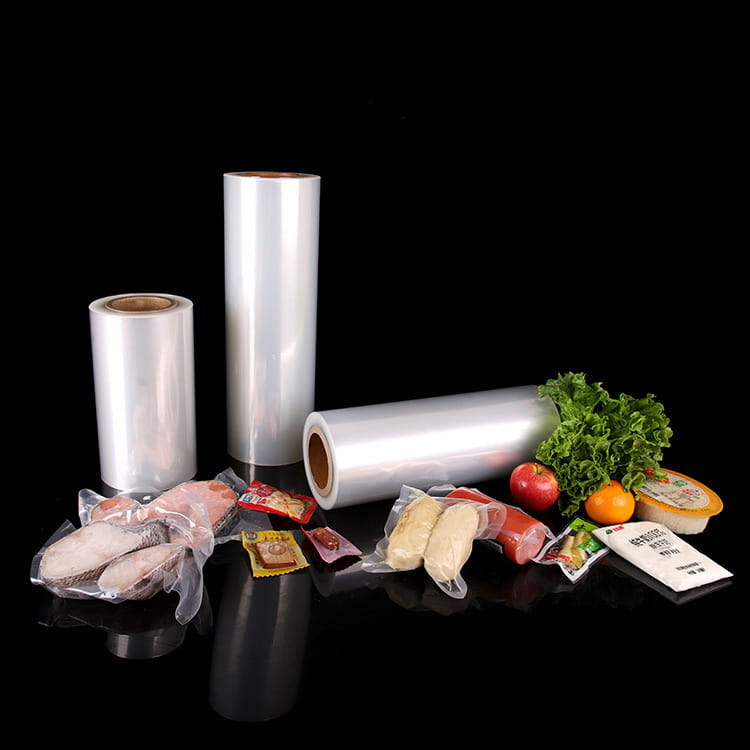
Flexible pouch stock prepared for food-grade filling lines
Buyers researching a packaging bag program for the first time often assume the material is interchangeable across suppliers. In practice, film structure, gauge consistency, and lamination bond strength vary enough between factories that the same nominal specification can perform very differently once it goes through a customer's own vacuum chamber and sealing equipment.
Material Science Behind Reliable Food-Grade Pouches
Most food-grade vacuum pouches are built from a laminated structure rather than a single plastic layer. A typical construction pairs a barrier layer, often nylon or a coated film, with a polyethylene sealant layer. This is where the term PA/PE comes from: polyamide on the outside for puncture resistance and printability, polyethylene on the inside for a reliable, food-safe heat seal. Reputable food packaging film manufacturers control gauge tolerance tightly, because a film that varies by even a few microns across a roll can cause inconsistent sealing on high-speed lines.
Barrier performance is usually described through oxygen transmission rate and moisture vapor transmission rate. Lower numbers on both mean longer protection against oxidation and staling. Products with fat content, such as cured meats or cheese, are especially sensitive to oxygen ingress, so buyers sourcing for those categories should ask for actual transmission rate ranges rather than accepting a generic "high barrier" label. The chart below compares typical performance ranges across common film approaches used for food-grade pouches, scored on a relative scale where a higher number indicates stronger performance in that category.
Relative material performance across common vacuum pouch structures
The comparison illustrates why a pa/pe film structure remains the default recommendation for products that need to hold a deep vacuum without pinholing at the fold lines. Mono-layer films are lighter and cheaper, which suits dry, shelf-stable goods, but they generally cannot match laminated structures on barrier performance or resistance to abrasion during transit. For businesses evaluating PA/PE vacuum bags against simpler alternatives, the right choice depends on product moisture content, expected distribution time, and whether the pouch will be frozen, since repeated freeze-thaw cycles put additional stress on seal seams.
Vacuum Pouch Types and Sealing Styles Compared
Not every vacuum pouch is built the same way, and the sealing method matters as much as the film itself. A 3-side sealing bag is sealed on three edges with the fourth left open for filling, which suits products that are loaded and then vacuum-sealed on the customer's own equipment. A pre-formed vacuum bag, by contrast, may already include a bottom gusset or side gusset for standing display, and is typically chosen when shelf presentation matters as much as barrier protection.
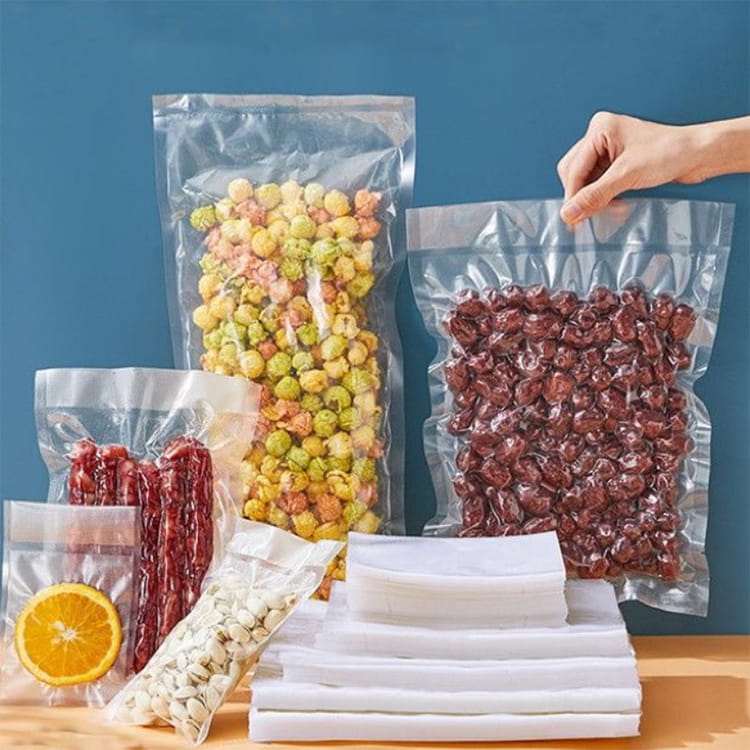
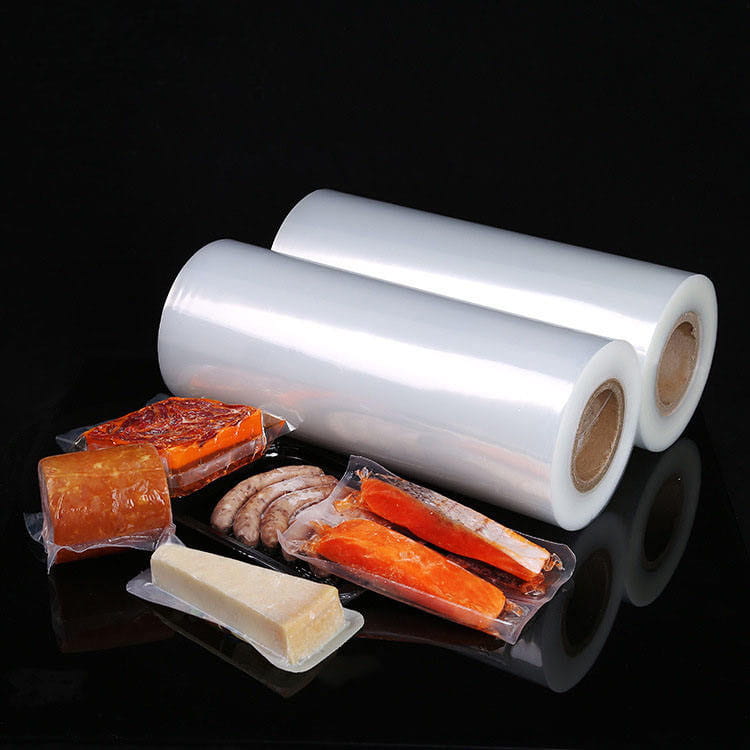
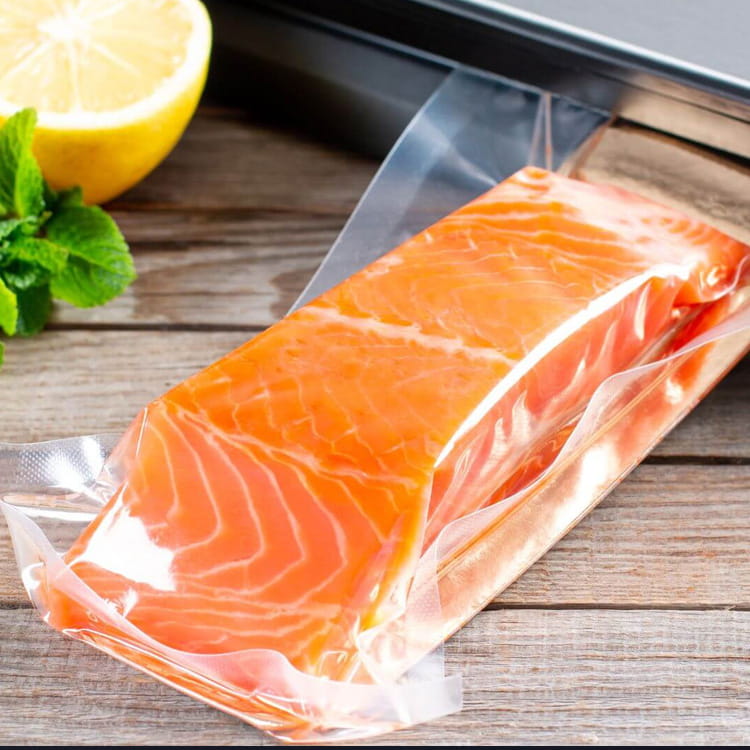
Three-side sealed pouch prior to product loading
Seal strength is the number that separates a pouch that survives distribution from one that fails in a case somewhere between the factory and the retail shelf. It is usually reported in newtons per fifteen millimeters of seal width, based on a pull test across the sealed edge. The chart below shows typical seal strength ranges reported for common pouch formats, which is a useful reference point when a supplier's technical sheet gives only a single vague number.
Buyers filling their own pouches on-site tend to favor 3-side formats because they simplify inline loading, while brands selling directly to retail often prefer pre-formed stand-up bags for their display advantage. Neither format is universally superior; the right pick depends on the filling line already in place and how the product needs to sit on a shelf.
Core Evaluation Criteria When Selecting a Supplier
Once the material and format are settled, the harder question is which factory to actually work with. Buyers surveyed informally across procurement forums tend to weigh a consistent set of factors, though the priority order shifts depending on order volume and product risk category. A useful way to frame supplier evaluation is a short checklist covering documentation, operational fit, and communication quality.
| Evaluation Area | What to Verify | Why It Matters |
|---|---|---|
| Food safety certification | Current, third-party audited, scope matches product | Confirms baseline hygiene and traceability controls |
| Minimum order quantity | Written MOQ per SKU, not per order | Affects inventory risk for new or seasonal products |
| Lead time consistency | Historical on-time rate, not just quoted time | Protects launch dates and retail commitments |
| Customization scope | Print method, gauge range, gusset options | Determines how far the pouch can match brand needs |
| Sample and pilot process | Willingness to run small pilot batches | Lets a buyer test seal performance before scaling |
The chart below reflects how buyers commonly rank these priorities when comparing wholesale packaging quotes, based on aggregated procurement survey patterns rather than any single company's data.
Approximate weighting reported across informal packaging buyer surveys
Production Workflow From Film to Finished Pouch
Understanding how a pouch is actually made helps a buyer ask sharper questions during a factory audit or video call. The process generally moves through raw material sourcing, extrusion or lamination of the film structure, surface printing, slitting into working widths, pouch forming and sealing, then quality inspection before packing for shipment. Each stage introduces a point where defects can be caught early or missed entirely, depending on how disciplined the operation is.
Simplified sequence used by most flexible packaging converters
The two stages worth the most scrutiny are lamination and sealing. Poor lamination bonding can cause layer delamination during vacuum forming, which is often invisible until the pouch is filled and put under stress. Sealing consistency depends on temperature control, dwell time, and pressure uniformity across the sealing bar, all of which should be logged and checked periodically rather than set once and left alone.
Demand Trends Shaping the Vacuum Pouch Category
Demand for flexible vacuum packaging in food applications has trended upward as brands look for lighter formats that reduce freight weight and landfill volume compared with rigid alternatives. Categories such as pet food, snack foods, and portioned proteins have been particularly active in shifting toward pouch formats over the past several years, driven partly by retailer requests for shelf-ready packaging and partly by consumer preference for resealable formats.
Illustrative index of pouch adoption growth in food packaging categories
For a growing brand, this trend has a practical implication: capacity at established food packaging film manufacturers can tighten during peak demand periods, so securing a supplier relationship with reliable lead times matters more during high-growth seasons than during quieter periods when most factories have open capacity.
Cost Structure and Pricing Factors
Pouch pricing is rarely a single line item. Material cost typically makes up the largest share, followed by printing complexity, tooling or die costs for custom shapes, and freight. Buyers who only compare a per-unit quote across suppliers without breaking down these components often end up comparing apples to oranges, since one supplier may quote a lower unit price while excluding tooling fees that appear later in the invoice.
| Cost Component | Approximate Share | Notes |
|---|---|---|
| Film and resin material | 45 to 55 percent | Varies with barrier requirement and gauge |
| Printing and finishing | 15 to 20 percent | Rises with color count and special finishes |
| Labor and conversion | 10 to 15 percent | Depends on automation level at the factory |
| Tooling and setup | 5 to 10 percent | One-time cost, often amortized over volume |
| Freight and logistics | 10 to 15 percent | Sensitive to order size and shipping method |
Requesting an itemized quote rather than a single bundled number gives a buyer leverage to negotiate the components that matter most, such as waiving tooling fees in exchange for a longer-term volume commitment.
Quality Control and Certification Checklist
Certifications are a starting filter, not a guarantee of consistent output, but they narrow the field to factories that have at least been audited against a recognized standard. When reviewing food-grade pouch suppliers, it helps to separate certifications that cover food safety management from those that cover general quality systems.
- ISO 9001 for general quality management consistency
- ISO 22000 or HACCP-based systems for food safety management
- BRC or similar retailer-recognized packaging standards where export to major retail chains is planned
- Migration and food-contact compliance testing appropriate to the destination market
Beyond paperwork, ask about in-line inspection practices such as seal integrity testing, metal detection where relevant, and batch traceability records. A factory that can produce recent inspection logs on request is generally more trustworthy than one that only offers a certificate scan with no supporting operational detail.
Common Applications Across Food Categories
Vacuum pouches serve a wide range of food categories, and the right specification shifts depending on the product's moisture content, fat content, and expected shelf life.
| Product Category | Typical Pouch Priority |
|---|---|
| Cured and processed meats | High oxygen barrier, strong seal integrity |
| Hard and semi-hard cheese | Moisture barrier, puncture resistance |
| Roasted coffee | Aroma barrier, degassing valve compatibility |
| Pet food and treats | Durability, stand-up shelf presentation |
| Snack and dried goods | Cost efficiency, print clarity |
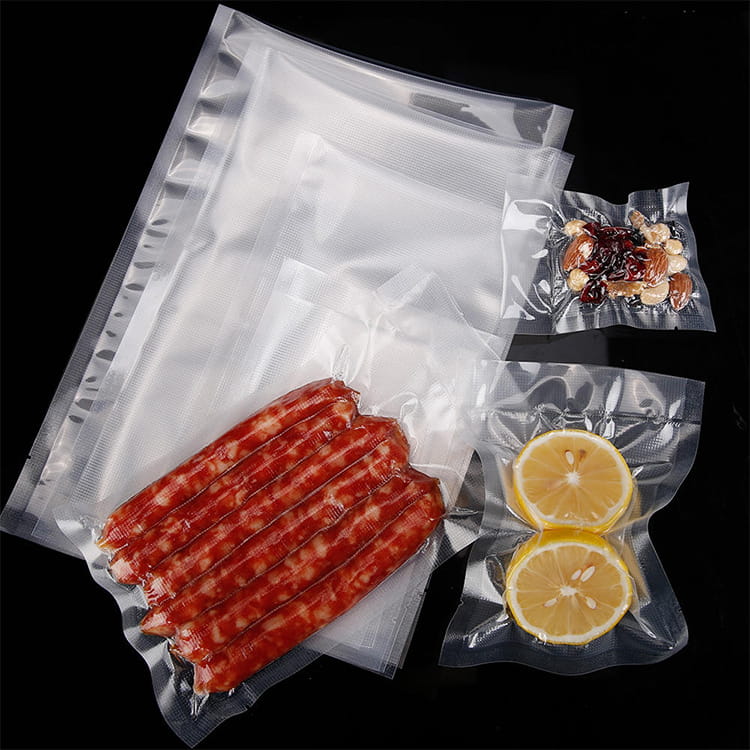
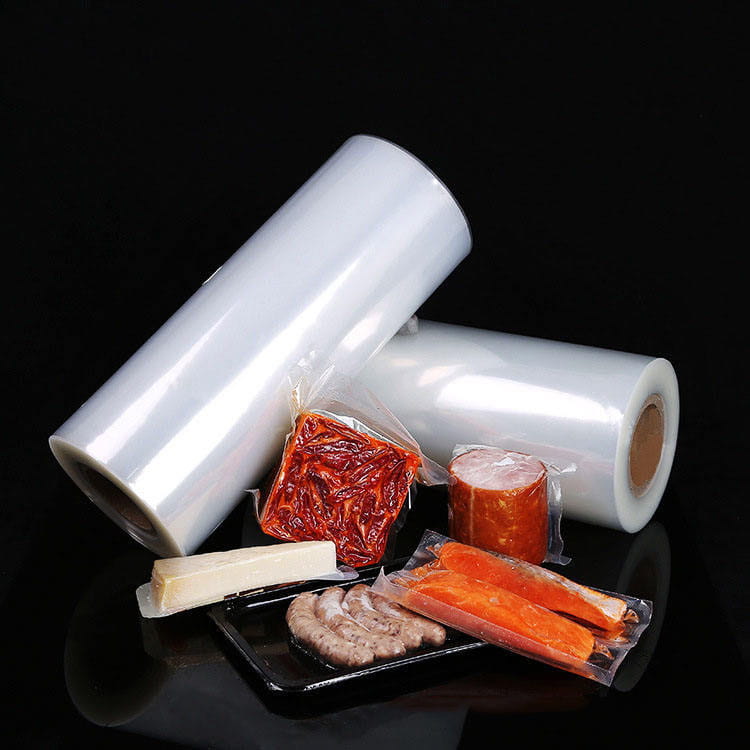
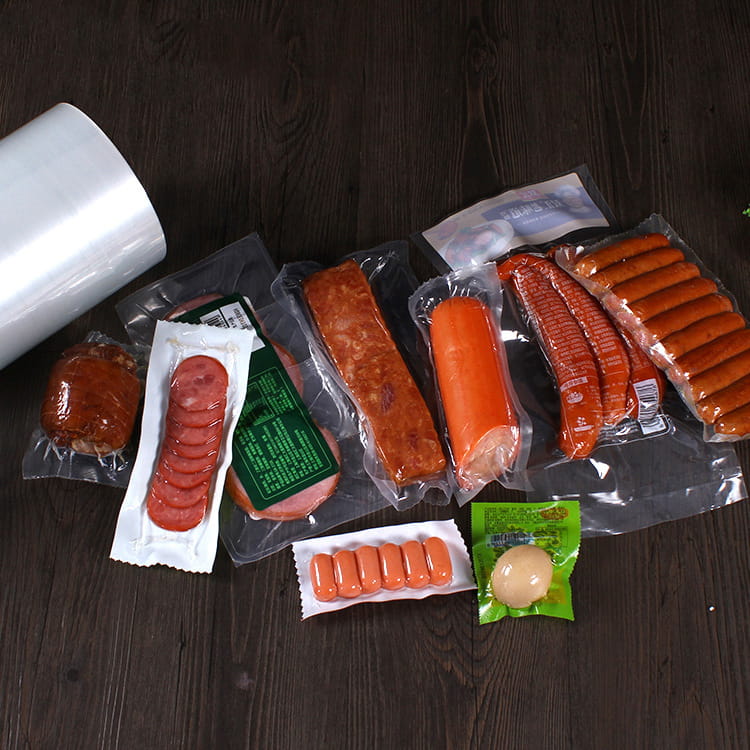
Vacuum-sealed pouch format used across protein and snack categories
Matching the pouch specification to the product category early avoids the common mistake of over-specifying barrier performance for a dry, shelf-stable product, which adds cost without a meaningful shelf-life benefit.
How to Vet Wholesale Vacuum Sealer Bag Suppliers Before Committing
Before placing a first production order, a short due-diligence sequence reduces the risk of costly surprises. Request physical samples rather than relying on digital renderings, since seal quality and film feel cannot be judged from a photo. Run those samples through your own filling and sealing equipment rather than the supplier's demonstration line, since equipment differences can produce different results with the same film.
For buyers exploring custom vacuum pouches, it is worth asking specifically how a supplier handles print color matching across production runs, since color drift between batches is a common complaint once a brand scales past its first order. Finally, treat the first production run as a pilot: order the smallest quantity the supplier will accept, inspect it fully on arrival, and only scale up once seal consistency and print quality have been confirmed across an actual batch rather than a single sample.
Frequently Asked Questions
Q1: What is the difference between a vacuum pouch and a standard flexible pouch?
A vacuum pouch is engineered specifically to withstand air removal without pinholing or seam failure, using film structures and seal widths designed for that stress, while a standard flexible pouch may not be rated for vacuum use at all.
Q2: How long does it take to develop a custom vacuum pouch specification?
Development timelines vary, but a typical cycle from initial specification to approved production sample runs several weeks, factoring in film sourcing, printing plate or cylinder preparation, and sample testing rounds.
Q3: Can vacuum pouches be recycled?
Recyclability depends on the film structure. Mono-material polyethylene structures are generally easier to recycle through existing flexible film streams than multi-material laminates, so brands prioritizing recyclability should discuss mono-material options directly with their supplier.
Q4: What minimum order quantity should a new brand expect?
Minimum order quantities vary widely by factory and by whether printing is custom or stock, so it is best to request a written MOQ schedule per specification rather than assuming a single number applies across all product lines.
Q5: How is seal strength actually tested before an order ships?
Reputable converters run pull tests on sample seals from each production batch, measuring force required to separate the seal, and can share these test records on request as part of a quality package.