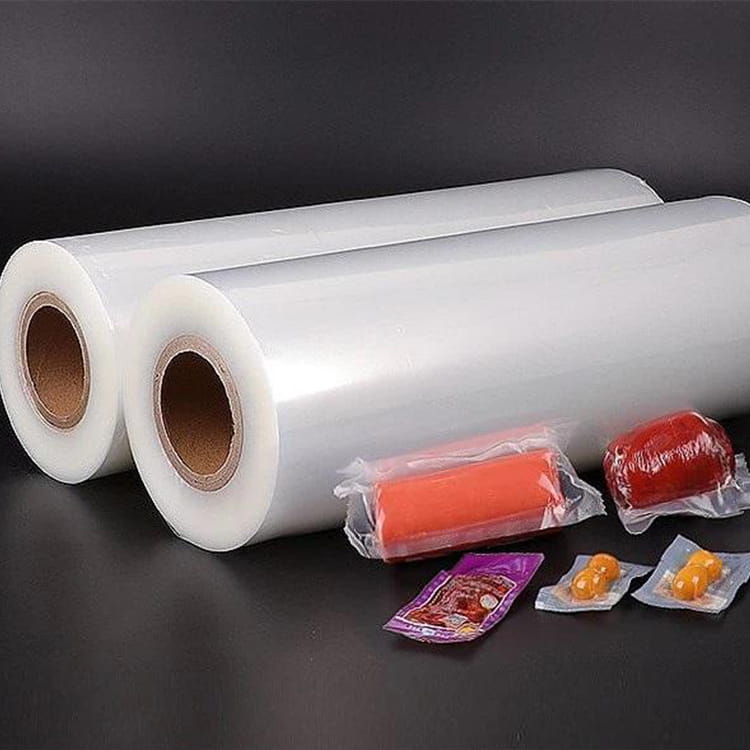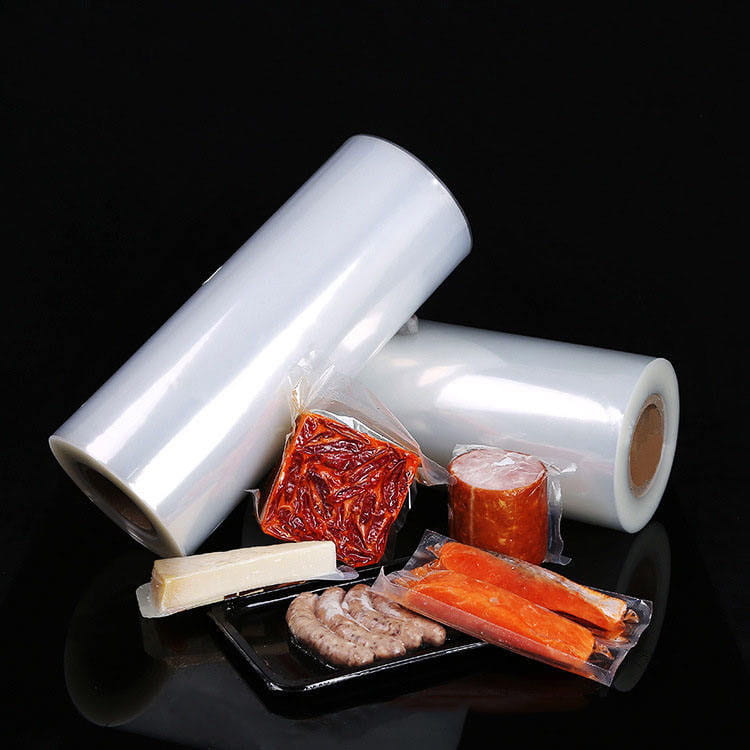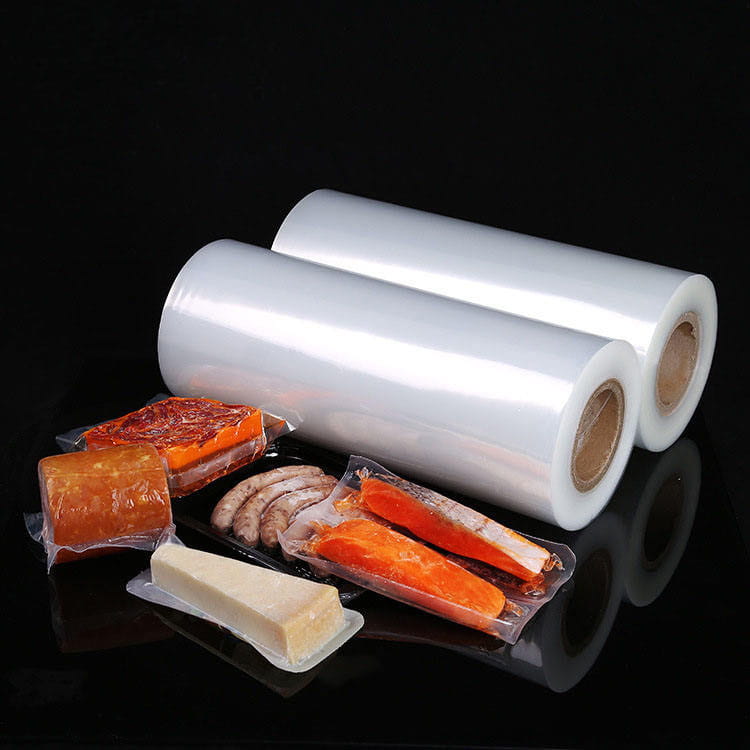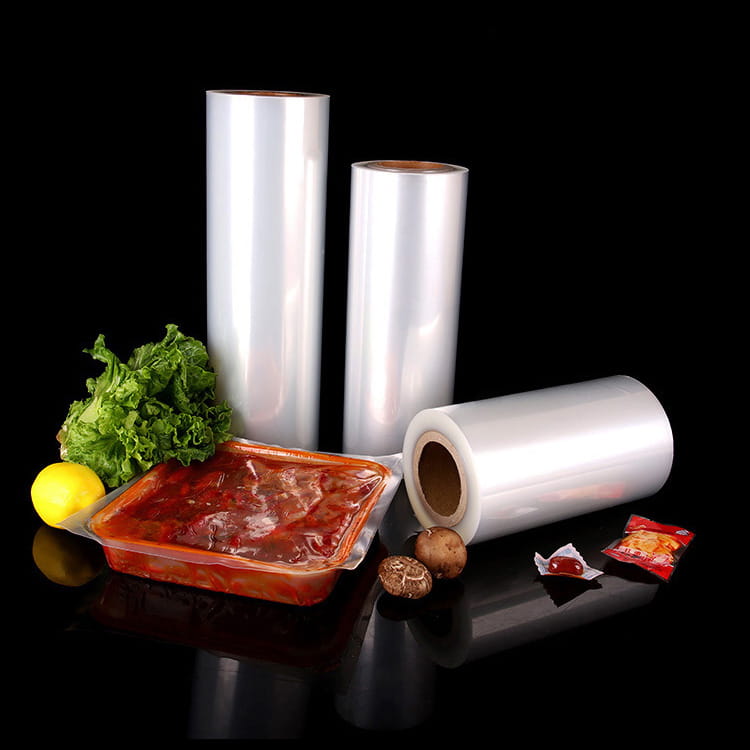


 English
 عربى


A frozen dumpling line and a retort ready-meal line can request films that look almost identical on a spec sheet: seven layers, a nylon core, high clarity, vacuum-sealable. They still end up with completely different results on the factory floor, because the decisive layer is not the polyamide. It is the sealant resin bonded to it: polyethylene (PE) in PA/PE film, polypropylene (PP) in PA/PP film.
The short answer first. If your product lives in a chiller or freezer and no process step goes above roughly 90 °C, PA/PE is usually the correct specification: it seals at lower jaw temperatures and stays flexible in deep-freeze storage. If the pack must survive 121 °C retort sterilization, hot filling or steam cooking, PA/PP is the structure that holds. Barrier, puncture strength and optics come from how the whole layer stack is engineered; the thermal envelope comes from the sealant.
PA/PE film
Sealant: polyethylene (PE)
Seals at lower jaw temperatures
Stays flexible at −18 °C and below
Chilled, frozen and vacuum packs
PA/PP film
Sealant: polypropylene (PP)
Handles 121 °C retort sterilization
Stiffer, glossier surface
Retort pouches and hot-fill packs
What PA/PE and PA/PP Actually Describe
Both films are multilayer coextrusions: several polymer melts are combined through a single die to form one web, with no adhesive and no solvent. The PA (polyamide, or nylon) layer is the mechanical backbone. It supplies puncture resistance, tensile strength, controlled tear behavior and a meaningful share of the oxygen barrier, which is why both families perform so well in vacuum packaging.
The difference sits on the sealing side. PE gives a soft, broadly heat-sealable skin that bonds at relatively low temperatures and keeps its flexibility in the cold. PP gives a stiffer, glossier skin with a much higher melting point, which is what allows finished packs to sit in a retort without the seals peeling open. In a typical 7-layer build, thin PA layers are distributed through the wall and bonded to the sealant with tie resins; this breakdown of what sits inside a 7-layer or 9-layer coextruded film is a useful reference for that layer-by-layer logic. Where shelf-life targets exceed what PA alone delivers, an EVOH layer is added to the stack, but that is an additive decision built on top of the PE-versus-PP question, not a replacement for it.
PA/PE vs PA/PP: Side by Side
Most practical differences show up in four properties: melting point, service temperature ceiling, cold flexibility and sealability. The table below condenses them into the numbers that matter during a specification review.
| Property | PA/PE film | PA/PP film |
|---|---|---|
| Sealant resin | Polyethylene (PE) | Polypropylene (PP) |
| Sealant melting point | about 105 to 115 °C | about 160 to 170 °C |
| Continuous service ceiling | roughly 80 to 90 °C | roughly 120 °C |
| Typical jaw sealing range | about 110 to 160 °C | about 150 to 200 °C |
| Retort at 121 °C | Not suitable | Standard application |
| Deep-freeze flexibility | Stays pliable at −18 °C and below | Stiffens; risk of cracking |
| Surface character | Softer, higher friction | Stiffer, glossier |
| Typical jobs | Frozen food, chilled vacuum packs, thermoforming fresh meat | Retort pouches, hot fill, steam-sterilized packs |
Keep in mind that these are ranges for common packaging grades. A supplier can shift the sealing window with metallocene PE grades or with PP copolymer choices, which is why the final data sheet should always replace the rule of thumb.
Temperature Is the Real Decision Variable
PA itself is rarely the limiting material: PA6 melts at about 220 °C, comfortably above anything a food process throws at it. The ceiling comes from the sealant. PE begins to soften near 100 °C and melts at roughly 105 to 115 °C in the grades used as sealant layers, so a PA/PE pouch pushed through a 121 °C retort cycle will deform and the seals will fail. PP melts at roughly 160 to 170 °C, which leaves real headroom above the 121 °C retort plateau and makes hot filling straightforward.
The logic reverses in the freezer. PE-based sealants stay pliable at −18 °C and, in many LDPE-rich blends, well below −30 °C, so frozen meat, seafood and dumpling packs resist corner cracking through cold-chain handling. PP toughens and turns brittle as temperatures drop, which makes a PA/PP pouch far more likely to crack along fold lines if it is dropped or compressed in a freezer. That is why freezer programs almost never specify PA/PP, even when its high-temperature ratings look attractive on paper.
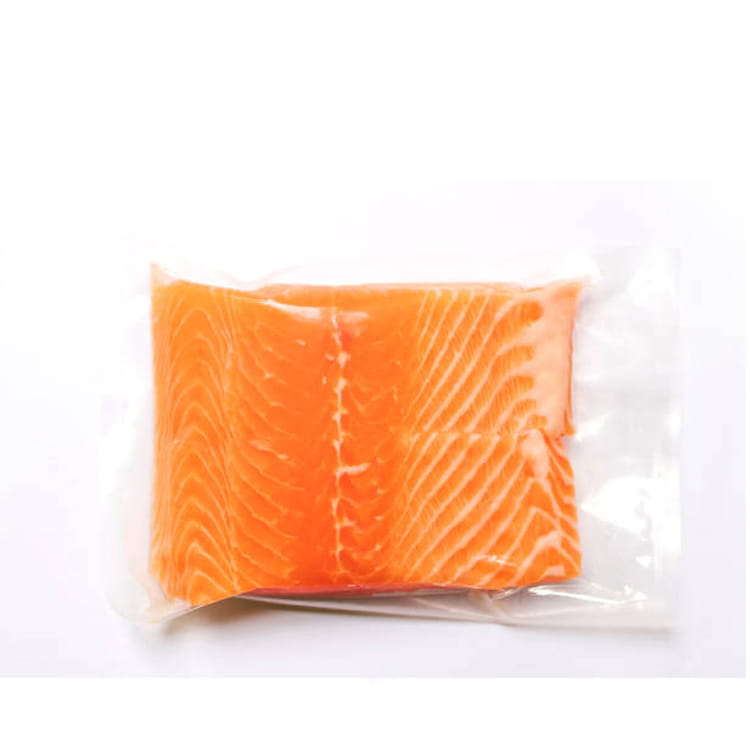 7-Layer Clear Vacuum Sealer Bags for Freeze-Dried FoodsWith a PA/PE-based seven-layer structure rated to -40°C, these bags stay flexible in the freezer, making them a fitting example where PE sealants resist corner cracking in frozen storage.View Product →
Rule of thumb from converting floors: below about 100 °C of combined process and storage load, think PA/PE; at or above retort temperatures, think PA/PP.
Matching the Film to the Process
Disagreements between the two films usually disappear once the thermal profile of the product is written down line by line: filling temperature, pasteurization or sterilization steps, reheating, storage and transport.
Choose PA/PE when
- the pack is chilled or frozen: fresh meat, poultry, cheese, frozen dumplings, seafood and bakery held at −18 °C or below
- the process is vacuum skin packing or thermoforming of fresh products with no reheating step
- pasteurized items such as cooked ham or sausages are kept below roughly 90 °C
- electronics, chemicals or textile goods need vacuum protection without any thermal load
Choose PA/PP when
- the pack is retort sterilized at 121 °C, with higher-grade builds specified toward 135 °C
- products are hot filled or reheated inside the pack, such as steam-ready meals
- the application needs a stiffer, glossier pack for shelf presentation
- thermoformed containers must survive reheating after forming
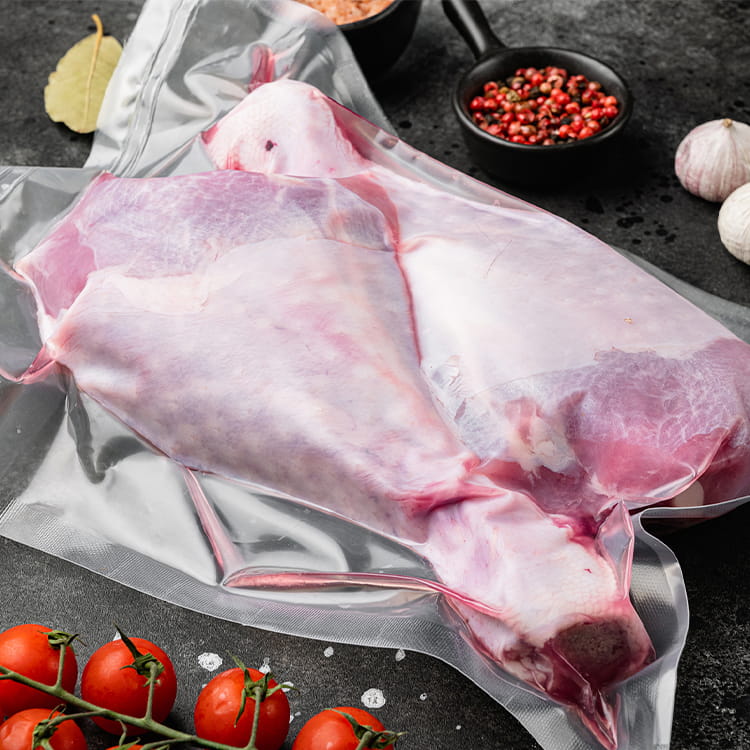 7-Layer High-Temperature Retort CPP Film for Microwavable PackagingBuilt on PA/PP co-extrusion with heat resistance up to about 150°C, this retort-ready film illustrates the PA/PP choice for sterilization and microwaving applications discussed here.View Product →
Thermoforming deserves its own note, because both families exist as forming webs: the PA face supplies deep-draw strength and puncture resistance, while the sealant follows exactly the temperature logic above. You can see the two compared directly on the thermoforming film pages, where PA/PE and PA/PP forming webs are listed side by side.
Symmetrical vs Asymmetrical: The Choice Inside Both Families
Resin is the first decision; layer symmetry is the second, and it applies equally to PA/PE and PA/PP. In a symmetrical build, the PA core sits in the middle with sealant skins of equal thickness on both faces. Tension is balanced through the cross-section, so the film lies flat, prints and converts cleanly, and finished bags resist curling when humidity or temperature changes. The trade-off is cost: more nylon distributed through the wall and a more demanding extrusion setup.
An asymmetrical build shifts the PA toward one face and puts more sealant on the other. That is cheaper per square meter and often exactly right for a vacuum bag that seals on one side while presenting a PA face outward. The risk is residual stress: unbalanced structures tend to curl when one side absorbs moisture or when seals are made, so converters need to manage web tension and bag design carefully.
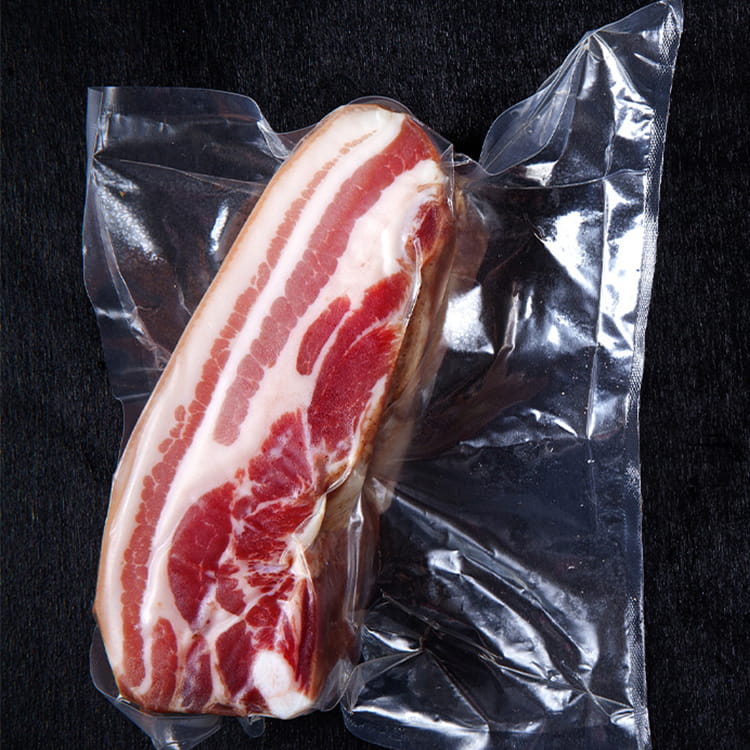 7-Layer Heavy-Duty Puncture-Proof Vacuum Sealer Bag RollThis PA/TIE/PE roll combines a high-barrier PA core with a PE sealant, matching the freezer-oriented sealant selection and heavy-duty puncture resistance described for vacuum packaging.View Product →
A sensible sequence for buyers: fix the sealant resin by temperature first, then pick symmetry by converting needs, then tune layer count and barrier. Reversing that order usually produces a film that is technically impressive and operationally wrong.
A Five-Point Checklist Before You Specify
- Write down the full thermal profile: filling temperature, pasteurization or retort steps, reheating, storage and transport. A single 121 °C step settles the PE-versus-PP question immediately.
- Check the sealing equipment against the film: jaw temperature range, dwell time and pressure must cover the sealant window, and PA/PP needs hotter jaws than PA/PE.
- State the lowest storage temperature in the written specification, not in a phone call. Freezer programs should push the choice toward PE sealants.
- Decide symmetry by converting reality: printing, lidding and flatness favor symmetrical builds, while cost-driven one-side-seal bags tolerate asymmetrical ones.
- Check barrier honestly. If shelf-life targets exceed what the PA layers deliver, add an EVOH layer to the structure rather than trading away the correct sealant.
Frequently Asked Questions
Q1: Can PA/PE film be used in retort processing?
Not in standard builds. The PE sealant softens near 100 °C and melts at roughly 105 to 115 °C, so a 121 °C retort cycle deforms the pack and opens the seals. Retort work calls for a PP-based sealant; PA/PE is comfortable with pasteurization well below that threshold.
Q2: Which film is better for frozen food packaging?
PA/PE. PE sealants stay flexible at −18 °C and below, which protects packs from corner and fold cracking during cold-chain handling. The high-temperature headroom of PA/PP delivers no benefit in a freezer, while its brittleness at low temperature becomes a real liability.
Q3: Does a symmetrical structure cost more than an asymmetrical one?
Usually slightly more, because nylon is distributed through the whole wall and the extrusion setup is more demanding. The payback is flatness, cleaner printing and less curling in the bag. Cost-driven vacuum bags that seal on one side often accept an asymmetrical build and manage the tension on the converting line instead.
Q4: Is PA/PP film harder to seal on standard equipment?
It needs more heat. Typical jaw temperatures sit around 150 to 200 °C for PA/PP against roughly 110 to 160 °C for PA/PE, so the sealing machine must reach and hold the higher range with stable dwell time. A sealing trial at both ends of the window is the fastest way to confirm compatibility before a full run.