

 English
 عربى
عربى


Six weeks into a retail cycle, a vacuum-packed cured ham has already lost its rose-red color, and the retailer's complaint log is filling up. The roll stock on that pack was bought as “high barrier film.” The failure rarely comes from the label itself — it comes from the gap between what the film was specified to do and what the product actually needed.
The short answer to how to choose high barrier film for food packaging: work backwards from three questions. How does your food deteriorate? What barrier numbers does your target shelf life demand? Will the film's structure survive your filling, sealing and sterilization process? Layer counts, price per kilogram and supplier promises only matter once those three answers are on the table.
Start From the Failure Mode, Not From the Film Catalog
Most disappointing film purchases trace back to one skipped step: nobody named the dominant deterioration mode before comparing quotations. A film that blocks oxygen brilliantly can still pass moisture, and a structure engineered for chilled distribution can blister in a retort. Before requesting a single quote, sort your product into one of three buckets:
Oxygen-drivenMoisture-drivenHeat-process exposed
- Oxygen-driven failure: rancidity in nuts and fried snacks, color fade in cured meats, aerobic spoilage in cooked products. Priority: a low OTR value backed by an EVOH or high-nylon barrier core.
- Moisture-driven failure: soggy biscuits, caking powders, weeping fillings. Priority: low WVTR plus seals that stay hermetic through the entire distribution chain.
- Heat-process exposure: retort sterilization or hot filling. Priority: a PA/PP-based structure rated for the process temperature, rather than a standard PA/PE sealant.
Secondary threats can override these priorities. Bone-in meat punishes a weak film at the puncture test long before oxygen ingress becomes measurable, and aroma-sensitive products such as coffee or spices may need flavor-barrier performance that never appears on a standard datasheet.
Read the Datasheet the Way a Buyer Should
Two numbers do most of the work. OTR (oxygen transmission rate, in cm³/m²·24h) tells you how much oxygen crosses each square meter of film per day; WVTR (water vapor transmission rate, in g/m²·24h) does the same for moisture. Lower is better in both cases — but a raw figure means little until you check the conditions printed next to it.
Barrier data is quoted at specific temperature and humidity, and the difference is not cosmetic. A film measured at 23°C and 0% relative humidity can read several times better than the same film measured at 38°C and 90% RH. EVOH, the workhorse oxygen barrier in multilayer co-extruded film, is particularly sensitive to humidity. Ask every supplier for data at both dry and humid conditions, and ask which method was used — ASTM D3985 for oxygen and ASTM F1249 for water vapor are the usual references.
Rules of thumb, each to be confirmed with your own shelf-life trials:
These are screening thresholds, not guarantees. The figure that finally matters is the one your own accelerated and real-time shelf-life testing supports.
| Food category | Dominant threat | What to demand on the datasheet |
|---|---|---|
| Nuts and fried snacks | Oxygen (rancidity) | OTR ≤ 2 cm³/m²·24h at both 0% and 90% RH, plus aroma barrier data |
| Biscuits and dry powders | Moisture pickup | Low WVTR plus hermetic seal-strength data |
| Fresh and cured meats | Oxygen plus puncture | OTR plus puncture resistance and deep-draw thermoforming data |
| Retort and sterilized foods | Heat plus oxygen | PA/PP structure rated to 121°C with post-retort OTR data |
Match the Layer Structure to Your Process, Not Just Your Product
Once the barrier target is clear, structure decides whether the film survives your line. In a multilayer co-extruded film the layers divide the labor: an outer polyamide (PA) skin carries mechanical strength, an EVOH or PA core blocks oxygen, tie layers bond the incompatible resins, and a polyolefin sealant (PE or PP) closes the pack.
Three structural decisions matter most:
- Barrier class: high-barrier structures with an EVOH core for oxygen-sensitive foods; mid-barrier PA structures where shelf-life targets are shorter and cost pressure is higher.
- Sealant resin: PA/PE films cover chilled, frozen and pasteurization ranges, while PA/PP films are the standard choice for retort processing at around 121°C.
- Symmetry: symmetric structures balance properties on both faces and draw more evenly in deep thermoforming; asymmetric structures trade some of that balance for lower cost.
If you are weighing these resin pairings in detail, our comparison of PA/PE and PA/EVOH structures walks through the layer logic behind each option.
In practice, most oxygen-sensitive projects start from one of three layer platforms:
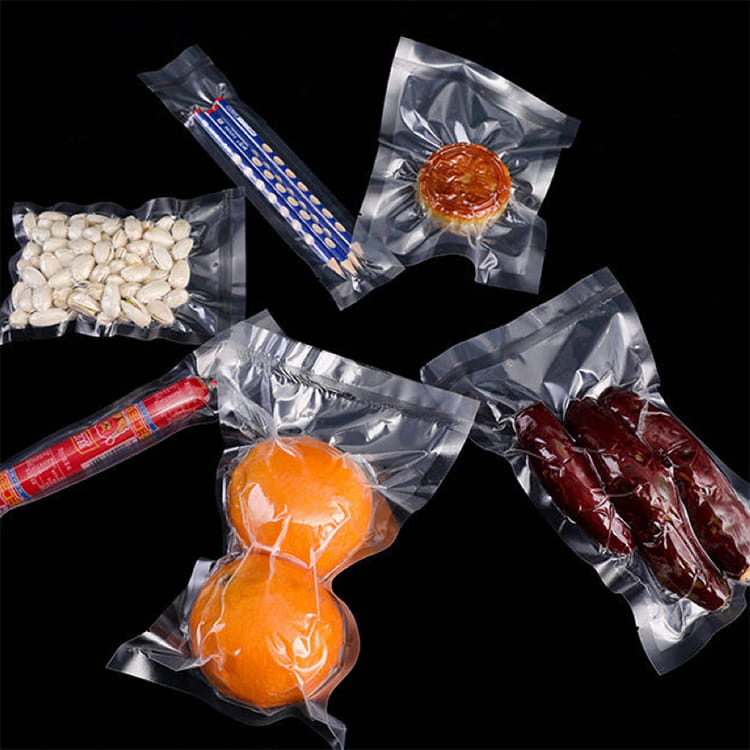 Food Grade 5-Layer Coextruded High Barrier Packaging FilmA five-layer co-extruded film with a high-barrier core that blocks oxygen, moisture, UV, and odors for food and pharmaceuticals. As the first of the three starting platforms, it shows how a balanced 5-layer structure can serve oxygen-sensitive projects well.View Product →
 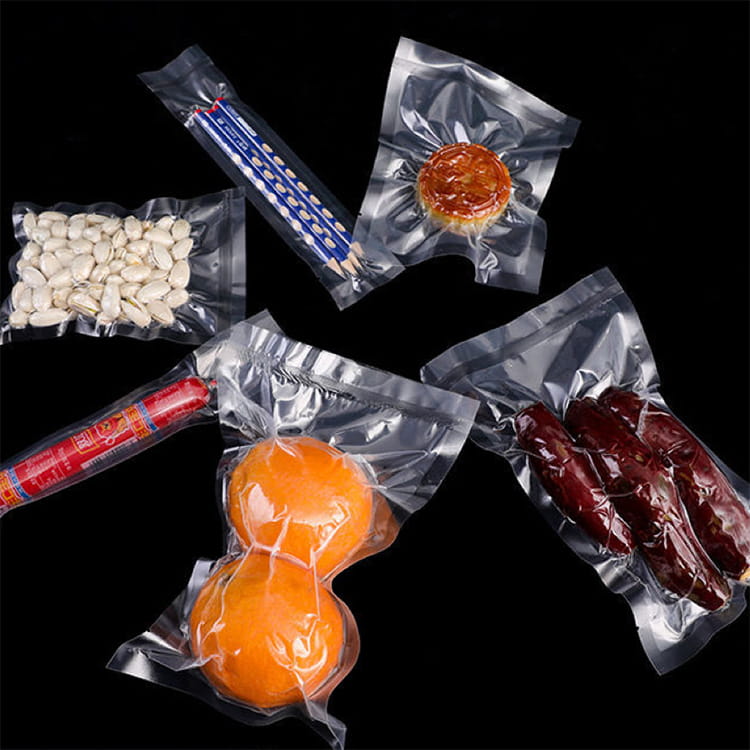 Food Safety 7-Layer Transparent Co-Extruded Packaging FilmThis 7-layer film combines PA, PE, PP, TIE, and EVOH to deliver strong oxygen and water-vapor barrier, puncture resistance, and reliable heat sealing. It represents the mid-tier platform option for oxygen-sensitive packaging projects needing transparency.View Product →
 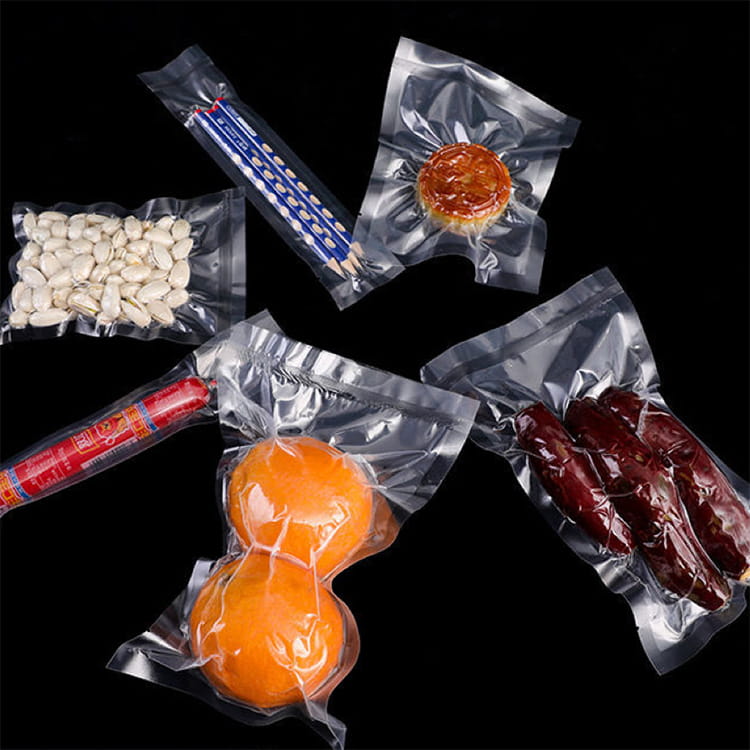 9-Layer EVOH High Barrier Forming Film for Food PackagingA 9-layer co-extruded forming film with an EVOH core offering maximum barrier against oxygen and moisture, plus strength and thermoforming compatibility. Featured here as the third platform for demanding oxygen-sensitive applications.View Product →
Layer count is not a scoreboard. A well-balanced 5-layer EVOH structure can outperform a poorly specified 9-layer one, which is why the datasheet review in Step 2 always comes before this decision.
Validate Before You Commit to Volume
Documentation separates a film that works from a film that merely photographs well in a catalog. Before signing a supply agreement, work through this list:
- Food-contact compliance: request declarations for your target markets, such as FDA food-contact listings for the United States and EU plastics food-contact declarations for Europe.
- Batch-level evidence: ask for certificates of analysis showing actual OTR, WVTR, thickness and seal-strength values per lot — not just specification ranges.
- A pilot on your own line: verify the sealing window at your machine's speed, check deep-draw behavior if thermoforming, and inspect seals after drop and transport simulation.
- Hygiene and traceability: confirm the production environment's food-safety credentials and that each finished roll can be traced back to raw-material lots.
- Agreed tolerances: fix thickness, width and barrier tolerances in the contract so incoming inspection has an objective basis for acceptance.
Supplier breadth matters here as well. A maker that controls extrusion, slitting and bag conversion on one site can adjust structure, width and sealant formulation without routing your project through three separate vendors. Browsing Changxi Packaging's complete co-extruded film portfolio shows how barrier grades, PA/PE and PA/PP pairings, thermoforming films and finished bags connect within a single production system — a useful benchmark when you sit down to compare quotations.
Frequently Asked Questions
Q1: What OTR do I need for a 12-month ambient shelf life?
For oxygen-sensitive foods such as nuts, fried snacks or cured meats, buyers commonly screen for OTR at or below 1 cm³/m²·24h under realistic humidity conditions, then confirm with accelerated shelf-life testing. A film at 2 may still be sufficient for milder recipes or shorter claims — your own trial data decides.
Q2: Is a 9-layer film always better than a 5-layer film?
No. Extra layers add structural freedom, but balance matters more than count. Compare verified barrier data and process fit first; layer count should follow from those requirements rather than lead them.
Q3: Does humidity really weaken EVOH barrier performance?
Yes. EVOH's oxygen barrier degrades as relative humidity rises, which is why datasheets measured only at 0% RH can overstate real-world performance for wet or retorted foods. Request high-humidity data and look for structures that shield the EVOH core between hydrophobic layers.
Q4: How do I decide between PA/PE and PA/PP films?
Follow your thermal process. PA/PE suits chilled, frozen and pasteurized applications; PA/PP is the standard pairing where retort temperatures near 121°C are involved. Seal-bar compatibility also differs, so include your line operators in the pilot run.
Choosing a high barrier film is a sequencing exercise. Name the failure mode, set OTR and WVTR targets with test conditions attached, pick a structure that matches your thermal and forming process, then validate on your own line before the first volume order. Buyers who keep that order rarely pay twice — once in rejected film and again in returned product.