

 English
 عربى


A packaging team comparing quotes for the same six-pack usually sees PVC shrink film at a lower price per kilogram and POF, the polyolefin option, at a higher one. PVC wins the first meeting and often loses by the third month, once the shrink tunnel has been re-set, the sealing jaws have started to corrode, and a retailer has asked for written confirmation that the packaging contains no PVC.
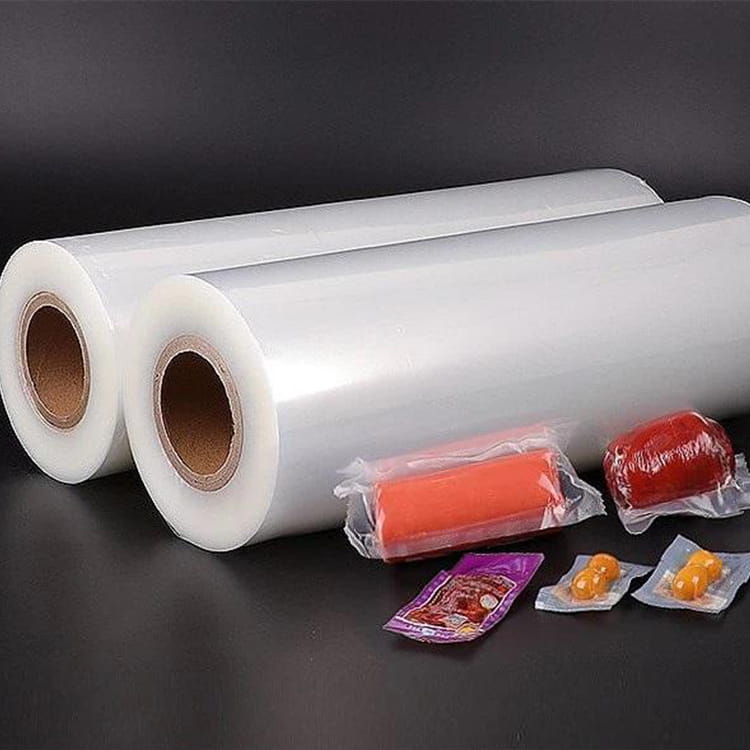
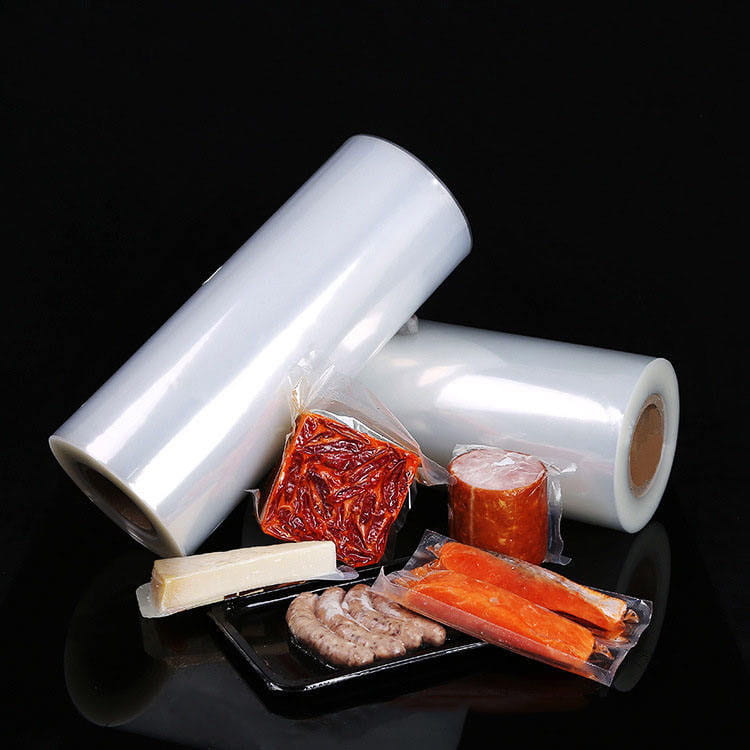
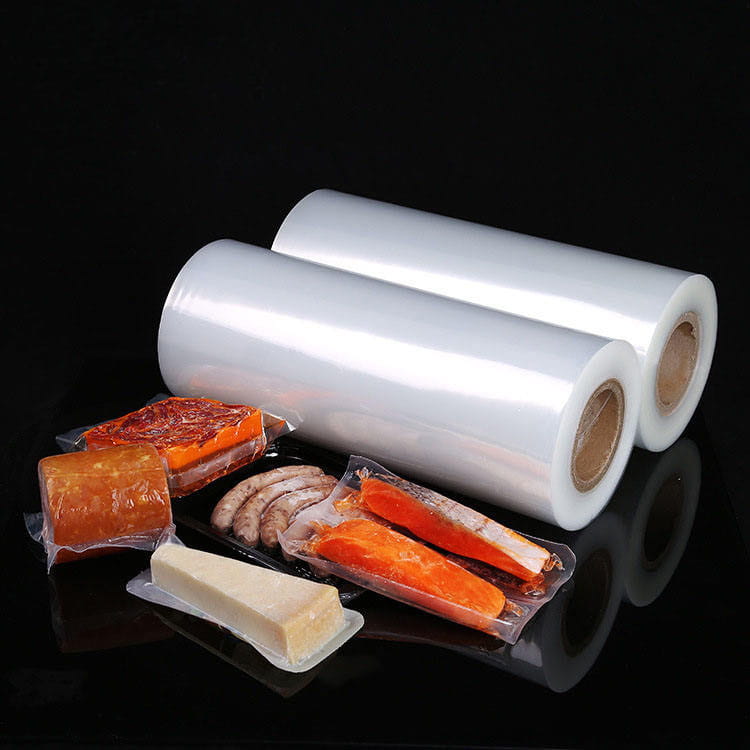
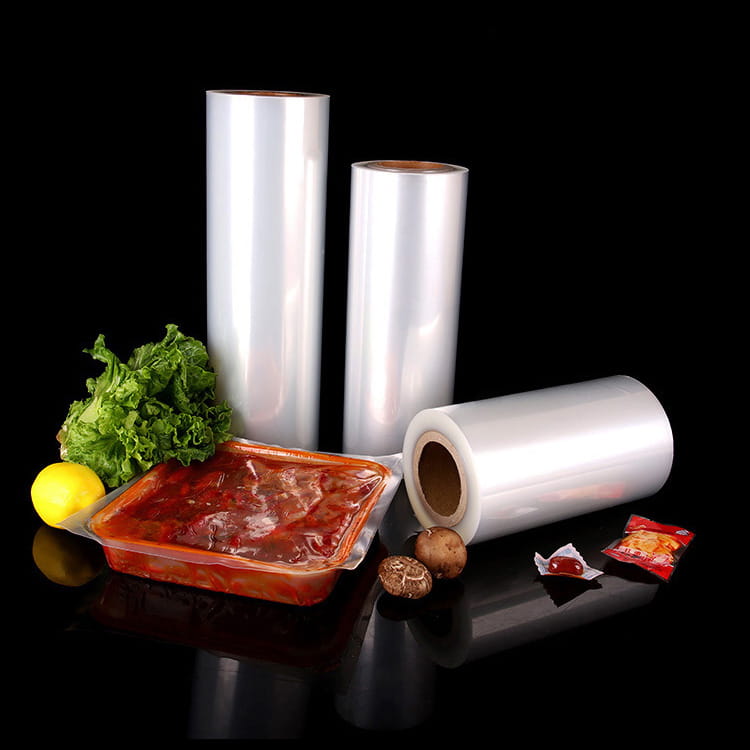
The short answer: POF is a chlorine-free, plasticizer-free film coextruded from polyethylene and polypropylene; PVC is a vinyl film made flexible with plasticizers. POF is the safer default for food, retail multipacks and anything that may be recycled alongside polyethylene, and it usually produces the tighter, stronger pack. PVC keeps a genuine role where the tunnel cannot reach about 150 °C, where a stiff, glass-clear wrap with crisp edges is wanted, or where the item is not food and cost per kilogram is the only number on the scorecard.
POF vs PVC Shrink Film at a Glance
The table below gathers the differences that matter in practice. Values are typical ranges for standard grades, so your supplier's datasheet and a trial on your own line always take precedence.
| Property | POF (polyolefin) | PVC (polyvinyl chloride) |
|---|---|---|
| Base polymer | Polyethylene and polypropylene layers | PVC resin with plasticizers and stabilizers |
| Chlorine content | None | Present in the polymer itself |
| Density | About 0.92 g/cm³ | About 1.35 to 1.40 g/cm³ |
| Common gauge | 12 to 30 µm | 12 to 25 µm |
| Shrink ratio | Up to 60 to 75%, usually balanced | Up to 40 to 60%, often stronger in one direction |
| Shrink tunnel range | About 145 to 175 °C | About 120 to 150 °C |
| Barrier to moisture, oxygen and odor | Higher | Lower |
| Seal window | Wider, but needs a hotter jaw | Narrower, seals at lower temperature |
| Film feel | Stretchy and puncture resistant | Stiff, brittle, crisp |
| Food contact | Widely accepted, low odor | Depends on plasticizer and local rules |
| Recycling | Compatible with PE film streams | Not compatible with PE recycling |
| Price | Higher per kilogram, close per square meter | Lower per kilogram |
Why the Two Films Shrink Differently
Both films are stretched during production so the polymer chains stay frozen in an oriented state. Heat releases that orientation and the film contracts. What the polymer is made of decides how hard it pulls and how long that pull lasts.
PVC depends on plasticizers
PVC resin is rigid on its own, so formulations add plasticizers plus stabilizers and lubricants. Plasticizers soften the film at low temperature, which is why PVC begins to shrink around 120 to 150 °C and runs happily on older tunnels. Those plasticizers are not chemically bound into the polymer, so they can migrate over time. That is why PVC film carries a noticeable odor, why packs can loosen in a warm warehouse, and why food-contact rules restrict which plasticizers are permitted in different markets.
POF depends on coextrusion and orientation
POF is coextruded from polyethylene and polypropylene layers and then oriented. High-shrink grades are usually crosslinked with an electron beam, which links the chains into a loose network that remembers the orientation. The film therefore pulls back harder and keeps that tension instead of relaxing. The underlying mechanics are covered in this explanation of how heat and tension drive shrink wrap.
What Changes When You Switch Film on an Existing Line
- Tunnel temperature and dwell. PVC typically runs at 120 to 150 °C; POF usually needs 145 to 175 °C with a slightly longer dwell or a preheat zone. A tunnel sized for PVC may need new elements or a slower line speed.
- Sealing. PVC seals at a lower temperature with a short dwell, but the window is narrow. POF needs a hotter jaw and a clean, well-cooled seal, yet tolerates a wider range of settings before burn-through or weak seals appear.
- Machine condition. Overheated PVC releases hydrogen chloride, which attacks sealing jaws, tunnel walls and sensors, so extraction and cleaning are not optional. POF leaves no corrosive residue.
- Appearance and damage rates. PVC is stiff and brittle, giving crisp corners and packages that open easily. POF stretches and resists punctures, conforming to odd shapes with fewer rejects.
- Storage. PVC film can continue to relax after packing; POF holds its tension, which matters when goods sit in a warm truck.
Food Contact, Odor and Retailer Requirements
POF contains no chlorine, no phthalate plasticizers and very little odor, so it is accepted almost everywhere as a food-contact and secondary food packaging film. PVC is not automatically unsuitable, but the answer depends on which plasticizer was used and which market you sell into. Several phthalates are restricted for food contact in the European Union, and a growing number of retailers simply refuse PVC packaging in their specifications.
It also helps to separate what shrink film does from what it cannot do. Shrink film holds a pack together, protects it from handling and improves shelf presentation. It is not a barrier layer, so shelf life still comes from the primary package.
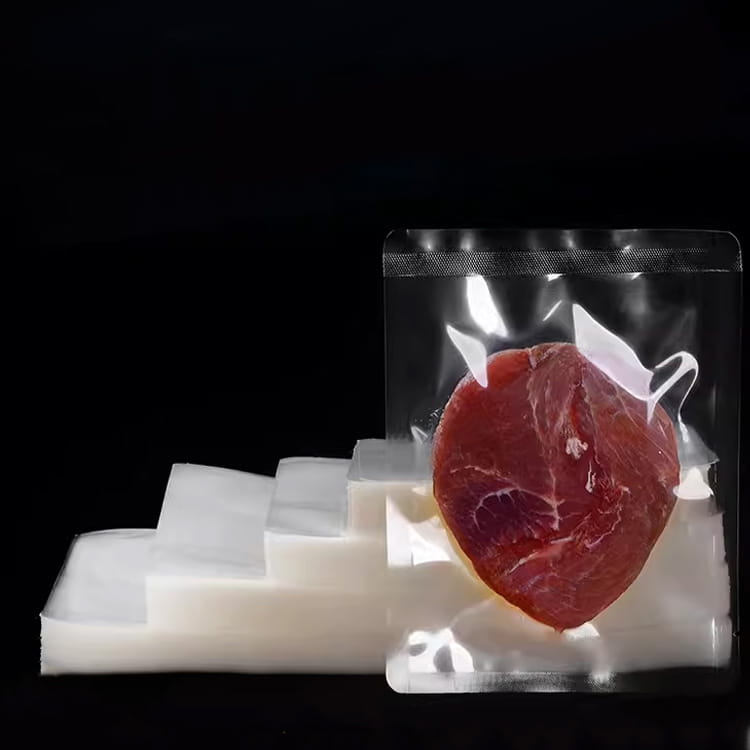 Fresh Food High-Barrier PE/PA Vacuum Sealer BagFor vacuum sealing where shrink film cannot provide an oxygen or moisture barrier, this PE/PA bag suits fresh foods, meats and seafood.View Product →
Compare Cost per Square Meter, Not per Kilogram
PVC is cheaper per kilogram, and it is also roughly 50% denser than POF, so a kilogram of PVC covers far less area at the same gauge. Work the numbers once and the gap shrinks sharply.
0.92 g/cm³
Typical POF density
1.35–1.40 g/cm³
Typical PVC density
≈ 50%
More square meters per kilogram with POF
Take a 19 µm film. One kilogram of PVC at 1.38 g/cm³ covers roughly 38 m²; one kilogram of POF at 0.92 g/cm³ covers roughly 57 m². At USD 2.20 per kilogram for PVC and USD 3.30 for POF, both land close to USD 0.06 per square meter. The kilogram price looks like a 50% penalty, while the real cost of wrapping the same pack is nearly identical.
Then add what never appears on the quote: scrapped packs while settings are dialled in, downtime for tunnel adjustments, and specification changes demanded by a retailer. A film that runs at 2% waste instead of 6% usually beats a small difference in price per kilogram.
Recycling and End-of-Life
POF is a polyolefin film, so it is broadly compatible with polyethylene film recycling streams. The exception is crosslinked grades, which cannot easily be remelted and should be checked with the recycler before any claim is published. PVC sits at the other end of the scale: the chlorine in the polymer makes it unsuitable for PE recycling and hard to sort, and it raises concerns in incineration. Its plasticizers add a second complication. For brands with published packaging commitments, PVC usually appears on the prohibited list and POF does not.
Where Shrink Film Is the Wrong Answer
Neither POF nor PVC extends shelf life on its own. Their moisture and oxygen transmission rates are far higher than those of engineered barrier films, so they cannot protect oxygen-sensitive or moisture-sensitive products. When a pack needs a real barrier, such as frozen meat, processed cheese, ready meals or nuts, the right comparison is between multilayer coextruded films rather than between two shrink films. A 7-layer structure with EVOH or PA layers, or a thermoforming web sealed to a lidding film, does the job shrink film cannot.
 7-Layer Co-Extruded High Barrier Packaging FilmWhen a pack needs a real barrier, this PA/PE/PP/TIE/EVOH multilayer film provides oxygen and moisture protection for food and other sensitive products.View Product →
How to Choose in Five Minutes
- Is the pack food, or will it be recycled with polyethylene? Choose POF.
- Does the tunnel top out below about 150 °C with no upgrade path? PVC may be the only film that shrinks properly, so confirm extraction and local restrictions first.
- Do you need a stiff, glass-clear sleeve or a tamper-evident band on a non-food item? PVC still fits, provided compliance allows it.
- Do you need shelf life rather than containment? Shrink film is the wrong category; specify a coextruded barrier film or a vacuum pack.
- Do you need a formed tray for protein, dairy or ready meals? The decision moves to the forming web and its barrier performance.
On form-fill-seal lines the forming web is what carries the barrier, and it is selected on draw depth, sealing layer and barrier level rather than on shrink behaviour.
 Custom 7-Layer Low-Temperature PA/PE Co-Extruded FilmA low-temperature PA/PE thermoforming film that combines gas barrier, toughness and delamination resistance for freeze-dried foods and vacuum-sealer bags.View Product →
Frequently Asked Questions
Q1: Is POF just another name for polyolefin shrink film?
Yes. POF stands for polyolefin film, and the name covers grades built from polyethylene and polypropylene. Crosslinked POF delivers higher shrink force for demanding shapes; non-crosslinked grades are easier to reprocess but pull with less force.
Q2: Can I run POF and PVC on the same machine?
Usually yes, but not on the same settings. Expect a higher tunnel temperature and a different jaw temperature for POF, plus proper fume extraction whenever PVC runs. Test both films on the same product before committing to a switch.
Q3: Which film has the higher shrink ratio?
POF, in most cases. Balanced POF grades reach roughly 60 to 75% in both directions, while PVC commonly reaches 40 to 60% and often shrinks more strongly in one direction. Shrink force and how long it lasts matter more than the headline percentage, because they decide whether a pack is still tight after a month.
Q4: Is PVC shrink film safe for food?
It depends on the plasticizer and the market. Some phthalate plasticizers are restricted for food-contact use in the European Union, and retailer policies vary. POF avoids the question entirely because it contains no chlorine and no plasticizer.
Treat the choice as a packaging decision rather than a film purchase. Write down the product, the packing temperature, the shelf life required, the recycling route and the retailer's material policy, and the POF versus PVC question usually answers itself. Where the answer turns out to be neither, the specification should point to a coextruded barrier structure or a vacuum pack instead.