

 English
 عربى
عربى


When you receive a film quotation and see "custom gauge film thickness" listed, it is easy to assume this is just a technical filler. But the gauge number, usually expressed in mils, microns, or "gauge," is the single most important parameter that controls how your package performs. In the barrier film industry, one simple fact remains constant: thickness drives oxygen and water vapor barrier, puncture resistance, heat-seal performance, and total material cost. If you specify a lower gauge than your product needs, you risk rejecting product early. If you specify too high, you pay for performance you never use. With coextruded flexible packaging, custom gauge film thickness is a tool for matching those two risks, not a vague spec.
What Does "Gauge" Actually Measure?
In North American film packaging, "gauge" is a non-SI unit. One mil equals 0.001 inch, and 100 gauge equals 1 mil. Therefore, one gauge equals 0.01 mil, which equals 0.254 microns. When someone asks for a "90 gauge film," they mean 0.9 mil or 22.9 microns. A "200 gauge" film would be 2.0 mil or 50.8 microns.
Because the term "gauge" is not standardized across all regions, custom gauge film thickness often requires a conversion table. This is especially important when your supplier works in metric and your specification sheet uses imperial units.
| Gauge | Mil | Microns |
|---|---|---|
| 50 | 0.5 | 12.7 |
| 90 | 0.9 | 22.9 |
| 100 | 1.0 | 25.4 |
| 150 | 1.5 | 38.1 |
| 200 | 2.0 | 50.8 |
Note that these values are nominal thickness. In actual production, variation across the roll can cause real performance differences. For a deeper look at how barrier films are structured, see our article on how coextruded high barrier films out perform standard pouches.
Why Custom Gauge Matters in Barrier Film Performance
In multilayer coextruded films, the total gauge is not just a thickness number; it impacts oxygen transmission rate (OTR), water vapor transmission rate (WVTR), mechanical toughness, and seal integrity. For example, increasing the total thickness of a 7-layer film from 50 microns to 80 microns will generally lower its OTR, but it also increases cost. Custom gauge lets you dial in the right point between protection and budget.
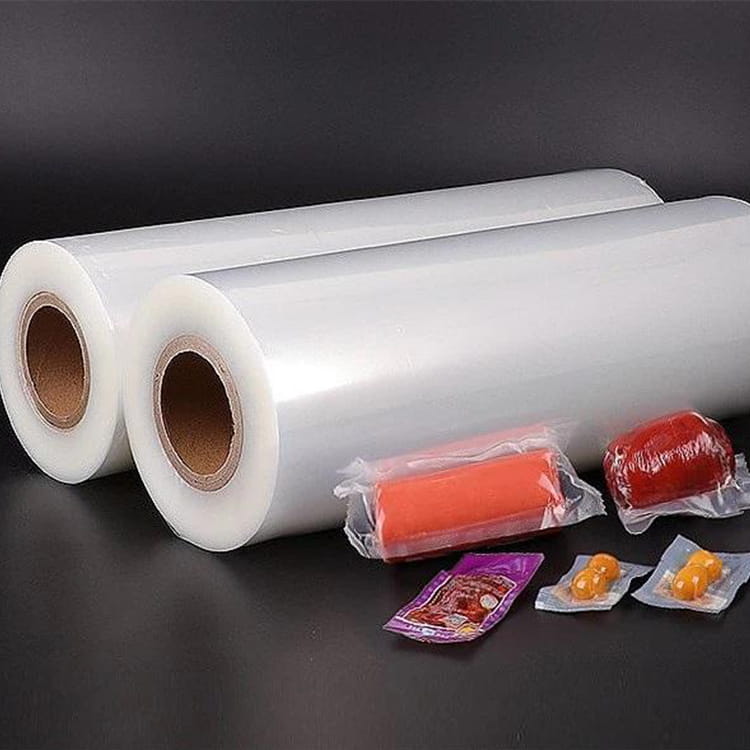
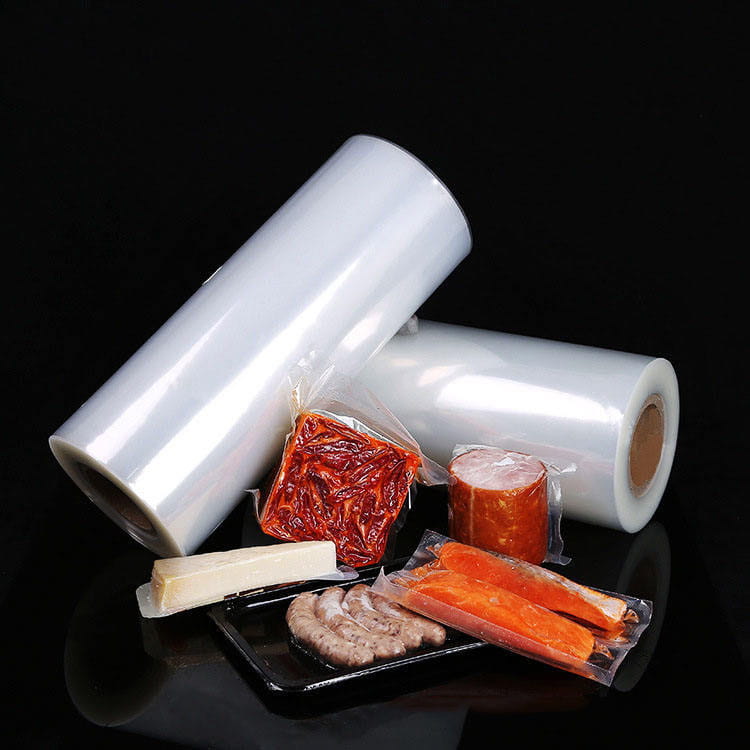
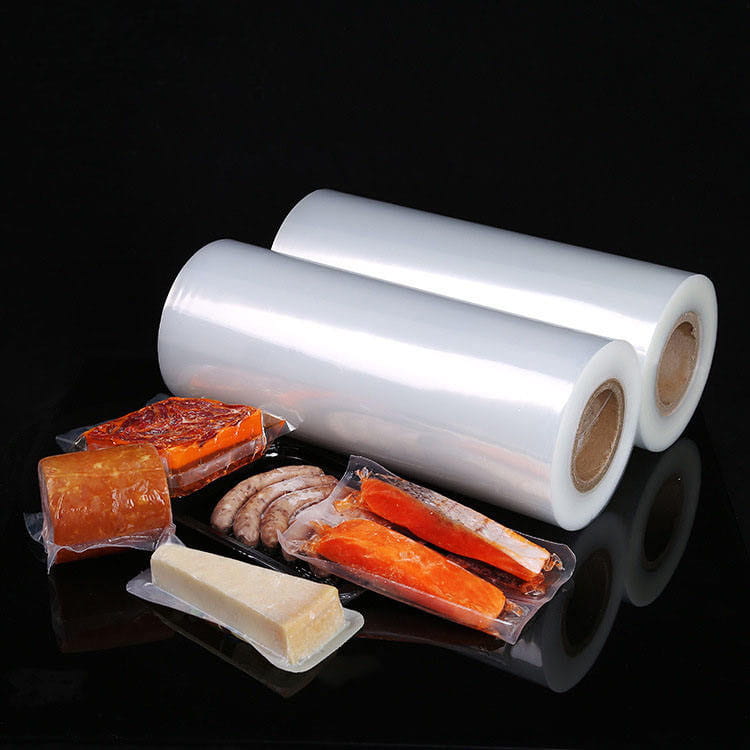
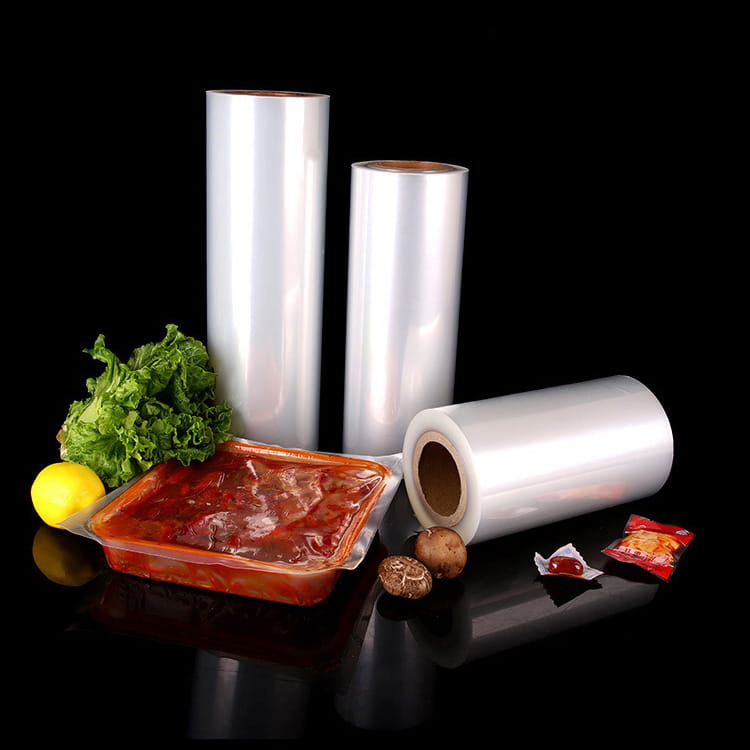
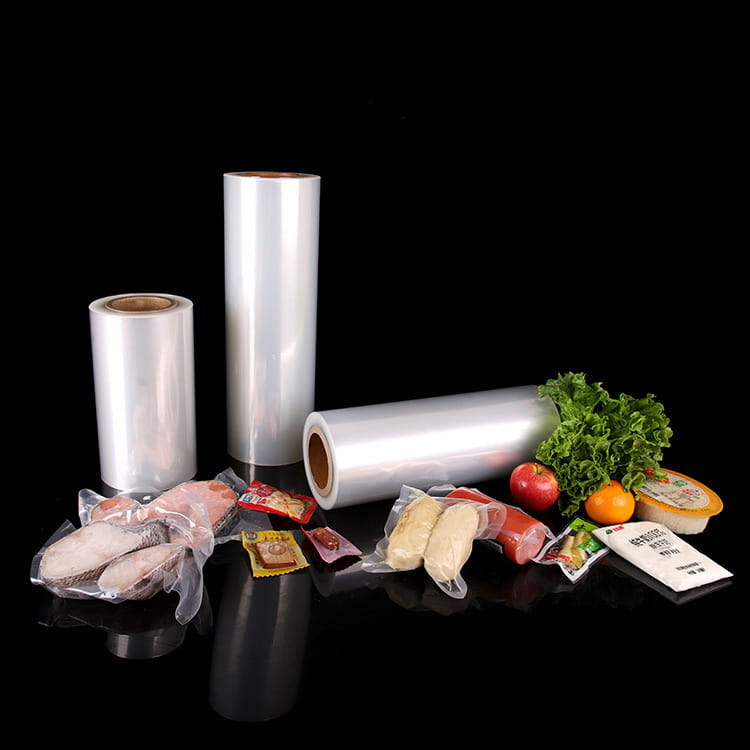
Our 7-layer coextruded high barrier film can be produced in custom gauges to match different oxygen and moisture requirements. For high-barrier applications such as meat, cheese, or electronic components, a thicker gauge often provides a more comfortable safety margin.
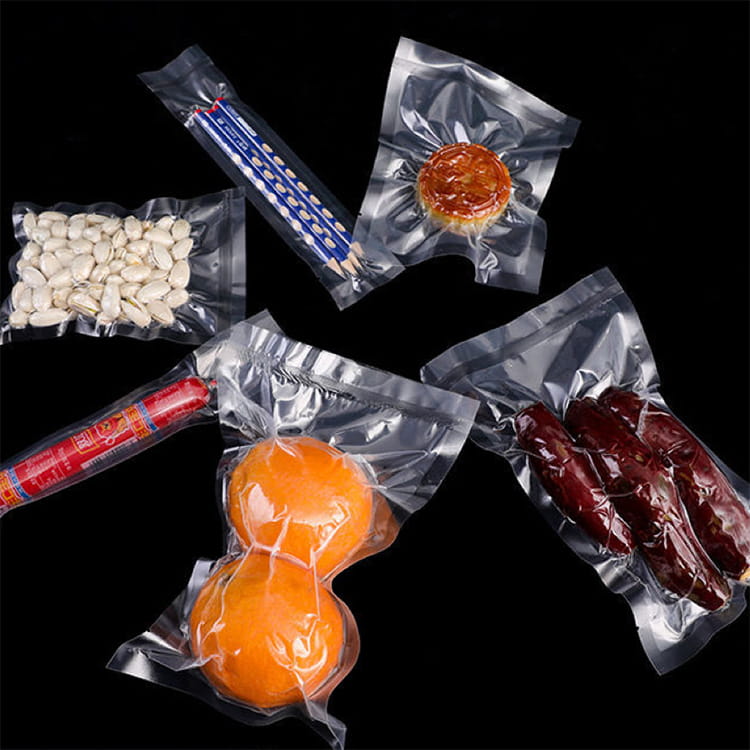 7-Layer Transparent Co-Extruded Film with EVOH Barrier for Food PackagingThe 7-layer structure includes EVOH for oxygen and moisture barrier, plus PA and PP for strength. Adjustable thickness ensures reliable protection for sensitive contents. Its transparency enhances product appeal.View Product →
But thickness alone is not enough. The distribution of gauge across the web, both machine direction and cross direction, affects how uniformly the barrier works. A film with a nominal 100 micron thickness but 15 micron variation may perform far worse than a 90 micron film with 3 micron variation.
How to Specify the Right Custom Gauge for Your Application
Start with the content and the process. If you pack food that will be retorted or hot-filled, you need a film that withstands high temperature. Our 7-layer symmetric PA/PP high-temperature film can be produced in custom gauges to handle those conditions. On the other hand, for cold-chain and refrigerated products, a low-temperature asymmetrical PA/PE low-temperature film with a thinner gauge may be the better choice for sealing efficiency and cost.
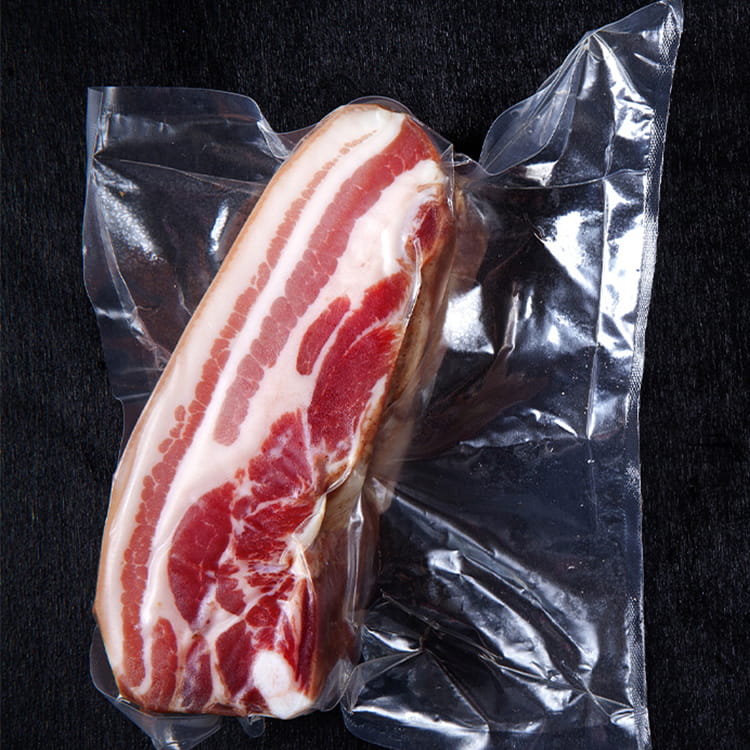 Puncture-Proof 7-Layer Vacuum Sealer Bag Roll for Heavy-Duty UseReinforced 7-layer design with PA and PE layers offers impact resistance and low-temp tolerance. Suitable for vacuum sealing meat, cheese, and other items, extending freshness against freezer burn.View Product →
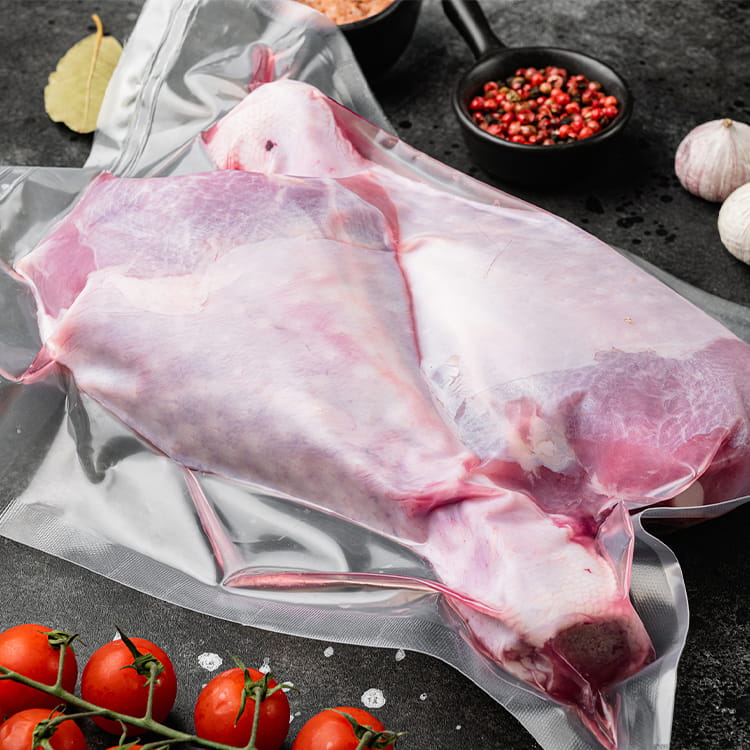 High-Temperature Resistant 7-Layer Retort CPP Film for SterilizationThis film withstands retort and microwave temperatures, with PA core and PP layers. Ideal for high-temperature food processing and packaging, maintaining barrier and integrity under heat.View Product →
Then ask about mechanical stress. A heavier product like meat with bones needs more puncture resistance, usually a thicker gauge. A lighter snack product may only need a barrier layer that is thick enough to protect against oxidation.
Use a simple checklist before placing a custom gauge order:
- Target OTR and WVTR values in g/m2/24h
- Sealing temperature window, whether low-temp or high-temp
- Mechanical handling: drop tests, vacuum dwell time, transit vibration
- Cost per unit and material yield
Measuring and Verifying Custom Gauge Consistency
Custom gauge is only useful if it is consistent across the roll. In multilayer coextrusion, small fluctuations in melt pressure, die lip opening, and line speed can create thickness variations. Both machine direction (MD) and cross direction (CD) variation matter. A common method for verification is a scanning thickness gauge that measures the film continuously on the production line. Offline sample testing is also used, often following ASTM D8136 for the measurement of plastic film thickness.
For buyers, ask for the following data: average gauge, MD gauge spread, and CD gauge spread. The best suppliers can show a thickness profile, not just a nominal value.
Note that custom gauge also affects the gauge of each individual layer in a coextruded structure. A 7-layer film with a total custom thickness can still have a different ratio of PA to EVOH to PE. This has a direct impact on barrier and stiffness. It is not something you can see with a nominal gauge number.
Common Misconceptions About Custom Gauge Thickness
There are three common misunderstandings that can cause packaging failures:
- Nominal gauge means actual gauge. A quotation of 90 gauge should not be read as guaranteed 0.9 mil everywhere. Actual thickness can vary across the roll.
- Gauge alone determines barrier. In a multilayer film, layer distribution, resin selection, and sealant materials matter just as much as total thickness.
- Same gauge spec for different film types. A 100 gauge PE film and a 100 gauge PA/PE film behave very differently in stiffness, puncture, seal strength, and barrier. Do not transfer a gauge spec from one film recipe to another without testing.
Frequently Asked Questions
Q1: What does "custom gauge film thickness" mean?
It means the film is manufactured to a specified thickness or gauge range that is tailored for your application, rather than being limited to a standard catalog value.
Q2: How do I convert gauge to microns?
Multiply the gauge number by 0.254 to get microns. Or divide microns by 0.254 to get gauge. For example, 90 gauge equals 22.86 microns.
Q3: What gauge should I use for vacuum packaging of meat?
For most meat applications, a gauge between 80 and 120 microns, roughly 315 to 470 gauge, is common with a high-barrier coextruded film. But your specific meat type, processing temperature, and shelf life goal will determine the final value.
Q4: Can I specify different gauges for different layers in the same film?
Yes. In a custom coextruded film, each layer can be tailored. This allows you to adjust the barrier layer thickness independently of the seal and strength layers.
Q5: How does custom gauge affect the cost of the film?
Thicker film requires more raw material, so material cost typically increases. But a custom gauge can also save money by eliminating over-specification, making it a cost-control tool when properly chosen.
The most reliable way to choose a custom gauge film thickness is to bring your product's real requirements to a film supplier who understands multilayer coextrusion. Start with the barrier target, sealing temperature, physical stresses, and retail shelf life. Then ask for a thickness profile and a sample for testing. That is how you turn a vague spec into a packaging solution that performs.