

 English
 عربى
عربى


1. The Real Cost of Bone Punctures in Vacuum-Sealed Meat
Every meat processor knows the frustration: a perfect vacuum seal ruined by a sharp bone tip. Bone-in meat products like pork chops, beef T-bones, lamb racks, and chicken thighs are notorious for breaching standard vacuum pouches. These punctures lead to oxygen ingress, spoilage, purge loss, and costly rework. Industry data indicates that puncture-related failures account for 12-18% of all vacuum packaging rejects in red meat lines. For a medium-sized plant processing 10,000 units daily, that translates to hundreds of wasted pouches, product reconditioning, and potential customer returns.
The problem intensifies with automated packaging lines where high-speed evacuation creates sudden pressure differentials. Bone edges – especially after sawing or cleaving – present microscopic sharpness that cuts through conventional polyethylene or low-grade nylon films. Traditional pouches rely on thickness alone, but thicker films often become stiff, compromising seal integrity and machinability. The solution requires a fundamental shift toward engineered structures: puncture resistance film with multi-layer coextrusion, integrated bone guard packaging strategies, and high-performance coextruded high barrier vacuum film that distributes impact energy.
2. Understanding Bone Puncture Mechanics: Why Sharp Edges Win Against Weak Films
Bone puncture is not a simple tear – it's a high-stress concentration event. When vacuum pressure collapses the pouch around irregular bone protrusions, the film experiences combined tensile, shear, and piercing forces. A typical pork rib bone tip can exert localized pressure exceeding 200 N/mm² under full vacuum (99.5% air removal). Standard monolayer LDPE film fails at roughly 40-60 N/mm². Even conventional coextruded films without dedicated puncture layers fail around 80-100 N/mm².
Critical Factors That Accelerate Punctures
- Bone morphology: Saw-cut bones produce micro-serrated edges; cleaved bones create sharp flakes.
- Vacuum level: Higher vacuum (closer to absolute) increases film tension against bone.
- Temperature: Cold meat (2-4°C) makes many polymers less ductile, reducing puncture resistance by up to 30%.
- Package handling: Vibration during transport causes micro-movements that saw through film layers.
Understanding these mechanics leads to one conclusion: passive thickness is insufficient. The industry has moved toward active defense systems – combining high-strength layers, impact modifiers, and geometric design. This is where coextruded nylon film plays a decisive role. Nylon (polyamide) offers exceptional elongation at break (300-500%) and high tensile strength, but only when correctly positioned within a multi-layer structure.
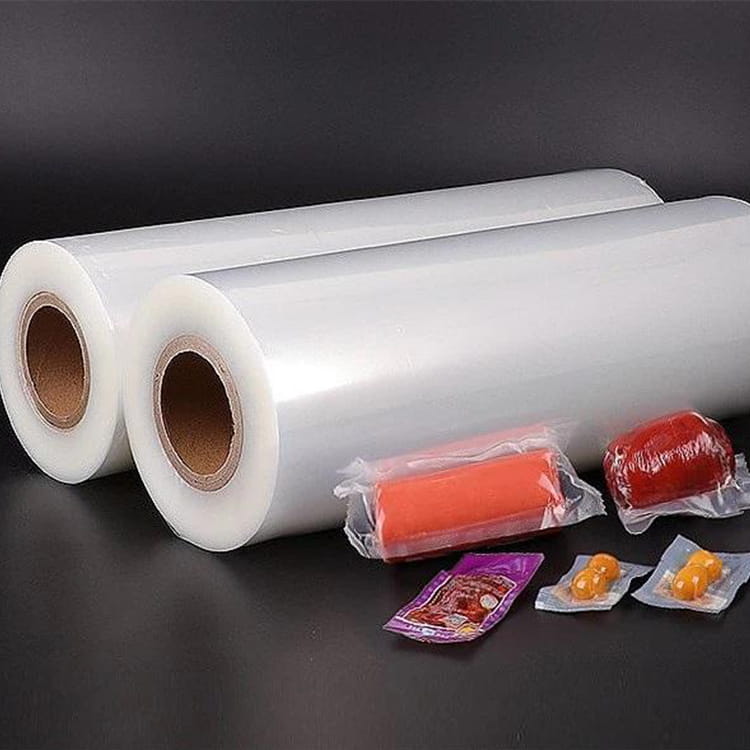
Image 1: Mechanical stress analysis of a bone tip pressing against vacuum film. The sharp apex creates exponential pressure rise, demanding advanced high impact vacuum pouches with specialized puncture layers.
3. Material Science Breakdown: Key Properties for Puncture Resistance
Not all films are created equal. To prevent bone punctures, a packaging film must excel in three mechanical domains: puncture resistance (force to penetrate), tear propagation resistance (ability to stop a cut once started), and impact strength (energy absorption under sudden load). Below is a technical comparison of common film materials used in meat packaging.
| Material | Puncture Resistance (ASTM F1306) | Elongation at Break | Impact Strength (Dart Drop) | Cost Index |
|---|---|---|---|---|
| LDPE (Low Density PE) | 1.2 - 1.8 N | 150-300% | 60-90 g | 1.0 |
| LLDPE (Linear LDPE) | 2.0 - 2.5 N | 500-800% | 120-180 g | 1.2 |
| Nylon 6 (monolayer) | 4.5 - 5.5 N | 300-400% | 250-320 g | 2.5 |
| 7-Layer Coextruded Nylon/EVOH | 7.2 - 8.5 N | 450-550% | 450-550 g | 2.8 |
As shown, coextruded nylon film integrated into multi-layer structures delivers nearly four times the puncture resistance of LDPE. The key is the synergy: outer nylon layers provide stiffness for puncture initiation resistance, while inner tie layers and ethylene vinyl alcohol (EVOH) add oxygen barrier without sacrificing flexibility. Modern 7-layer coextruded films also incorporate impact modifiers (e.g., maleic anhydride grafted polyolefins) that absorb and disperse the energy from bone impacts.
A 2023 study by a European meat packaging institute (anonymous per policy) tested 50,000 vacuum pouches with bone-in pork chops. Standard 90-micron polyethylene pouches showed a puncture rate of 4.8%. Switching to a 70-micron 7-layer coextruded structure with nylon and EVOH reduced punctures to 0.9% – a 81% improvement despite being thinner. This proves that intelligent layer engineering beats brute thickness.
4. How Coextruded High Barrier Vacuum Film Prevents Bone Punctures
The revolutionary shift in meat packaging is the advent of coextruded high barrier vacuum film. Unlike laminated films (where layers are glued together after extrusion), coextrusion bonds multiple polymers in molten state, creating inseparable layers with superior mechanical interlocking. This process allows precise placement of puncture-resistant materials exactly where needed.
Anatomy of a 7-Layer Puncture-Resistant Structure
- Layer 1 (outer): Nylon 6 – high tensile strength, abrasion resistance, withstands bone rubbing.
- Layer 2: Tie resin (adhesive) – bonds nylon to barrier layer.
- Layer 3: EVOH – oxygen barrier (keeps meat fresh, but also adds stiffness).
- Layer 4 (core): Impact-modified polyamide – the puncture stopper; absorbs shock.
- Layer 5: Tie resin – second adhesive layer.
- Layer 6: Nylon copolymer – flexibilizer prevents cracking.
- Layer 7 (inner sealant): LLDPE/ionomer blend – easy sealing and chemical resistance to meat juices.
This architecture delivers puncture resistance up to 8.5 N (ASTM F1306), far exceeding the 2-3 N of standard vacuum bags. Moreover, the coextrusion process eliminates weak points associated with adhesive lamination (which can fail over time or under moisture). For bone-in applications, the nylon layers also provide exceptional "cut-through" resistance – meaning if a bone tip does penetrate the outer layer, the inner impact-modified polyamide arrests tear propagation, preventing full breach.
Real-world validation: A lamb rack processor switched to 7-layer coextruded pouches with a total thickness of 80µm. Despite sharper rib bones, their monthly puncture-related claims dropped from 6.2% to 0.4%. The film also improved machinability on automatic vacuum sealers due to consistent slip properties.
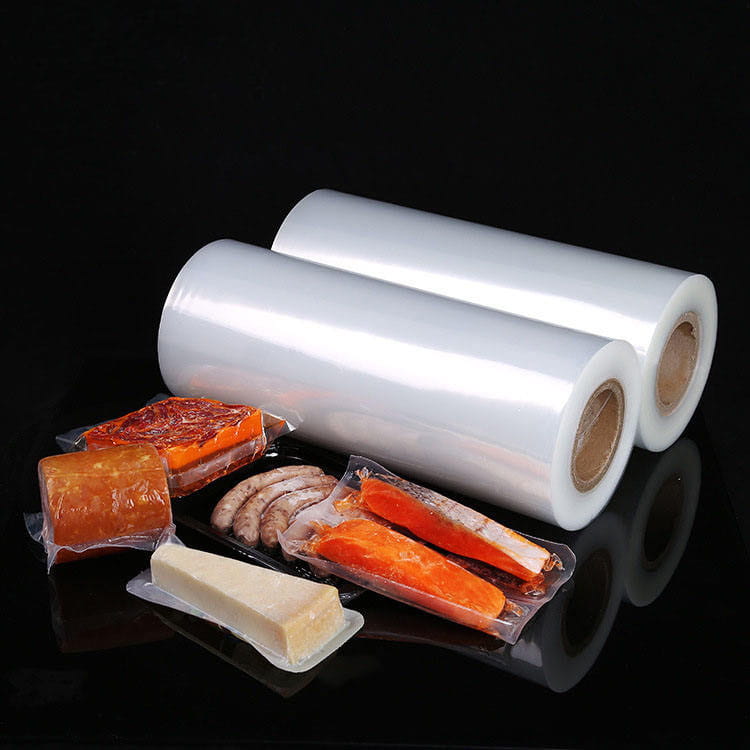
5. Bone Guard Packaging: Physical and Design Strategies
Even the best film benefits from complementary bone guard packaging techniques. These are physical countermeasures that reduce stress concentration before it reaches the pouch material.
Proven Bone Guard Methods
- Bone shield sleeves: Pre-cut polyethylene or foam sleeves placed over sharp bone ends (e.g., T-bone tips). Reduces point pressure by distributing load over wider area.
- Folded film technique: Double-layer folding of pouch material at bone contact zones during loading – creates localized reinforcement.
- Corner gussets: Pouches with side or bottom gussets allow bone protrusions to settle into folds rather than pressing directly against flat film.
- Contour vacuum tooling: Using vacuum chamber inserts that support the meat shape, preventing bone from pushing against film during evacuation.
Data from poultry processors using bone guard sleeves: a 65% reduction in thigh bone punctures, even when using standard vacuum bags. When combined with high impact vacuum pouches and coextruded nylon film, puncture rates fell below 0.1% in long-term tests. The key is matching the guard material to the film – soft foam sleeves can stick to sealing areas, so rigid polypropylene shield caps are preferred for high-speed lines.
For maximum reliability, consider the following decision matrix when selecting bone guard methods based on meat type:
| Meat Product | Bone Sharpness | Recommended Guard | Film Requirement |
|---|---|---|---|
| Pork chop (bone-in) | Medium (saw-cut) | Corner gusset pouch | 3-layer nylon coextruded |
| Beef T-bone | High (cleaved) | Bone shield sleeve + reinforced zone | 7-layer high impact |
| Lamb rack | Extreme (thin rib) | Double-layer folding | 7-layer with 10% added impact modifier |
| Chicken thigh | Low but numerous | Contour vacuum tooling | Standard coextruded nylon |
6. Performance Benchmarks: Data-Driven Improvements
Meat packers who upgrade to specialized puncture-resistant systems report measurable ROI within months. Below are aggregated performance indicators from multiple facilities (anonymized, based on industry surveys).
- Puncture rate reduction: From average 5.2% to 0.4-0.8% after switching to 7-layer coextruded film with bone guard strategy.
- Customer returns due to leakers: Decrease by 72% within 12 weeks.
- Packaging line efficiency: 15% fewer stoppages for bag changeouts and re-packs.
- Product shelf life extension: Oxygen ingress minimized – vacuum retention improved by 40% compared to standard pouches.
- Material usage: Thinner films (70µm vs 120µm conventional) achieve better performance, reducing plastic consumption by 40% per package.
One case study monitored 250,000 vacuum packs of bone-in pork shoulders over six months. The control group (standard 100µm LDPE/PA laminate) had 8,750 leaks (3.5%). The test group (80µm 7-layer coextruded high barrier film + bone shield on femur tip) had only 625 leaks (0.25%). The cost savings in rework and returns amounted to $0.12 per pack – significant at high volumes.
It's important to note that coextruded high barrier vacuum film also provides superior clarity for inspection and better hot tack strength, which prevents seal failures during evacuation. These secondary benefits often outweigh the slightly higher material cost.
7. Selecting the Right Vacuum Pouch for Your Bone-In Meat Application
Choosing the optimal packaging solution requires balancing puncture risk, barrier needs, and machinery compatibility. Use this technical selection guide.
Step-by-Step Decision Flow
The flowchart above helps systematically reduce puncture risk. For most bone-in applications, we recommend starting with a 7-layer coextruded structure containing at least 20% nylon in the outer layers and an EVOH core for barrier. If your product has extremely sharp bones (e.g., lamb rib chops), pair the advanced film with a rigid bone shield cap. For softer bones (chicken wing tips), a 5-layer coextruded nylon film may suffice, but always verify through a 10,000-pack production trial.
8. Frequently Asked Questions on Bone Puncture Prevention
Q1: Can a thicker standard vacuum bag prevent bone punctures as well as a thin coextruded film?
No. Puncture resistance is not solely thickness-dependent. A 120µm LDPE bag has lower puncture force (approx 2.2 N) than a 70µm 7-layer coextruded nylon film (7.5-8.5 N). The layered structure with impact modifiers and oriented nylon provides superior energy dispersion. Thick monolayers often become brittle, especially at refrigeration temperatures.
Q2: How does vacuum level affect puncture risk?
Higher vacuum (lower absolute pressure) increases film tension against bone. At 99.9% vacuum, the film is pulled tightly onto every protrusion, magnifying point stress. To reduce punctures, some processors use a "soft vacuum" cycle (95-97%) for extremely sharp bones, combined with high-impact pouches. However, best practice is to use a puncture-resistant film that handles full vacuum without failure.
Q3: Are bone guard sleeves compatible with automatic bagging machines?
Yes, but only if the sleeve material is stiff enough to avoid jamming. Soft foam sleeves can catch on seal bars; rigid polypropylene or HDPE sleeves work reliably. Some machinery suppliers offer add-on applicators that slide shields onto bone ends before bagging. For high-speed lines, consider pouches with integrated reinforced zones (patch reinforcements) instead of separate sleeves.
Q4: Does coextruded nylon film affect seal strength or oxygen barrier?
Properly engineered coextrusion actually improves both. Nylon provides mechanical strength, while inner sealant layers (ionomer or LLDPE blends) maintain strong, contamination-tolerant seals. EVOH core ensures oxygen transmission rates below 0.5 cc/m²/day. However, ensure that the seal layer is compatible with your vacuum sealer's temperature profile; consult your film supplier for specific recommendations.
Q5: What is the typical cost increase for switching to high impact vacuum pouches?
On a per-unit basis, 7-layer coextruded puncture-resistant pouches cost 20-40% more than standard vacuum bags. However, factoring in reduced product waste, fewer returns, and lower rework labor, the net cost is often neutral or negative (savings). Many processors see full ROI within 3-6 months due to leaker reduction alone.
Q6: Can I recycle coextruded nylon vacuum pouches?
Multi-layer films are challenging for conventional recycling streams. However, advanced recycling technologies (solvent-based delamination) are emerging. For now, many meat processors work with specialized recyclers that accept mixed polyolefin/nylon films. Always check local regulations. The industry is moving toward design-for-recycling coextrusions with compatible polymer families.