

 English
 عربى
عربى


When a pallet of boxed goods arrives with a corner torn open, the first suspect is usually the film gauge. In many cases, however, the real culprit is the process used to make the stretch wrap. Cast and blown stretch film can look identical on the roll, but they handle loads, machines, and budgets very differently. Here is a practical breakdown of what those differences mean before you place your next order.
What Is Cast Stretch Film?
Cast stretch film is produced by extruding molten resin onto a chilled roller. The fast cooling creates a smooth, uniform molecular structure. This process makes the film noticeably clearer and quieter when it unwinds, so it feels pleasant on a busy packing floor.
The main advantages of cast film include:
- Lower cost per roll because the process runs at high speed with fewer raw material additions.
- Excellent visual clarity, which helps with reading labels and checking pallet contents.
- Quiet unwind, a small but real benefit in warehouses where noise is monitored.
- Consistent thickness tolerance for uniform loads.
However, cast film has lower holding power and less puncture resistance. It has weaker film memory, meaning it is less likely to spring back after stretching. If the pallet has sharp corners or heavy, shifting products, cast film can fail before the load reaches the customer.
What Is Blown Stretch Film?
Blown stretch film is made by pushing molten resin through a circular die and inflating it into a bubble. The air cools the film more slowly, which gives the polymer chains more time to relax. The result is a stronger, tougher structure with high puncture resistance and superior load retention.
Blown film also has better film memory, so it continues to grip the load after stretching. It is the go-to choice for irregular pallets, heavy drums, and sharp-edged cartons. The trade-offs are higher production cost, a slightly hazy appearance, and more noise during unwinding.
This same blown extrusion process is used in coextrusion to combine multiple resin layers into a single structure. At our plant, we operate multilayer coextruded blown lines to make films that balance strength, barrier, and heat-sealing performance. Many of those films are designed for food and industrial packaging, not just pallet wrap.
Learn more about our 7-layer coextruded high barrier film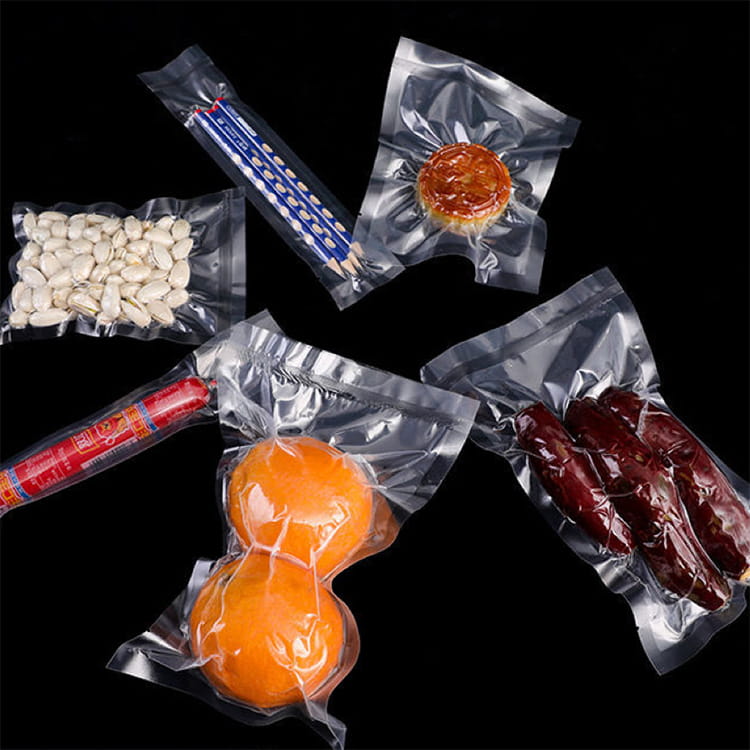 7-Layer Transparent Co-Extruded Food Packaging FilmThis multilayer film uses PA, PE, PP, TIE, and EVOH to deliver strong barrier properties, puncture resistance, and heat sealing. Its transparency enhances product visibility while protecting sensitive contents during storage and transport, making it ideal for demanding food and industrial applications.View Product →.
Blown extrusion also allows us to tailor stiffness, thickness, and cling to meet a specific packaging challenge, which is exactly why this process is favored for demanding applications.
Cast vs. Blown Stretch Film: Side-by-Side Comparison
To make the choice clearer, here is a direct comparison of the key performance criteria. Use this as a starting point when you evaluate film options for your operation.
| Property | Cast Film | Blown Film |
|---|---|---|
| Relative cost | Lower | Higher |
| Puncture resistance | Moderate | High |
| Load retention | Good for light loads | Excellent for heavy loads |
| Film memory | Limited | Strong |
| Clarity | Very clear | Hazy |
| Unwind noise | Quiet | Loud |
| Cling | Needs more tackifier | Naturally higher |
| Thickness consistency | Very tight | Good, but varies more |
This table highlights a central point: the best film is not always the one with the lowest price. It is the one that matches the load and the machine. A cast film may be perfect for a shrink-wrapped box of light paper products, while a blown film is usually the safer choice for a steel drum or a load with protruding edges.
How to Choose the Right Film for Your Application
We have seen buyers focus too much on gauge number and miss the process difference. Here are four practical questions to ask before you purchase.
- What is my load profile? If the pallet is stable, uniform, and lightweight, cast film will work well. If it is heavy, unstable, or has sharp corners, choose blown film.
- What machine do I use? Some automatic wrappers work better with cast film because it unwinds quietly. Others are set up for the higher cling and memory of blown film.
- What does my budget really cover? A cheaper cast roll may seem like a win, but if it breaks or fails to hold the load, the cost of damaged goods will quickly erase the savings.
- What is the environment? In a cold warehouse or a humid production hall, blown film often maintains its grip better, while cast film may become softer.
If you also need a transparent tubular film for light packaging tasks, we offer a solution that uses the same coextruded blowing technology to deliver tight tolerance and good clarity.
Tubular transparent packaging film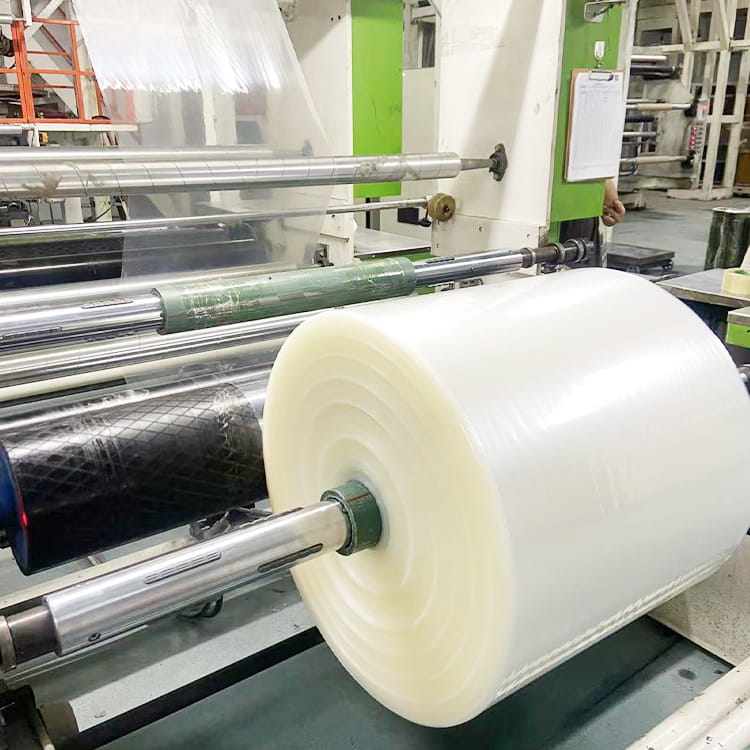 Tubular Transparent Co-Extruded Packaging FilmThis tubular film offers excellent clarity and mechanical strength, suitable for light packaging tasks. Made from coextruded materials with tight tolerance, it can be customized in width and thickness, providing reliable protection and an appealing presentation for various products.View Product →
This product is often used for general wrapping and can be matched to your required width and thickness.
When in doubt, ask your supplier for a sample run. A small test with your actual pallet will reveal more than any specification sheet.
Frequently Asked Questions
Q1: Is blown stretch film always better?
No. Blown film is stronger, but it is also more expensive and noisier. For light, uniform loads that are cheap to replace, cast film can be the better economic choice.
Q2: Can cast film be used for heavy loads?
It can, but you will need a thicker gauge and possibly more layers. That may eliminate the cost advantage. For heavy loads, a blown film usually provides better protection per kilogram of film.
Q3: Why is blown film noisier when unwinding?
The slower cooling and molecular orientation create a film with higher friction between layers. That friction generates the sound. Some operators use this as a positive sign of high cling, but it can be annoying in a small workspace.
Q4: Can I switch from cast to blown film without changing my machine?
Often you can, but you should verify the film tension settings and allow for the extra noise. If your wrapper has a pre-stretch system, blown film may require less pre-stretch because it has better memory.
In the end, the choice between cast and blown stretch film is not about which technology is superior in theory. It is about which one gives your products the best protection at a cost that makes sense for your operation. Take a close look at your loads, your machines, and your true cost of damage. That will tell you which process belongs in your packaging line.