

 English
 عربى
عربى


Introduction: Defining Forming and Non-Forming Films in Flexible Packaging
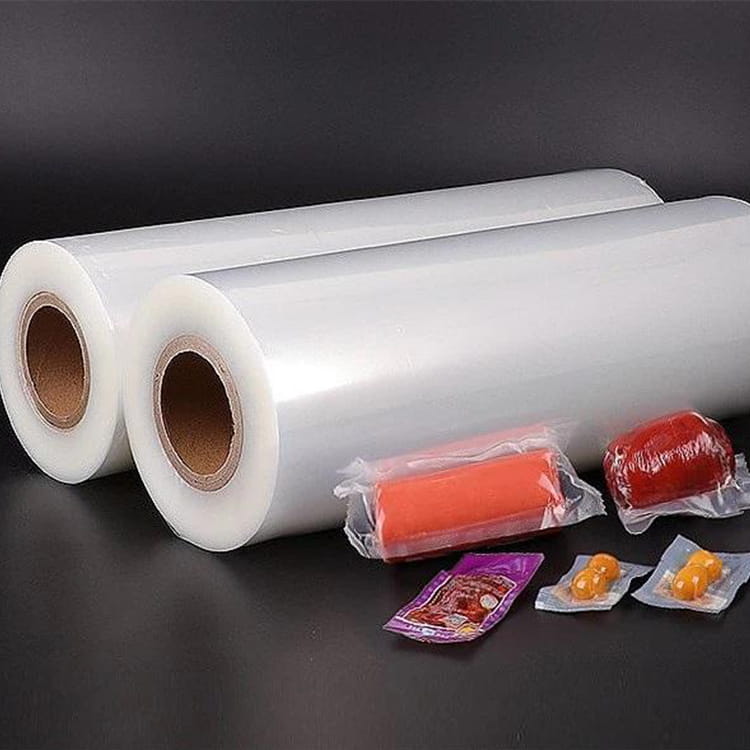
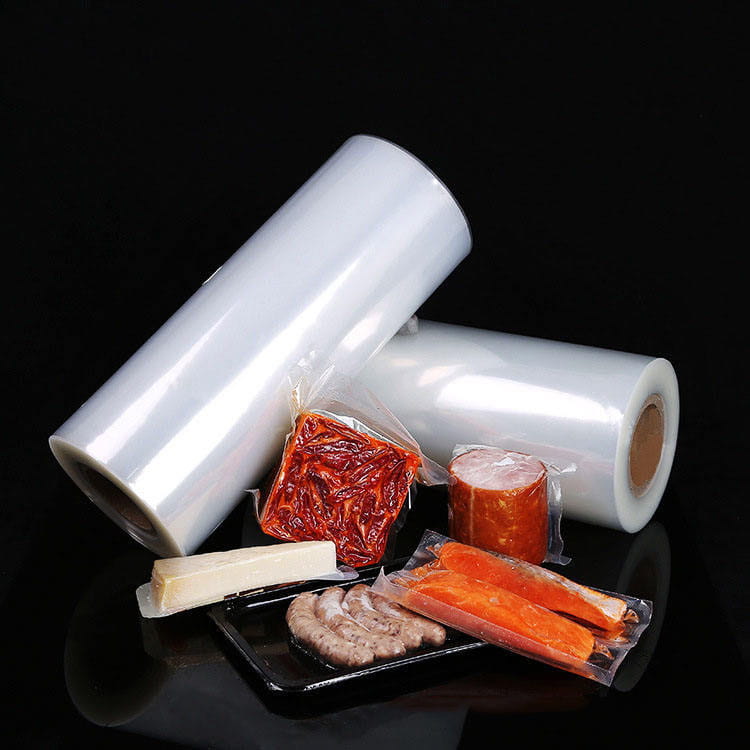
Flexible packaging for perishable goods, especially in the food and medical sectors, relies on a critical distinction between two families of films: forming films and non-forming films. The former are designed to be deeply stretched or shaped into a cavity (thermoforming), while the latter remain flat and serve as a cover or top web. Understanding this difference is essential when specifying Top and Bottom High Barrier Film systems for applications such as modified atmosphere packaging (MAP) or vacuum skin packaging. The interaction between the bottom web (forming film) and the top web (non-forming film or lidding) determines seal integrity, oxygen ingress, and mechanical puncture resistance. This article provides a technical deep dive into the material science, performance metrics, and selection criteria for these films, with a focus on high-barrier structures using EVOH, PA, and PE coextrusion.
Data from industrial surveys indicate that switching from standard monolayer films to a properly matched forming/non-forming high barrier system can reduce oxygen transmission rates (OTR) by over 90%, extending product shelf life from 7–10 days to 25–30 days for fresh red meat. The synergy between the two webs is non-negotiable: the forming film must withstand deep drawing without thinning beyond acceptable limits, while the non-forming film must offer consistent heat sealability and dead-fold characteristics. This article breaks down the physical and chemical requirements of each, provides comparative data, and includes a case study on meat packaging efficiency improvements.
Technical Fundamentals of Forming Films
Forming films, often referred to as bottom webs, are the workhorses of thermoforming packaging lines. They are heated and vacuum-formed or pressure-assisted into a mold to create a pocket that holds the product. A High Barrier Thermoforming Film must balance three often conflicting properties: deep drawability, uniform thickness distribution, and extremely low OTR (typically ≤ 1.0 cc/(m²·24h·atm) for high barrier). The polymer architecture usually includes a central EVOH layer (ethylene vinyl alcohol) which provides oxygen barrier, surrounded by adhesive tie layers and structural layers of polyamide (PA) for mechanical strength and polyethylene (PE) for sealability.
Key Mechanical Requirements for Forming Films
- Elongation at break: Minimum 300% (MD & TD) to accommodate deep draw ratios up to 3:1 or 4:1 without rupture.
- Drape and sag resistance: Films must remain dimensionally stable when heated to forming temperatures (typically 90°C to 130°C).
- Puncture resistance: ≥ 15 N (using ASTM F1306) to withstand sharp bone edges in meat packaging.
- Thinning uniformity: A well-designed PA PE Coextruded Film can limit thinning at the deepest corners to ≤ 35% of original thickness, preserving barrier performance.
Role of EVOH in Thermoforming Structures
EVOH is the gold standard for oxygen barrier in flexible packaging. However, its oxygen barrier properties degrade linearly with increasing relative humidity. For forming films used in wet or frozen applications, the EVOH layer must be protected by moisture-resistant skins (e.g., PA or thick PE layers). A typical forming film might have the structure: PE (sealant)/Tie/EVOH/Tie/PA (outer). The PA provides not only abrasion resistance but also contributes to better thermoformability because of its amorphous character. OTR values for such a 5-layer EVOH High Barrier Film can be as low as 0.3–0.5 cc/(m²·24h·atm) at 23°C and 50% RH, but increase to 1.5–2.0 cc/(m²·24h·atm) at 85% RH if the tie layers are inadequate.
| Property | Standard Forming Film (PA/EVOH/PE) | High Performance Forming Film (PA/EVOH/PA/EVOH/PE) |
|---|---|---|
| Total thickness (µm) | 120–180 | 150–250 |
| OTR (cc/(m²·24h·atm)) | 1.2–1.8 | 0.3–0.6 |
| WVTR (g/(m²·24h)) | 4–7 | 2–4 |
| Max draw depth (mm) | 60–80 | 90–120 |
Non-Forming Films: The Role of Top Webs and Lidding
Non-forming films, also referred to as top webs or lidding, are not subjected to any deep drawing. Instead, they are laid flat over the formed pocket and sealed under heat and pressure. Despite this seemingly simpler role, the technical demands on a High Barrier Lidding Film are equally stringent. The film must have excellent dead-fold (remaining flat without curling), consistent heat seal initiation temperature (typically 115°C–135°C), and high resistance to delamination during peeling. In easy-peel applications, controlled seal strength is required (e.g., 5–10 N/15mm), whereas for hermetic sealing, peel strengths above 25 N/15mm are specified.
Top and Bottom Web Films: Synergistic Pairing
In a complete packaging system, the top web (non-forming) and bottom web (forming) are rarely identical. The top web is often thinner (40–90 µm) and designed for printability, optical clarity, and anti-fog properties. Its barrier layer (usually EVOH or aluminum oxide coated PET) must match or exceed the OTR of the bottom web to avoid a "weak link" effect. For example, if the forming film has an OTR of 0.5 cc/(m²·24h·atm) but the lidding film allows 3.0 cc/(m²·24h·atm), the total package OTR will be dominated by the lidding. This is why specifying Top and Bottom High Barrier Film as a system is critical. Real-world audits have shown that mismatched barrier layers cause 40% of premature spoilage cases in MAP meat products.
- Anti-fog coatings: Required for refrigerated products to maintain visibility.
- Laser-scored easy-peel: Allows partial opening without tearing the film.
- High slip & antistatic: Essential for high-speed horizontal form-fill-seal (HFFS) machines.
One notable innovation is the use of oriented PA (OPA) in non-forming films to improve puncture resistance while reducing thickness. OPA/EVOH/PE structures offer an excellent stiffness-to-weight ratio and are increasingly replacing PET-based lidding in meat trays.
Core Differences: Forming vs Non-Forming Films – Comparison Table
To select the correct film for each web, engineers must understand the distinct performance metrics. The table below summarizes the fundamental differences between forming and non-forming films in the context of high-barrier flexible packaging.
| Parameter | Forming Film (Bottom Web) | Non-Forming Film (Top Web / Lidding) |
|---|---|---|
| Thermoforming capability | Yes – must stretch into a mold (draw ratio up to 1:4) | No – remains flat; only slight bending |
| Typical thickness range | 120–250 µm (thicker to compensate for thinning) | 40–90 µm (thinner because no thinning) |
| Primary mechanical stress | Puncture and tensile during forming; abrasion after filling | Impact during sealing; peel strength for opening |
| Sealant layer | Usually PE (low melting point, good hot-tack) | PE or modified PP (wider sealing window) |
| Barrier layer position | Centered or closer to product side | Often closer to outer surface (to protect EVOH from moisture) |
| Typical OTR requirement | ≤ 1.0 cc/(m²·day) | ≤ 1.5 cc/(m²·day) (but matched to bottom web) |
In high-speed packaging lines, the forming film must also exhibit low friction on the heating plates and consistent sag behavior. Non-forming films, conversely, require excellent unwind properties and static dissipation to prevent web breaks. These complementary but distinct specifications make the selection of Forming and Non Forming Films a specialized engineering task.
The High Barrier Structure: Role of EVOH, PA and PE Coextrusion
Both forming and non-forming films achieve high barrier performance through multi-layer coextrusion, typically 5, 7, or 9 layers. The central oxygen barrier is almost always EVOH (with ethylene content 27–44 mol%). Lower ethylene content gives better barrier but poorer processability. The structural backbone is PA6 or amorphous PA (PA6I/6T) which contributes to thermoforming depth and puncture resistance. The sealant layer, usually PE or a blend of LLDPE and LDPE, ensures hermetic sealing across a wide temperature range. The image below illustrates a typical 5-layer coextruded high barrier film used for both forming and non-forming applications (with layer thickness ratios adjusted per role).
For forming films, the PA layer is placed on the outside (or inside) to protect the EVOH from cracking during deep drawing. For non-forming films, the same structure can be used, but often the PA layer is swapped with a higher-modulus material like PET or OPA to reduce elongation. The use of EVOH High Barrier Film technology allows packagers to achieve OTR values below 0.2 cc/(m²·day) with 7-layer designs that include additional EVOH and PA layers. However, cost optimization often leads to 5-layer coextrusion with tie layers based on maleic anhydride-grafted polyolefins, providing interlayer adhesion strength > 5 N/15mm.
Application in Meat Packaging: Vacuum Skin Packaging and Thermoforming
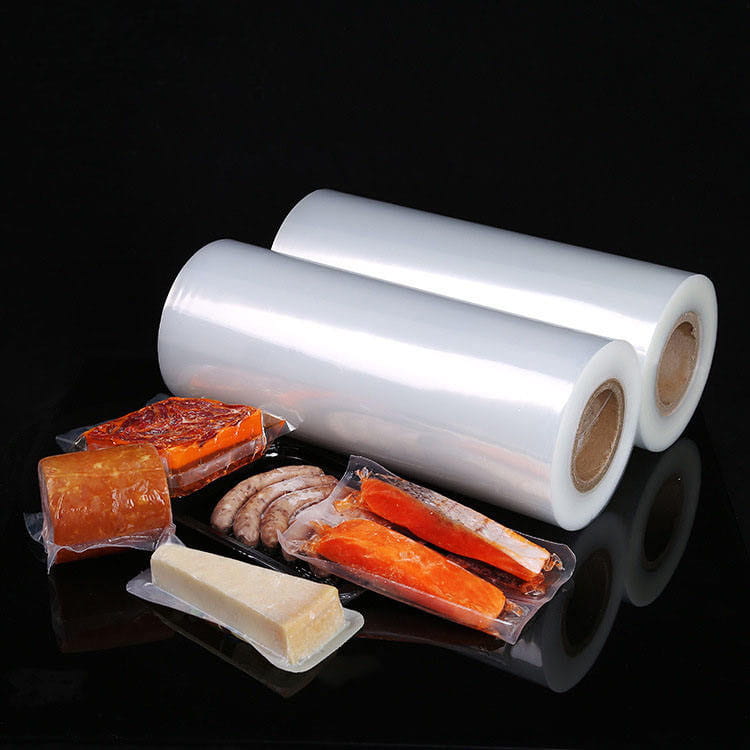
Meat packaging represents one of the most demanding applications for high-barrier flexible films, combining deep draw, high moisture, and sharp product contours. Two dominant technologies rely on forming and non-forming films: vacuum skin packaging (VSP) and thermoforming MAP. In VSP, the top web (non-forming) is heated and vacuum-drawn tightly over the meat, conforming to every contour, while the bottom web (forming) is pre-formed only slightly. This requires the Vacuum Skin Packaging Film to have exceptional softness and high elongation (> 400%). Typically, VSP uses a PA/EVOH/PE structure with a total thickness of 80–120 µm and an OTR ≤ 0.8 cc/(m²·day).
Conversely, traditional thermoforming uses a rigid bottom web (forming) that creates a deep cavity, and the non-forming top web is simply sealed flat across the flange. For large primal cuts of beef, the forming film must handle draw depths of 100 mm or more. Data from a European meat processor (anonymous) showed that by upgrading from a standard PA/PE forming film to a 5-layer PA PE Coextruded Film with central EVOH, the oxygen content inside the package dropped from 2.5% to 0.3% after 14 days, and the shelf life increased from 18 to 34 days at 2°C. The key was the uniform EVOH thickness across the formed corners, which remained above 6 µm even at a draw ratio of 3.2:1.
Selection Guide for Meat Packaging Films
- Fresh red meat (high drip): Use anti-fog coated non-forming film and a forming film with high WVTR (to allow moisture escape?) – actually low WVTR to prevent drying. EVOH thickness ≥ 8 µm.
- Processed meat (salami, ham): Require high puncture resistance from bone fragments; use PA-rich forming films (40% PA content).
- Frozen meat: Must avoid brittleness; choose a forming film with low-temperature impact modifiers (e.g., EVA blend).
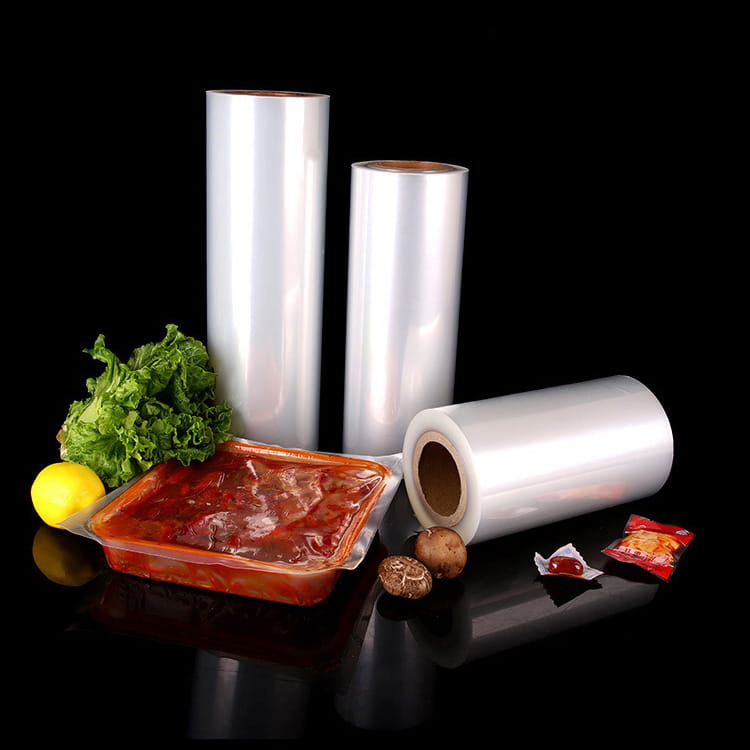
The Flexible Packaging Film for Meat must also comply with FDA and EU food contact regulations, especially for migration of EVOH oligomers. Leading converters use coextrusion lines that maintain EVOH purity and ensure no residual solvents. In summary, the forming vs non-forming choice for meat is not merely mechanical; it is about balancing oxygen scavenging, moisture retention, and mechanical integrity over the entire cold chain.
Selecting Between Forming and Non-Forming Films: Key Parameters
When designing a flexible packaging structure, engineers must decide which web (or both) will be the high-barrier element. In many cases, both are high-barrier to achieve total package OTR below 0.5 cc/(m²·day). However, there are scenarios where only the forming film or only the non-forming film incorporates EVOH, depending on product geometry and cost. The table below provides a decision matrix.
| Application scenario | Barrier assigned to forming film | Barrier assigned to non-forming film | Recommended structure |
|---|---|---|---|
| Shallow tray (meat fillet, cheese) | Yes – essential | Optional – can be standard PE | Forming: PA/EVOH/PE; Non-forming: PE or PET/PE |
| Deep drawn (whole chicken, bone-in ham) | Yes – mandatory | Yes – to avoid edge ingress | Both: PA/EVOH/PE with minimum 8 µm EVOH |
| Vacuum skin pack (VSP) | Often low barrier (5–10 cc/m²·day) | High barrier (EVOH or AlOx) | Forming: PA/PE; Non-forming: PA/EVOH/PE |
Another critical parameter is the sealing interface. When a non-forming film is sealed to a forming film, the sealant layers must be compatible. Incompatible sealants (e.g., PP sealant on top web and PE sealant on bottom) will result in weak seals or contamination of sealing bars. Most modern Top and Bottom Web Films use a coextruded sealant layer of LLDPE with a melting point of 110–125°C. To achieve hermetic seals, the hot-tack strength at 0.2 seconds should be > 3 N/15mm.
Finally, economic considerations: forming films are generally more expensive per square meter because they are thicker and contain more PA. However, if a thinner, non-forming high barrier film can replace a thicker forming barrier, total material usage may drop by 20–30%. Life-cycle assessments (LCA) for meat packaging indicate that switching from a 180 µm forming film to a 120 µm forming film + 50 µm high barrier lidding reduces polymer consumption by 28% while maintaining the same OTR, because the lidding’s EVOH layer is not thinned during forming. This is a classic example of the synergy between forming and non-forming films.
Frequently Asked Questions (FAQ)
Q1: Can a non-forming film be used as a forming film if the draw depth is very shallow?
Technically, a non-forming film (e.g., 60 µm PET/EVOH/PE) might withstand a draw depth of 5–10 mm without tearing, but it will not have the necessary elongation or thickness distribution to maintain barrier properties. For any draw depth above 10 mm, a designated forming film with PA or amorphous PET is required to prevent excessive thinning and pinholing.
Q2: What is the maximum draw ratio achievable with a PA/EVOH/PE high barrier forming film?
With a 5-layer coextruded film containing 25% PA and 10% EVOH, draw ratios of 1:3.5 are common. For 7-layer films with additional PA layers, draw ratios up to 1:4.5 are possible. Thickness after forming at the deepest corner should be measured; a safe lower limit is 35% of initial thickness to keep EVOH layer continuous.
Q3: How does moisture affect EVOH-based high barrier films in refrigerated meat packaging?
EVOH’s oxygen barrier decreases as relative humidity increases. At 90% RH, OTR can be 8–10 times higher than at 50% RH. To mitigate this, use multi-layer films with thick moisture-barrier skins (HDPE or PP) on both sides of EVOH. In practice, for chilled meat (2-4°C, 85-95% RH inside package), the effective OTR of an unprotected EVOH film might rise to 4-5 cc/(m²·day), which is insufficient for long shelf life. Always require testing data at high RH.
Q4: What is the difference between a lidding film and a top web in thermoforming?
In thermoforming, the top web is the non-forming film that is sealed onto the formed bottom web after the product is loaded. A lidding film is a subset of top webs, typically pre-cut or roll-fed, and is often thinner (30–60 µm). All lidding films are non-forming, but not all top webs are lidding (some top webs are also thermoformed slightly in VSP).
Q5: Can I recycle PA/EVOH/PE coextruded films?
These films are multi-material and generally not accepted in curbside recycling streams due to the difficulty of separating EVOH and PA from PE. However, some advanced recycling facilities use solvent-based separation or pyrolysis. Many meat packers are switching to mono-material PE-based high barrier films (with SiOx coating) to improve recyclability, but those have lower thermoforming depth.