

 English
 عربى
عربى


What Separates Reliable Poly Sheeting From Products That Fail Early
Industrial buyers rarely think about polyethylene sheeting until a job fails midway through a project. A vapour barrier splits during backfill, a tarp shreds under wind load, or a curing blanket lets moisture through within weeks. Most of these failures trace back to one decision made early on: which construction to specify and which supplier to trust.
Polyethylene sheeting is not a single product. It spans thin single-layer films, scrim-reinforced sheeting, and layered co-extruded structures, each suited to a different mechanical and environmental load. Understanding these distinctions before ordering saves rework, warranty disputes, and site delays.
Field observation: On large earthwork projects, sheeting failures are reported far more often during installation and handling than during actual service life, which points to material toughness and seam strength as the real differentiators, not just base thickness.
Why Layer Structure Matters More Than Thickness Alone
A common mistake is comparing sheeting purely by mil thickness. Two films at the same gauge can behave completely differently under stress, tearing, and UV exposure, depending on how the resin layers are arranged during extrusion.
A multi-layer co-extruded film is produced by feeding two or more resin streams through a single die simultaneously, bonding them at the molecular level while the film is still molten. This differs fundamentally from laminating pre-formed films together after the fact, which tends to create a weaker bond line that can delaminate under repeated flexing.
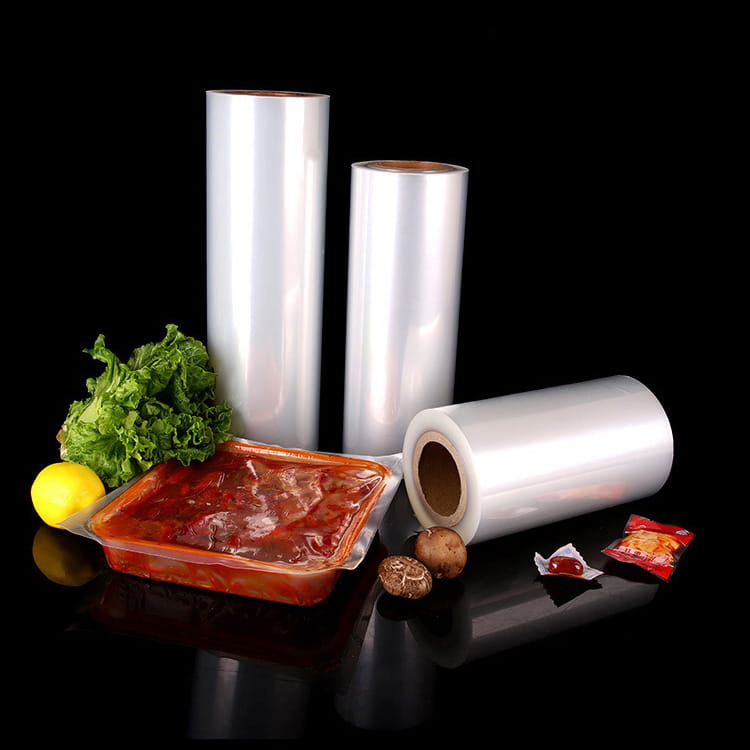
Each layer in a co-extruded structure can be engineered for a specific role:
- An outer layer optimized for UV stabilization and abrasion resistance
- A core layer that carries most of the tensile and puncture load
- An inner layer tuned for seal strength or chemical compatibility
This layered approach is why a well-built co-extruded film can outperform a thicker single-layer sheet in puncture resistance testing, even though the raw material cost per kilogram is similar.
How to Evaluate a Polyethylene Sheeting Manufacturer
Choosing among competing plastic sheeting manufacturers comes down to verifiable production practices rather than marketing claims. The following criteria give a realistic picture of manufacturing consistency.
| Evaluation Point | What It Indicates |
|---|---|
| Resin blend consistency batch to batch | Predictable mechanical properties across large orders |
| In-house extrusion vs outsourced film | Tighter thickness tolerance and faster defect correction |
| Documented tensile and elongation testing | Objective proof of strength claims |
| UV additive dosing records | Reliable outdoor service life instead of premature embrittlement |
| Slitting and winding tension control | Fewer wrinkles, gauge bands, and roll telescoping issues |
Manufacturers that can share test data for each production lot, rather than a single generic spec sheet, tend to deliver more consistent field performance over time.
LDPE Film vs Reinforced Sheeting: Which Fits Your Load Case
Not every application needs the same construction. Comparing standard ldpe plastic sheets against scrim-reinforced sheeting clarifies where each belongs.
| Factor | Standard LDPE Sheeting | Reinforced Sheeting |
|---|---|---|
| Typical thickness range | 4 mil to 10 mil | 8 mil to 20 mil equivalent strength |
| Tear propagation resistance | Moderate | High, due to embedded scrim mesh |
| Best suited for | Short-term covers, vapour retarders, light protective wrap | Ground cover, tarps, curing blankets, repeated reuse |
| Handling in windy conditions | Prone to tearing at grommet points | Distributes load, reduces grommet pull-through |
| Relative material cost | Lower | Higher upfront, lower replacement frequency |
As a rough guide, if a sheet will be folded, dragged across rough ground, or reused across multiple projects, the added scrim reinforcement usually pays for itself within one or two seasons through reduced replacement frequency.
Matching Sheeting Type to Application
Specifying the wrong grade is the most common cause of premature failure on site. The following breakdown maps common use cases to the appropriate product category.
- Vapour barrier sheeting under concrete slabs: requires low permeability and puncture resistance during rebar and gravel placement, typically in the 10 to 15 mil range with a continuous, unbroken layer at seams.
- Construction grade plastic sheets for temporary weather protection: prioritize UV stabilization since exposure often extends beyond the original schedule.
- Heavy-duty poly sheeting for equipment covers and stockpile protection: needs high tear strength and grommet retention to withstand wind loading over weeks or months.
- Agricultural and containment liners: chemical compatibility of the inner layer becomes the deciding factor rather than tensile strength alone.
Quality Control Checklist Before Placing a Bulk Order
Before committing to a large roll order, run through this checklist with the supplier:
- Request a physical sample roll, not just a cut swatch, to test unwinding and stiffness
- Confirm actual gauge tolerance, since nominal mil ratings can vary by supplier practice
- Ask whether seams and folds are heat-sealed or adhesive-bonded, and compare peel strength
- Verify packaging protects rolls from UV and moisture during storage and transit
- Clarify minimum order quantities against your actual project timeline to avoid excess inventory
Suppliers who welcome this level of scrutiny, and can answer with specific test values rather than general assurances, are typically better positioned for long-term industrial supply relationships.
Frequently Asked Questions
Q1: What thickness of polyethylene sheeting is suitable for a below-slab vapour barrier?
Most below-slab applications call for sheeting in the 10 to 15 mil range, with continuous coverage and taped or heat-sealed seams to maintain an unbroken vapour barrier.
Q2: Does a thicker film always mean better puncture resistance?
Not necessarily. A well-engineered multi-layer or reinforced structure can outperform a thicker single-layer film because the internal layer arrangement, not just total thickness, controls how the material resists localized stress.
Q3: How long can construction grade plastic sheets stay exposed outdoors before degrading?
This depends heavily on UV additive dosing. Films with proper stabilization can hold up for several months of outdoor exposure, while unstabilized films may become brittle within weeks under strong sun.
Q4: What is the practical difference between LDPE sheeting and reinforced sheeting?
Standard LDPE sheeting is lighter and more economical for short-term or single-use jobs, while reinforced sheeting includes an embedded scrim mesh that resists tearing and is better suited to repeated handling and reuse.
Q5: What questions should I ask a manufacturer before a bulk purchase?
Ask about batch-to-batch resin consistency, documented tensile testing, gauge tolerance, and seam bonding method. Suppliers who provide test data rather than general marketing claims tend to deliver more predictable results.