

 English
 عربى
عربى


Why Bundling Film Sits at the Center of Retail Logistics
Every multi-pack that reaches a store shelf has already survived a chain of handling events: palletizing, warehouse stacking, truck vibration, and repeated manual handling at distribution points. Shrink bundling film is the packaging layer responsible for keeping that chain intact without adding unnecessary weight or cost to the shipment.
Unlike primary packaging that protects a single unit, bundling film groups multiple items into one stable, shelf-ready block. This single design choice affects pallet utilization, labor time at unpacking, and the rate of in-transit product loss.
How Bundling Film Improves Retail Shelf Efficiency
Retail teams rarely have time to repack loose items. A bundle that arrives square, with clear graphics and consistent tension, moves from pallet to shelf with almost no intervention. Three shelf-level outcomes depend directly on film selection:
- Reduced unpacking labor because bundles hold their shape without re-taping or re-banding
- Consistent facing on shelf, since printed film keeps branding aligned across every unit in the pack
- Lower breakage rates for glass, rigid plastic, and boxed goods held under even shrink tension
Retailers that track shelf-ready rate as a metric often find that film shrink uniformity, not the primary package, is the variable most responsible for variance between suppliers.
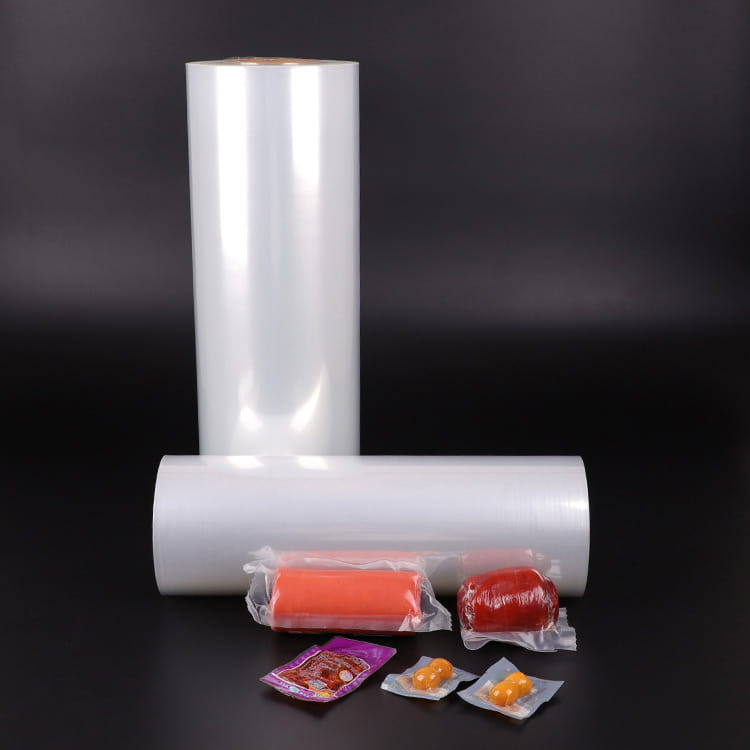
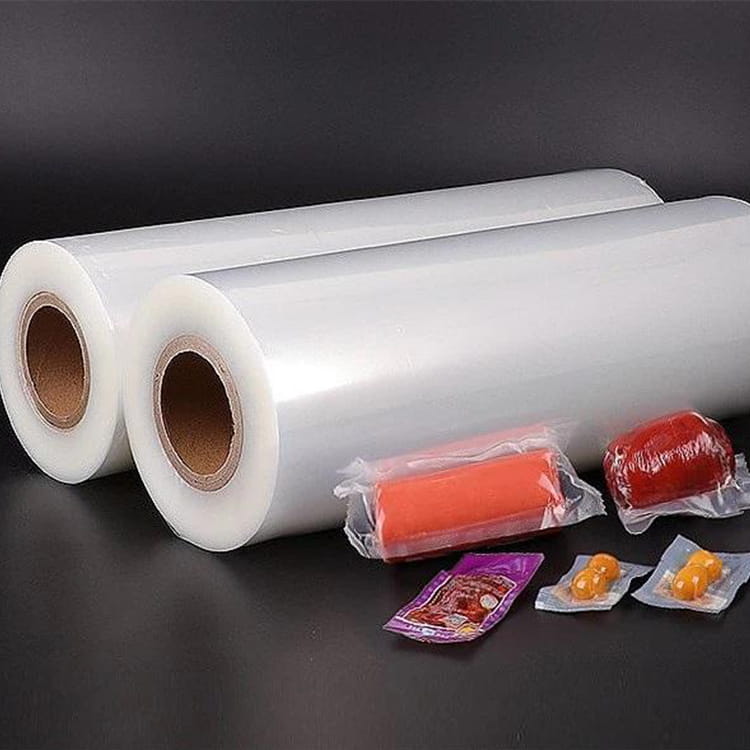
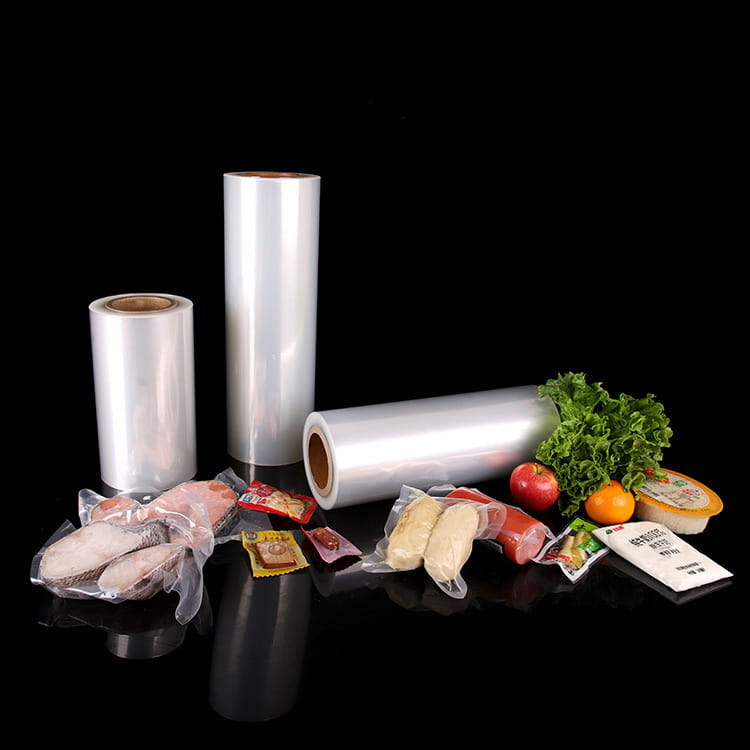
Base film structure used before printing and shrink processing
Transport and Logistics Advantages of Shrink Wrapped Multi-Packs
During transport, loose secondary packaging is the most common source of load shift. A properly shrunk bundle behaves as a single rigid unit rather than a collection of independent boxes, which changes how forces distribute across a pallet during braking, cornering, and stacking.
| Transport Factor | Loose Secondary Packaging | Shrink Bundled Packaging |
|---|---|---|
| Load shift during transit | Common on turns and braking | Minimal, unit acts as one block |
| Pallet stacking stability | Requires additional strapping | Self-supporting within shrink tension |
| Unpacking time at destination | Higher, individual handling | Lower, bundle handled as one unit |
| Moisture and dust exposure | Higher, gaps between units | Reduced, film forms a sealed wrap |
These outcomes compound across a full truckload. A distribution run of several hundred pallets with even a small reduction in load shift translates into measurable savings in returned or rejected shipments.
Key Film Properties That Determine Bundling Performance
Not all shrink bundling film performs the same way once it reaches a shrink tunnel. Four properties determine whether a bundle holds shape through the full distribution cycle:
Shrink Ratio
Determines how tightly the film conforms to irregular case shapes without leaving loose corners.
Tear Resistance
Prevents propagation of small nicks into full tears during high-speed line handling.
Seal Strength
Keeps the film seam closed under the stress of repeated stacking and vibration.
Print Clarity
Maintains sharp graphics through the heat exposure of the shrink process.
Selecting Between Polyethylene Bundling Film and Printed Options
Most bundling applications start with a polyethylene+shrink+bundling+film base, which offers predictable shrink behavior across a wide temperature range. From that base, buyers typically choose between two directions:
- Clear film for applications where product visibility matters more than branding, such as beverage multi-packs or bulk retail cases
- Printed shrink film for branded multi-pack bundling wrap where shelf presence and consistent graphics across units are priorities
The tradeoff is not simply cosmetic. Printed film requires tighter control of ink adhesion and shrink uniformity, since distorted graphics on a shelf are more noticeable than a slightly uneven clear wrap. Buyers producing high volumes of printed shrink film should confirm shrink tunnel temperature profiles are validated specifically for printed stock, not just base film.
Line Integration: From Base Film to Finished Bundle
Understanding where film properties matter most requires looking at the full production sequence, from raw film through to a stacked pallet ready for shipping.
Common Failure Modes and How Film Design Prevents Them
Film-related complaints usually trace back to a small set of recurring issues. Recognizing them early helps buyers request the right film specification rather than reacting after a shipment problem.
| Symptom | Likely Cause | Film Adjustment |
|---|---|---|
| Loose bundle corners after shrink | Insufficient shrink ratio for case geometry | Increase shrink percentage specification |
| Seam splitting during transit | Seal strength too low for load weight | Upgrade sealing layer thickness |
| Faded or distorted print | Tunnel temperature mismatched to ink type | Adjust base film and ink compatibility |
| Film puncture from case edges | Tear resistance too low for product | Select higher gauge or reinforced film |
Frequently Asked Questions
Q1: What is the difference between collation shrink film and standard bundling film?
Collation shrink film is designed specifically for grouping identical retail units into a single shelf-ready pack, with tighter shrink tolerances for consistent facing. Standard bundling film covers a broader range of secondary packaging uses, including non-retail bulk grouping.
Q2: Does printed shrink film reduce shrink performance compared to clear film?
Printing itself does not reduce shrink capability, but ink layers can shift the ideal tunnel temperature range slightly. Confirming compatibility between the ink system and shrink profile avoids print distortion.
Q3: How does bundling film affect pallet stability during transport?
A correctly shrunk bundle behaves as one rigid mass rather than several loose units, which reduces shifting forces transmitted through a stacked pallet during transit.
Q4: Can the same secondary packaging film be used across different product shapes?
Yes, provided the shrink ratio and gauge are specified for the most irregular case shape in the product range, since film suited only to uniform boxes may leave gaps around irregular items.