

 English
 عربى
عربى


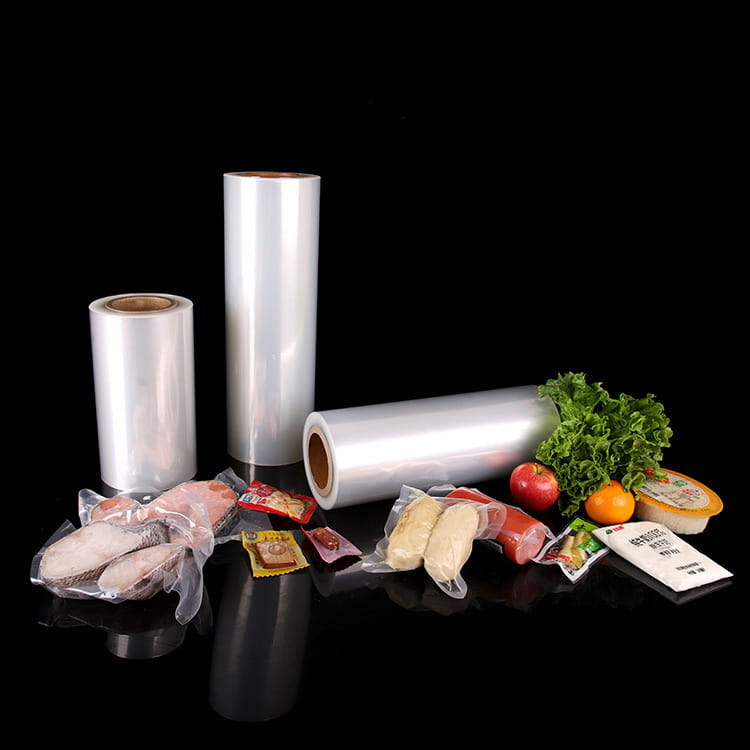
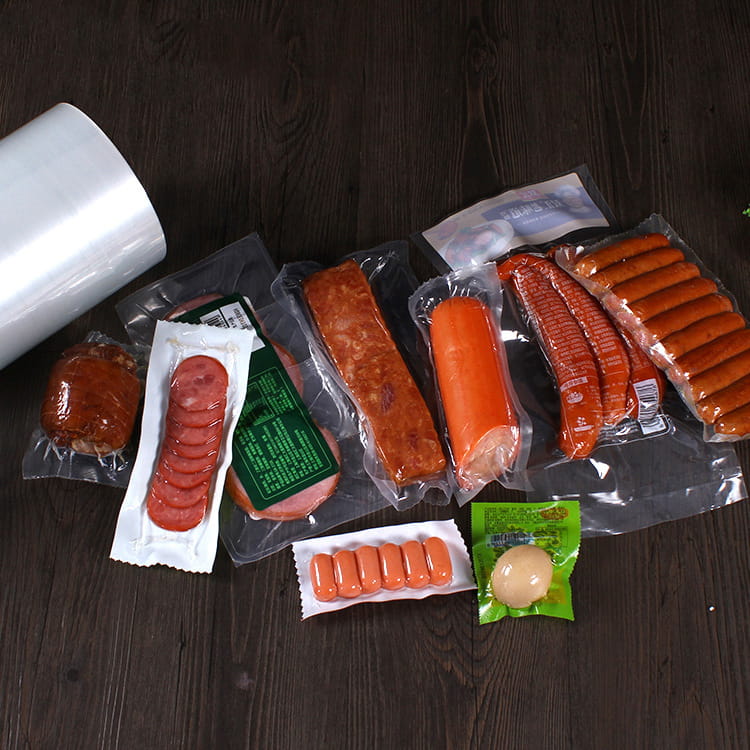
In contemporary food packaging system design, choosing the right materials is a multidisciplinary engineering decision that directly influences product quality, supply chain efficiency, regulatory compliance, and lifecycle sustainability. Among advanced polymeric solutions, evoh high barrier forming film for food packaging has increasingly become a central topic of discussion within technical teams tasked with packaging system integration, materials engineering, and procurement strategy.
1. Packaging Materials in Context: Functional Requirements and System Constraints
Food packaging serves multiple functional requirements within supply chains, including:
- Barrier protection: preventing ingress of oxygen, moisture, aroma, and contaminants.
- Mechanical integrity: resisting puncture, tear, impact, and stress during filling, distribution, and handling.
- Process compatibility: suitability with thermoforming, sealing, sterilization, and automated packaging lines.
- Regulatory compliance: food‑contact safety standards across jurisdictions.
- Sustainability profile: alignment with corporate environmental goals and circular economy principles.
Traditional films such as polyethylene (PE), polypropylene (PP), polyester (PET), and polyamide (PA) have delivered decades of service across food packaging applications. However, evolving product formats and extended shelf life demands challenge conventional materials on barrier performance, process efficiency, and resource use.
2. Material Property Comparison
Rigorous comparative analysis must begin with fundamental physical and chemical properties. In system design, these properties inform barrier performance, forming behavior, sealing characteristics, and mechanical robustness.
2.1 Structural Overview
| Property Category | Traditional Materials | EVOH High Barrier Forming Film for Food Packaging |
|---|---|---|
| Chemical Structure | Homopolymers (PE, PP); semicrystalline aromatic (PET); polyamide networks | Ethylene–vinyl alcohol copolymer with high ethylene content |
| Barrier Mechanism | Barrier mostly by chain packing density or crystalline regions | Barrier through molecular alignment of vinyl alcohol moieties enabling low gas permeability |
| Typical Use | Simple barrier or structural layer | Central barrier layer in multi‑layer constructions |
| Water Sensitivity | Relatively insensitive | Barrier performance influenced by humidity |
| Thermal Processing | Wide melt range; robust thermoprocessing | Sensitive thermal window for maintaining barrier |
Key insight: evoh high barrier forming film for food packaging functions primarily as a high‑performance barrier layer integrated into multilayer film architectures rather than a standalone structural film.
2.2 Barrier Performance: Oxygen and Moisture Transmission
Barrier characteristics are quantified by transmission rates — Oxygen Transmission Rate (OTR) and Water Vapor Transmission Rate (WVTR):
- Traditional materials such as PE and PP exhibit moderate to high OTR, requiring additional layers for sensitive products.
- PET and PA provide improved mechanical and moderate barrier but do not inherently deliver ultra‑low gas permeability.
Embedded within a multi‑layer structure, evoh high barrier forming film for food packaging delivers orders of magnitude lower oxygen permeability compared to typical PE/PP films. Its barrier performance, however, is dependent on relative humidity — engineering designs must account for moisture‑induced swelling effects that can transiently influence barrier integrity.
Engineering implication: Barrier layer placement and moisture‑management strategies (e.g., adjacent hydrophobic layers) are critical design considerations for consistent performance.
3. Manufacturing and Process Integration
Packaging system engineers must evaluate material compatibility with forming, sealing, and automation equipment.
3.1 Thermoforming and Heat Sealing
Traditional films:
- PE and PP deliver broad heat‑seal windows, forgiving in process variation.
- PET provides high mechanical strength but typically requires specialized seal layers.
EVOH‑based constructions:
- Must be integrated with compatible seal and tie layers.
- Require controlled thermal profiles during forming to prevent degradation of barrier properties.
- Exhibit narrower processing windows, demanding precise thermal control on forming lines.
A risk assessment framework for production integration should consider:
| Manufacturing Factor | Traditional Film | EVOH High Barrier Film |
|---|---|---|
| Heat Sealing Window | Broad | Narrow |
| Thermal Degradation Risk | Low | Moderate (requires control) |
| Equipment Calibration | Standard | High precision for repeatability |
| Forming Complexity | Low–medium | Medium–high |
Engineering takeaway: Deployment of evoh high barrier forming film for food packaging often entails upskilling operators, investing in advanced process control, and refining maintenance practices to sustain quality.
4. Barrier System Design and Multi‑layer Architectures
The effectiveness of evoh high barrier forming film for food packaging depends on its integration into an optimized multi‑layer barrier system.
4.1 Functional Layer Roles
A typical multi‑layer structure might include:
- Outer structural layer: provides stiffness, printability, and abuse resistance.
- Tie layers: enable adhesion between chemically dissimilar polymers.
- Barrier layer (evoh): primary gas and aroma barrier.
- Seal layer: interfaces with heat sealing equipment and ensures package closure integrity.
The challenge in design is to balance barrier performance with manufacturability and recyclability.
Engineering design principle: Map each layer’s function to its performance trade‑offs and integrate along the product life cycle (manufacturing → storage → end‑of‑life).
5. Regulatory, Safety, and Compliance Considerations
Food packaging materials must comply with food contact regulations in multiple jurisdictions, such as the FDA (U.S.), EFSA (EU), and other national standards.
- Regulatory assessments focus on extractables and leachables, migration thresholds, and inertness in contact with food.
- Materials such as PE, PP, and PET have long‑established regulatory footprints.
- EVOH high barrier forming film for food packaging, when used in approved constructions, similarly meets food contact safety criteria, but technical teams should verify compliance against region‑specific lists and concentration limits.
System engineering note: Regulatory compliance is not static — it evolves with scientific evidence and regional policy changes. Packaging engineers must embed ongoing compliance monitoring in product lifecycle management.
6. Mechanical Performance under Supply Chain Stress
A core distinction between traditional packaging and barrier‑enhanced materials lies in performance under mechanical stress:
- Traditional films deliver predictable elongation and energy‑absorption characteristics beneficial for rough handling.
- High barrier constructions often exhibit increased stiffness and reduced strain tolerance due to the rigid barrier layer.
Table 2 illustrates comparative mechanical performance patterns.
| Mechanical Property | Traditional Film Structures | EVOH‑based Multi‑layer Systems |
|---|---|---|
| Tensile Strength | Moderate−High | High |
| Elongation at Break | High | Lower than traditional films |
| Impact Resistance | Good | Dependent on outer layer design |
| Puncture Resistance | Application dependent | Often improved with engineered constructs |
Design engineering must account for the combined mechanical profile of all layers.
7. Thermal Stability and Food Process Compatibility
Food packaging materials must withstand temperature gradients during:
- Filling and sealing operations
- Pasteurization or retort sterilization
- Frozen or chilled storage
Traditional packaging materials may encounter limitations in high temperature sterilization due to shrinkage or seal failure.
EVOH barrier systems require careful thermal profiling:
- Australian red meat sterilization has shown that barrier layer integrity must be ensured for high‑temperature cycles.
- Cooling profiles must mitigate internal stresses caused by differential shrinkage between layers.
Key engineering action: Conduct thermal cycling tests under representative conditions for each packaged product.
8. Sustainability and End‑of‑Life Considerations
Increasingly, corporate sustainability goals and regulatory pressure are driving packaging engineers to evaluate environmental footprints:
- Traditional mono‑polymers such as PE or PP tend to be readily recyclable within existing streams.
- Multi‑layer structures with multiple polymers (including evoh high barrier forming film for food packaging) pose recycling challenges due to separation difficulties.
Trade‑off analysis must consider:
- Material usage reduction through thinner barrier layers.
- Lifecycle environmental impacts (embodied energy, carbon footprint).
- Availability of advanced recycling technologies (e.g., compatibilization, chemical recycling).
Systems engineering approach: Adoption of eco‑design principles that balance functionality and recyclability across the entire supply chain.
9. Cost‑Benefit Analysis for Strategic Decision Making
From a procurement and technical management standpoint, evaluating the total cost of ownership requires:
- Material cost per unit area
- Processing yield and scrap rate
- Shelf‑life extension benefits
- Reduction in food waste due to superior barrier
- Capital expenditure on process upgrades
An analytical cost model should integrate both quantitative and qualitative factors to guide decisions.
Example cost factors:
| Cost Element | Traditional Materials | EVOH High Barrier Film |
|---|---|---|
| Raw Material Cost | Lower | Higher |
| Processing Efficiency | High | Requires calibration |
| Shelf Life Impact | Moderate | Potentially significant |
| Package Weight | Variable | Often lower for equivalent protection |
| Lifecycle Impact | Standard | Needs sustainability evaluation |
The economic value of shelf life extension must be quantified in terms of reduced spoilage, fewer returns, and improved retailer satisfaction.
10. Integration Challenges and Best Practices
Several practical challenges arise when shifting from traditional materials to advanced barrier systems:
- Training for process engineers on handling high‑barrier materials.
- Testing protocols for barrier performance under humidity and temperature extremes.
- Quality control metrics such as bubble integrity, delamination checks, and seal strength measurement.
Best practices:
- Cross‑functional review: involve materials scientists, process engineers, and quality assurance early.
- Pilot trials: validate barrier performance under production conditions.
- Supplier collaboration: technical data exchange to optimize material specifications.
- Design of experiments (DOE) to define operating windows.
- Feedback loops post‑launch to refine material usage.
Summary
This article has systematically evaluated evoh high barrier forming film for food packaging in comparison with traditional packaging materials from a systems engineering perspective. Key takeaways include:
- Barrier performance: EVOH offers significantly lower gas permeability but requires humidity control and compatible layers.
- Manufacturing integration: Demands precise thermal management and advanced quality control.
- Mechanical and thermal behavior: Must be evaluated as composite system properties, not single‑layer characteristics.
- Regulatory and sustainability aspects: Require continuous monitoring and strategic planning.
- Cost and operational impacts: Must be framed within total value delivered, including shelf life and process efficiency.
Frequently Asked Questions (FAQ)
Q1: What is the primary functional advantage of evoh high barrier forming film for food packaging compared to traditional films?
A1: The core advantage is superior barrier performance against oxygen and aroma transmission, enabling extended shelf life for sensitive food products when integrated into multi‑layer film systems.
Q2: Can EVOH barrier materials be processed on standard packaging lines?
A2: They can, but tight control on thermal profiles and sealing conditions is essential. Packaging engineers should calibrate equipment and train operators to accommodate narrower process windows.
Q3: How does humidity affect barrier performance?
A3: EVOH exhibits moisture‑dependent permeability; engineers must design adjacent hydrophobic layers to protect the barrier layer from humidity‑induced swelling.
Q4: What sustainability challenges are associated with EVOH barrier films?
A4: Multi‑layer constructions complicate recycling streams. Engineers should consider eco‑design principles, emerging recycling technologies, and corporate environmental goals in material selection.
Q5: Is the cost premium of high barrier films justified?
A5: A rigorous cost–benefit assessment should quantify extended shelf life, reduced spoilage, and improved supply chain outcomes relative to material and processing costs.
References
- Singh, R. P. et al., Advances in Food Packaging Materials: Polymer Barrier Systems and Performance, Journal of Packaging Technology, 2024.
- ISO 15318: Packaging — Barrier Systems — Definitions and Evaluation Principles, International Organization for Standardization, 2023.
- Technical Report by Food Packaging Engineers Consortium, Integration of High Barrier Films into Automated Packaging Lines, 2025.