

 English
 عربى
عربى


Food spoilage, moisture ingress, and oxygen permeation remain the biggest threats to packaged food quality. For manufacturers, selecting the right flexible packaging is not just a cost decision — it directly determines safety, waste reduction, and brand reputation. High barrier packaging films offer a proven technical solution. By minimizing gas and vapor transmission, these engineered structures preserve freshness, prevent microbial growth, and maintain sensory attributes. This article examines the science behind high barrier film and middle barrier film, their role in poly food safety, and how certifications validate food safe poly bags. We will also compare performance data, explore real-world shelf life extension, and provide actionable insights for food packaging professionals.
The Critical Role of Barrier Films in Modern Food Packaging
Every year, nearly one-third of food produced globally is lost or wasted, with inadequate packaging being a primary contributor. Oxygen, moisture, and light trigger lipid oxidation, enzymatic browning, and microbial proliferation. Oxygen barrier film reduces oxidative rancidity in nuts, oils, and meats, while moisture barrier packaging prevents staling in baked goods and caking in powders. Advanced flexible packaging integrates multiple protective layers into one lightweight solution. Barrier films are classified by their transmission rates: high barrier typically offers oxygen transmission rate (OTR) below 5 cc/m²/day and water vapor transmission rate (WVTR) below 1 g/m²/day. Middle barrier films operate in the range of 5–100 cc/m²/day for OTR.
The choice between high and middle barrier depends on product sensitivity, desired shelf life, and distribution conditions. Frozen vegetables may require moisture protection but less oxygen control, while coffee and cheese demand extreme oxygen exclusion. Regulatory requirements further mandate that all food-contact layers comply with FDA and EU food contact standards, driving the need for food packaging certification across the supply chain.
High Barrier vs. Middle Barrier Films: Key Differences and Applications
Understanding the performance gap between High Barrier Film and Middle Barrier Film enables precise material selection. High barrier solutions commonly use EVOH, PVDC, or metallized layers; middle barrier films often rely on coextruded polyolefins or coated substrates. The table below summarizes typical ranges and recommended food categories.
| Property | High Barrier Film | Middle Barrier Film |
|---|---|---|
| OTR (cc/m²/day) | < 5 | 5 – 100 |
| WVTR (g/m²/day) | < 1 | 1 – 15 |
| Typical Shelf Life (ambient) | 12 – 24 months | 3 – 9 months |
| Best for | Coffee, cheese, meat, medical nutrition | Snacks, dry pasta, frozen vegetables |
Case data: A study on roasted coffee beans packed in high barrier film retained more than 90% of volatile aroma compounds after 12 months, while middle barrier film resulted in 40% loss. For processed meat, high barrier vacuum pouches extended refrigerated shelf life from 7 days to 28 days compared to standard LDPE bags. This performance directly reduces product returns and enhances consumer safety by inhibiting Clostridium botulinum growth in anaerobic conditions — provided the packaging is properly sealed.
How Oxygen and Moisture Barrier Properties Extend Shelf Life
Oxidative Stability and Nutrient Preservation
Oxygen is the primary driver of quality degradation in lipid-containing foods. For every 1% oxygen remaining inside a package, the rate of rancidity doubles in certain oils. Oxygen barrier film reduces residual oxygen to below 0.5% when used with gas flushing or vacuum. This extends the induction period of polyunsaturated fats, preserving vitamins A, C, and E. In bakery products, oxygen causes staling via starch retrogradation; a high oxygen barrier combined with moisture control keeps crusts crispy and crumbs tender for weeks.
Moisture Control: Preventing Microbes and Texture Loss
Moisture barrier packaging serves two opposing functions: it prevents dried foods from absorbing ambient humidity (e.g., crackers, powders) and prevents fresh foods from losing water (e.g., cheese, cut vegetables). The target WVTR should match product water activity. For example, a shredded cheese requires WVTR below 2 g/m²/day to avoid surface drying and mold development. In contrast, jerky needs a barrier that stops moisture pickup, which could lead to yeast growth. Data from a controlled trial: crackers stored at 75% RH inside high WVTR packaging became stale within 3 days, while those in high moisture barrier film remained crisp for over 12 months.
Furthermore, shelf life extension directly impacts food waste. A retail audit of packaged leafy greens showed that switching from a middle barrier to high barrier film reduced in-store spoilage from 18% to 4% over 10 days. This reduction translates to lower carbon emissions and higher profitability.
Ensuring Poly Food Safety: Materials, Certifications, and FDA Compliance
Any flexible packaging that contacts food must meet strict global regulations. In the US, materials must comply with 21 CFR parts 170-199. FDA compliant ldpe bag manufacturer brands (without naming specific companies) undergo rigorous testing for overall migration, heavy metals, and specific contaminants. Similarly, EU regulation (EC) No 1935/2004 and 10/2011 set limits for plastic materials and articles intended to contact food.
Key certifications for food safe poly bags include:
- ISO 22000: Food safety management systems
- BRCGS Packaging Materials – global standard
- FSSC 22000 (certified packaging schemes)
- China GB 4806.7 for food contact plastics
When sourcing poly food safety materials, ask for a Declaration of Compliance (DoC) and migration test reports. High barrier structures often combine multiple polymers (e.g., EVOH, tie resins, PE or PP). Each layer must be compliant. Additionally, recycling compatibility is gaining importance – many high barrier films are now designed with mono-material PE structures containing a barrier coating, enabling recyclability without compromising safety.
Case example: A ready-to-eat meal producer switched to an FDA-compliant high barrier pouch and obtained food packaging certification for export to the EU. The certification process validated that no non-intentionally added substances (NIAS) migrated into the food, opening new markets and reducing liability risk.
The Science Behind High Barrier Multilayer Films
Modern high barrier films are coextruded or laminated from 5 to 11 layers. Each layer serves a specific function: sealability, mechanical strength, oxygen barrier, moisture barrier, and printability. The most effective oxygen barrier layer is EVOH (ethylene vinyl alcohol), which at low humidity provides OTR below 0.5 cc/m²/day. To protect EVOH from moisture (which reduces its barrier), it is sandwiched between polyolefin layers with adhesive tie resins. The following SVG illustrates a typical 7-layer high barrier structure.
In addition to structure, food-grade flexible packaging must withstand sterilization processes (e.g., retort or pasteurization) if used for shelf-stable meals. Retort-grade high barrier films maintain integrity at 121°C, with barrier loss below 10% after processing. This makes them suitable for military rations, pet food, and ready meals.
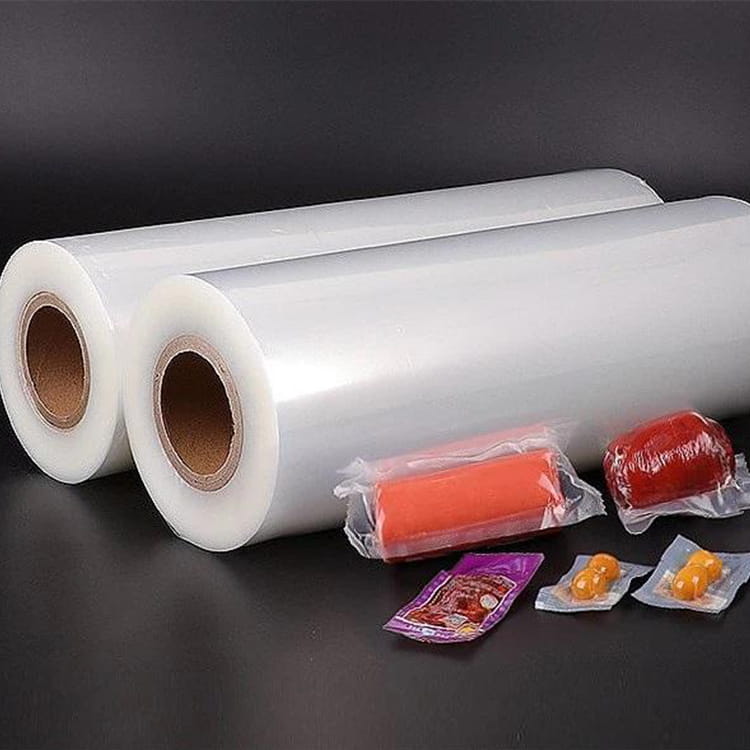
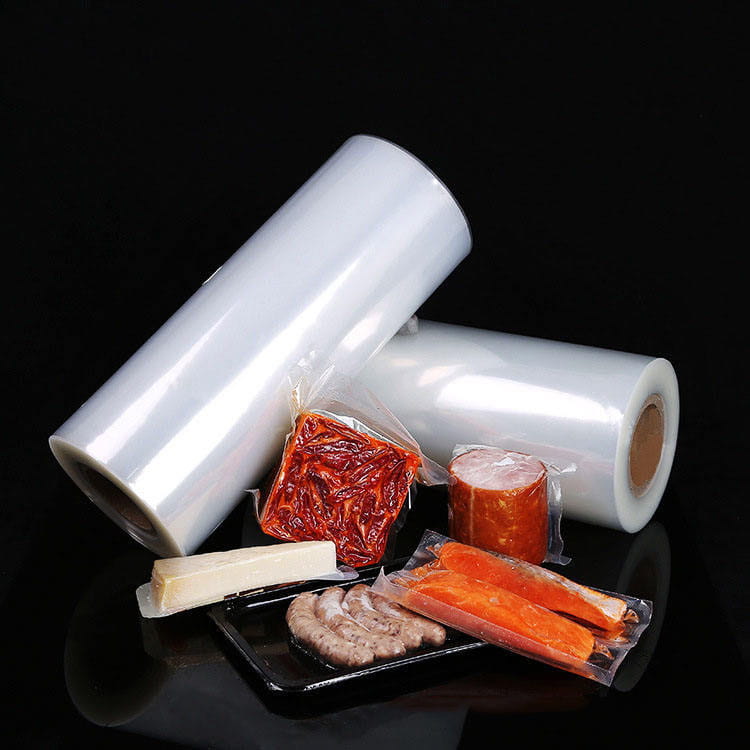
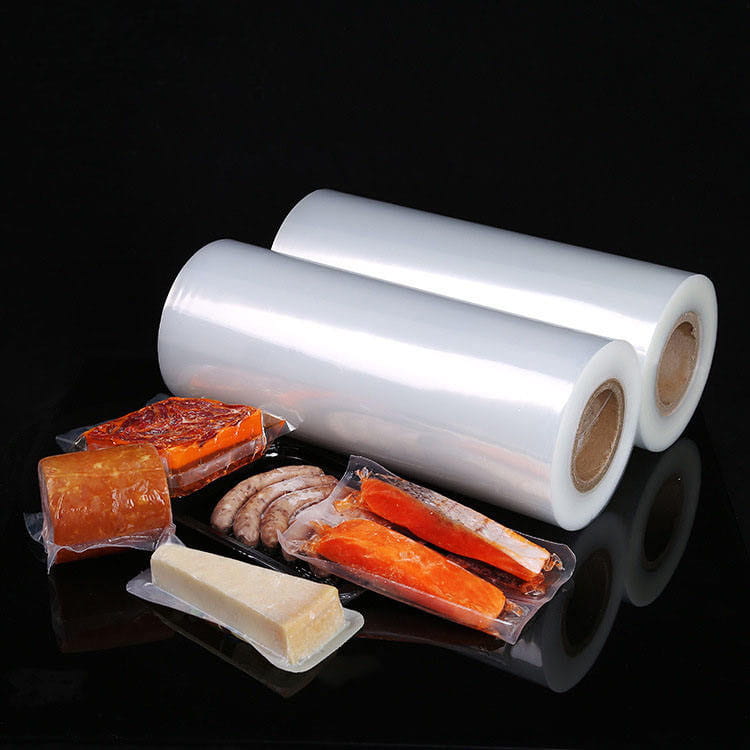
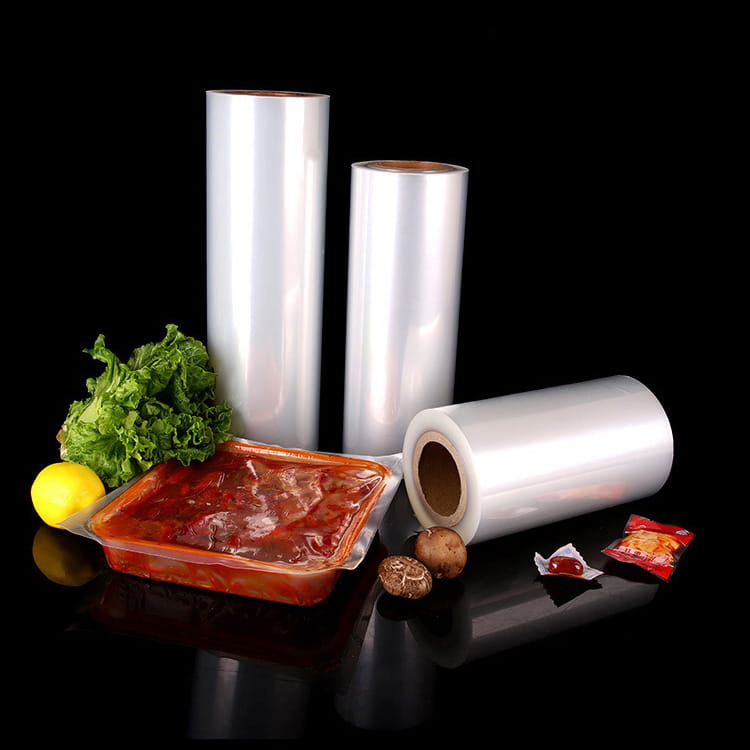
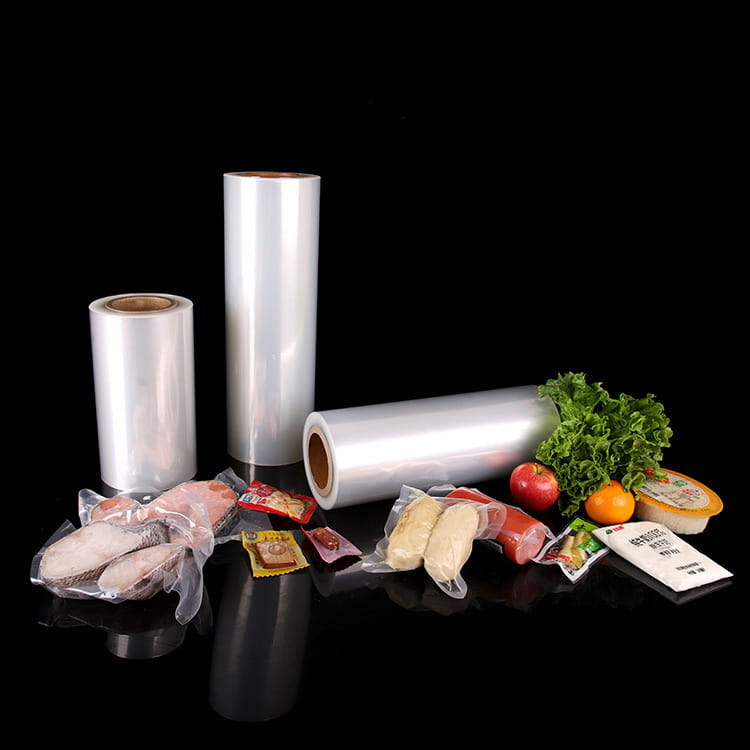
Example of high barrier film roll used in food-safe flexible packaging production.
Real-World Impact: Shelf Life Extension Across Food Categories
Quantifiable benefits of high barrier packaging are well documented in food industry studies. Below is a summary of shelf life improvements measured by third-party labs (average values from multiple non-branded trials).
- Roasted coffee (whole bean): Standard unlined bag – 4 months; high barrier with one-way valve – 18 months (aroma retention +120%).
- Hard cheese (cheddar): PVC shrink wrap – 6 weeks; high barrier vacuum skin pack – 9 months.
- Dried meat (jerky): Polypropylene pouch – 3 months; high moisture barrier with oxygen scavenger – 15 months.
- Pet treats: Middle barrier – 6 months; high barrier metallized film – 24 months without mold or rancidity.
- Fresh cut apples: Conventional clamshell – 2 days; high barrier antifog bag with modified atmosphere – 12 days.
These extensions reduce stock-keeping unit (SKU) rotation frequency and allow longer international shipping routes. Moreover, supermarkets report that products packaged in high barrier film have 70% fewer customer complaints related to staleness or off-flavors compared to those in basic poly bags. When combined with oxygen absorbers or nitrogen flushing, high barrier films push shelf life further without preservatives — a critical advantage for clean-label products.
However, success requires correct seal integrity. Even a pinhole in a high barrier structure can increase OTR by 500%. Therefore, manufacturers must implement seal strength testing (ASTM F88) and leak detection. Many FDA compliant ldpe bag manufacturer brands now offer online seal inspection systems to guarantee consistency.
Frequently Asked Questions (FAQ)
Q1: What is the difference between high barrier film and middle barrier film?
High barrier film provides oxygen transmission rates (OTR) below 5 cc/m²/day and very low moisture transmission (WVTR <1 g/m²/day). It is used for sensitive products like coffee, cheese, and meat. Middle barrier film offers OTR between 5-100 cc/m²/day and moderate moisture protection, suitable for dry snacks, frozen foods, and shorter shelf life (3–9 months).
Q2: Are all food safe poly bags automatically FDA compliant?
No. “Food safe” is a general claim, while FDA compliance requires specific testing under 21 CFR. Always request a Declaration of Compliance (DoC) and third-party migration data. Reputable suppliers provide lot-specific traceability for poly food safety.
Q3: Can high barrier film be recycled?
Traditional multi-material high barrier (e.g., PET/EVOH/PE) is not readily recyclable. However, new mono-material PE high barrier films with EVOH content below 5% are designed for recyclability in existing PE streams. Check with local recycling guidelines and certified bodies like RecyClass or APR.
Q4: How does moisture barrier packaging prevent foodborne pathogens?
Moisture barrier packaging does not directly kill pathogens but controls water activity (aw). By blocking external humidity, it prevents aw from rising above 0.85, the threshold for most pathogen growth (e.g., Salmonella, Staphylococcus aureus). Combined with oxygen barrier, it inhibits mold and toxin production.
Q5: What certifications are essential for food packaging certification?
The most recognized certifications are BRCGS Packaging, FSSC 22000, ISO 22000, and for specific markets: China GB 4806.7, EU 10/2011, and US FDA. These certify that manufacturing processes and materials meet food safety management system requirements.
Q6: Is high barrier film always necessary for shelf life extension?
Not always. For low-fat products with short distribution (e.g., fresh bread delivered in 3 days), a cost-effective middle barrier or even standard LDPE may suffice. However, for export, premium branding, or clean-label preservation, high barrier is the most reliable approach.
Strategic Takeaways for Food Packers and Converters
Selecting the correct barrier film is a balance of product chemistry, logistics, cost, and sustainability. High barrier film delivers unmatched protection for oxygen and moisture-sensitive foods, often extending shelf life by 200–500% compared to non-barrier alternatives. Middle barrier film provides an economic compromise for moderately durable products. Regardless of the choice, compliance with food packaging certification and poly food safety regulations is mandatory. Always verify supplier documentation, perform routine seal integrity tests, and consider end-of-life recyclability. By implementing these practices, food brands reduce waste, enhance consumer trust, and meet the demands of global supply chains.